
Affiliate disclosure: This post contains affiliate links. If you buy through them, PhysioGain may earn a small commission at no extra cost to you. I only list products I would be comfortable suggesting to my own patients. This guide is general information and not a substitute for a proper assessment.
One question I hear almost every week in clinic, usually from IT folks, bank staff, students and people who drive a lot: “Doctor, my lower back gets tired by evening. Should I buy a back rest for my chair?”
It is a fair question. Most of us sit for many hours, and a lot of office chairs, dining chairs and car seats do not give the lower back much to lean on. In this guide I will talk about the Tynor Back Rest Full from the PhysioGain Healing Store: what it is, who it suits, who should skip it, how to set it up properly, and what to do alongside it so your back actually gets stronger.
What the Tynor Back Rest Full is
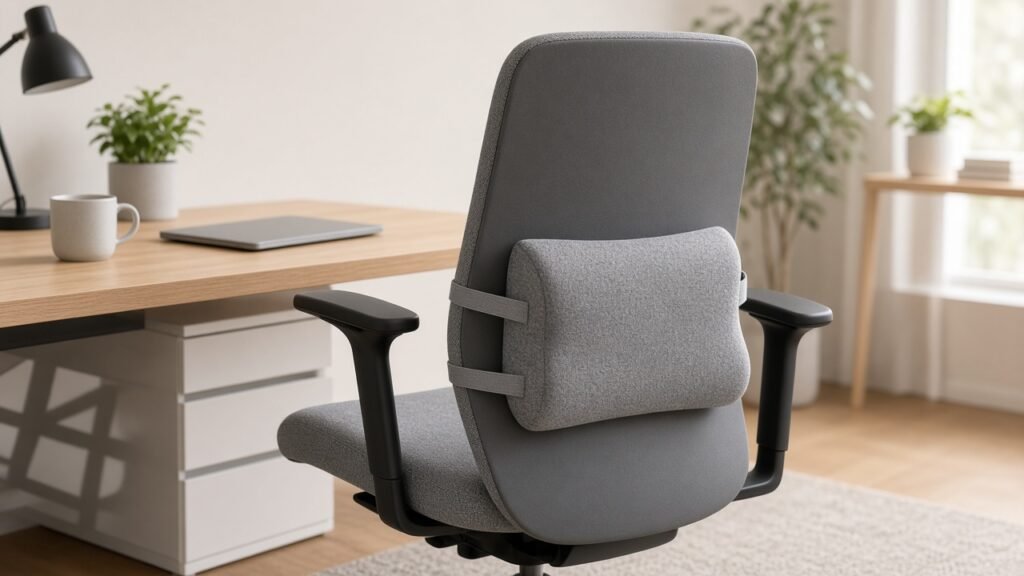
This is not a belt or a brace that you wear. It is a contoured foam cushion that sits against the backrest of your chair or car seat, behind your lower and mid back. Going by Tynor’s own product page (Tynor):
- It has a contoured shape that follows the natural curve of the lower back
- It is made of high-density PU foam that is meant to hold its shape
- An adjustable elastic strap with a buckle holds it on most chairs and car seats
- The fabric cover is removable and washable
- It comes in one universal size, listed for users roughly 152 to 192 cm tall
Because it is not worn on the body, it does not squeeze your tummy the way a lumbar belt can. You simply sit back into it.
Why sitting support matters, and why it is only part of the answer
Lower back pain is very common. The NHS notes that it usually gets better within a few weeks, but it can last longer or keep coming back. Their advice is to stay active and carry on with daily activities as much as you can, and not to stay in bed for long periods (NHS).
Mayo Clinic’s office ergonomics guide says to choose a chair that supports your spine, keep your feet flat on the floor or on a footrest, and keep your shoulders relaxed. It also makes a point I repeat to every patient: no matter how good your setup is, sitting in one position for hours is not good for your body, so get up and move often (Mayo Clinic).
So here is how I see it. A back rest can make sitting more comfortable and make it easier to sit back in your chair instead of slumping forward. That is useful. But it does not fix weak muscles, it does not heal a disc, and it is not a reason to sit for longer without breaks. Think of it as a helper for your sitting, not a treatment.
Who it may help
In my experience, a back rest like this makes most sense for:
- Desk workers whose office chair has a flat or very soft backrest
- People working from home on a dining chair or a sofa
- Drivers and daily commuters whose car seat leaves a gap behind the lower back
- People with mild, everyday back tiredness from long sitting, with no worrying symptoms
- Anyone whose physio or doctor has suggested extra lower back support while sitting
Who should NOT rely on it
Please do not buy a back rest and wait for it to sort things out if any of these apply to you:
- Back pain after a fall, an accident or any serious injury
- Pain, tingling, numbness or weakness in one or both legs
- Any change in bladder or bowel control, or numbness around the private parts
- Fever, feeling unwell, or weight loss without trying
- Pain that is worse at night, or does not ease with rest
- Pain that keeps getting worse, or has not improved after a few weeks
Both the NHS and Cleveland Clinic list symptoms like these as reasons to get checked by a professional, some of them urgently (Cleveland Clinic). A cushion is not the right first step here.
It may also not suit you if you are much shorter or taller than the listed height range, or if your chair or car seat is very narrow or deeply bucketed, as the cushion may not sit flat. If you have had recent spine surgery, follow your surgeon’s and physio’s advice on sitting.
How to set it up properly
Most complaints I hear about back rests come from poor positioning, not from the product itself. Here is how I teach patients to set one up:
1. Sort out the chair first
Set your chair height so your feet rest flat on the floor and your knees are roughly level with your hips. If your feet do not reach, use a footrest or a sturdy box.
2. Place the curve at your lower back
Strap the back rest to the chair and slide it up or down until the thickest part of the curve sits in the small of your back, around belt level. It should fill the gap, not push you forward.
3. Sit all the way back
Your bottom should touch the back of the seat. If you perch on the front edge, the back rest cannot do anything for you.
4. Check how it feels after 10 to 15 minutes
It should feel supportive and easy. If it feels like it is pushing your lower back too far forward, lower it a little or loosen the strap.
5. In the car
Fix it so it does not slide while you drive, and recheck your distance to the pedals and steering after fitting it, because a back rest moves you slightly forward in the seat.
What to pair it with
- Movement breaks: Stand up, walk around or stretch every 30 to 45 minutes.
- Strength work: Cleveland Clinic suggests strengthening your abdominal, hip and back muscles to support your spine. Simple bridges, bird dogs and side planks done regularly help far more than any cushion.
- Screen and desk setup: Bring your screen to eye level and keep your keyboard close, so you are not leaning forward. I have more ideas in my post on physio tips to prevent back pain at your desk.
- Daily activity: Walking, swimming, yoga and pilates may also help ease back pain, according to the NHS.
You can also read about how I approach back pain treatment at PhysioGain if your pain has been around for a while.
Buying checklist
- Your pain is mild, from long sitting, with no red flag symptoms listed above
- Your height falls within the range Tynor lists for the universal size
- Your chair or car seat has a backrest wide and flat enough to strap it onto
- You are fine with firm foam support rather than a soft pillow feel
- You are ready to pair it with movement breaks and strengthening
If you tick these boxes, you can check the Tynor Back Rest Full on Amazon.in for current price, stock and details.
FAQ
Will a back rest fix my posture?
No product fixes posture on its own. A back rest can make it easier to sit back comfortably, but changing position often and building strength matter more.
Can I use it all day?
You can use it whenever you sit, but do not let it become a reason to sit longer. Keep getting up regularly.
Is it the same as a lumbar belt?
No. A lumbar belt is worn around the waist for short-term support during flare-ups or lifting. This back rest stays on your chair and supports you only while you sit.
Can it help sciatica?
Some people find certain sitting positions more comfortable, but leg pain, tingling or weakness needs an assessment first. Please do not self-manage nerve symptoms with a cushion.
My verdict
The Tynor Back Rest Full is a simple, practical option for people who sit for long hours and feel their lower back getting tired because their chair or car seat gives little support. It is not a treatment and it will not replace exercise, movement breaks or a proper assessment. But set up correctly, it can make everyday sitting at your desk, at home or in the car feel more comfortable.
If that sounds like your situation, see the Tynor Back Rest Full on Amazon.in.
And if your back pain is sticking around, spreading into your leg, or you are simply not sure what is causing it, book an assessment with me. A proper check will tell you what your back really needs before you spend money on anything.
Dr. Lakshay Sharma PT, BPT (Delhi University), MPT in Sports and Musculoskeletal Physiotherapy, sports rehab certification from CSPR London.