
Cervical Spondylosis
Experiencing neck pain, stiffness, or difficulty turning your head? Learn what cervical spondylosis is, how it affects the neck, and how physiotherapy can help you move comfortably again.
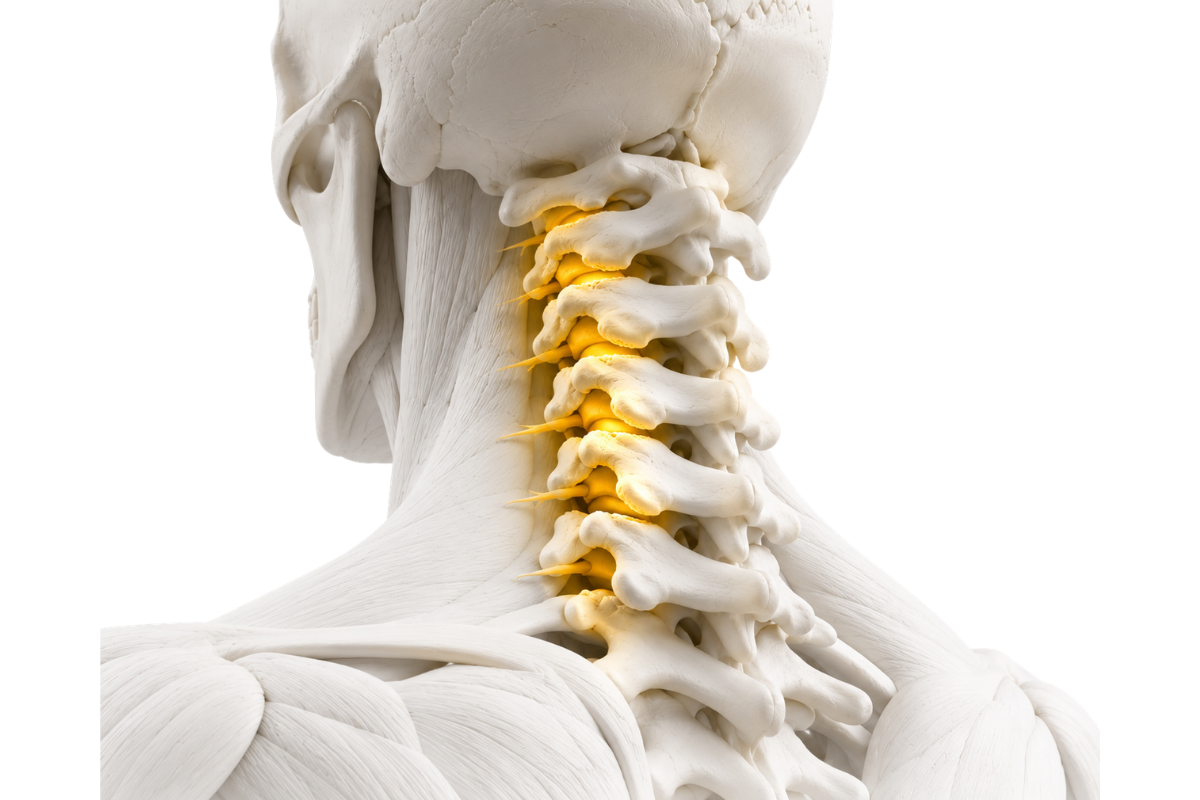
Cervical spondylosis refers to age-related changes in the joints, discs, and bones of the neck. Most cases improve with education, exercise, and physiotherapy.
QUICK OVERVIEW
Cervical Spondylosis at a Glance
COMMON SIGNS & SYMPTOMS
Is This What You're Feeling?
Neck Pain
Pain ranging from a dull ache to sharper discomfort in the neck.
Neck Stiffness
Difficulty turning your head, especially after periods of rest or prolonged sitting.
Reduced Neck Movement
Limited ability to look over your shoulder or tilt your head comfortably.
Headaches
Pain beginning at the base of the skull and spreading toward the forehead (cervicogenic headaches).
Shoulder or Upper Back Pain
Pain may spread into the upper trapezius or between the shoulder blades.
Arm Pain
Some people experience pain radiating into the shoulder or arm due to nerve root irritation.
Tingling or Numbness
Pins and needles or numbness in the arm or hand may occur if a cervical nerve root is compressed.
Muscle Weakness
Weakness in the arm or hand requires professional assessment.
COMMON CAUSES
Why Does It Happen?
Disc Degeneration
With age, cervical discs gradually lose water content and height, reducing their ability to absorb shock.
Facet Joint Changes
The small joints at the back of the cervical spine may develop age-related changes that contribute to stiffness and pain.
Bone Spurs (Osteophytes)
Extra bone growth may develop around the joints and can sometimes narrow the spaces where nerves exit the spine.
Thickening of Ligaments
Ligaments supporting the spine may thicken over time, occasionally contributing to narrowing of the spinal canal.
Previous Neck Injuries
Past trauma, including whiplash injuries, may contribute to earlier degenerative changes.
Genetics
Inherited factors influence how the cervical spine ages.
Natural Ageing
Degenerative changes are common with increasing age and do not always cause symptoms.
RISK FACTORS
Who Is Most at Risk?
Adults Over 40 Years
Age is the strongest risk factor.
Office Workers
Long periods of desk work and sustained neck postures may contribute to symptoms.
Manual Workers
Repetitive lifting, overhead work, and vibration exposure.
Drivers
Prolonged sitting and static neck postures.
Individuals with Previous Neck Injuries
History of whiplash or cervical trauma.
People with a Family History
Genetic factors influence the rate of degenerative change.
DIAGNOSIS
How Is It Diagnosed?
Clinical Assessment
Medical History
- Pain location
- Stiffness
- Arm symptoms
- Headaches
- Walking or balance problems
- Previous injuries
- Occupation
- Medical history
Physical Examination
- Neck range of motion
- Muscle strength
- Neurological examination
- Reflexes
- Sensation
- Functional activities
Special Tests & Imaging
Special Tests
- Spurling's Test
- Cervical distraction test
- Upper limb neurodynamic tests
- Cervical radiculopathy cluster
- Screening for cervical myelopathy
No single test confirms cervical spondylosis. Diagnosis is based on your history, examination findings, and, when necessary, imaging.
Imaging
X-rays may demonstrate disc space narrowing, osteophytes, and degenerative changes. MRI may be recommended when persistent arm pain or neurological symptoms are present, cervical myelopathy is suspected, or surgery is being considered.
SEEKING HELP
When Should You Get Help?
Self-Management
Usually appropriate if:
- Mild neck pain
- Improving symptoms
- Full arm strength
- No neurological symptoms
Book a Physiotherapy Assessment
Recommended if:
- Pain lasts longer than two weeks
- Increasing stiffness
- Recurrent episodes
- Difficulty working or driving
- Arm pain or tingling
Seek Immediate Medical Attention
Seek urgent medical assessment if you experience:
- Progressive arm or leg weakness
- Difficulty walking or maintaining balance
- Loss of bladder or bowel control
- Numbness in both hands or legs
- Severe neck pain after trauma
- Fever with neck pain
- Sudden unexplained weight loss
TREATMENT
Treatment Options
Education
Understanding cervical spondylosis and remaining physically active are important parts of long-term management.
Exercise Therapy
Targeted exercises to improve neck mobility, strength, endurance, and posture are considered first-line treatment.
Manual Therapy
Joint mobilization or manipulation may provide short-term pain relief for selected individuals when combined with exercise.
Lifestyle Modification
Improving workstation ergonomics, taking regular movement breaks, maintaining physical activity, and optimizing sleep can support recovery.
Medication
Pain-relieving medication may be appropriate under medical supervision for short-term symptom management.
Injections
Selective nerve root blocks or other spinal injections may be considered in certain individuals after specialist evaluation.
Surgery
Surgery may be considered when significant nerve root compression, cervical myelopathy, or persistent disabling symptoms do not improve with comprehensive conservative management.
PHYSIOTHERAPY
How Physiotherapy Helps
Physiotherapy aims to reduce pain, improve neck mobility, restore strength, and help you safely return to work, driving, exercise, and daily activities.
Treatment may include:
- Individualized exercise programmes
- Deep cervical flexor strengthening
- Neck mobility exercises
- Postural retraining
- Shoulder and upper back strengthening
- Manual therapy when indicated
- Ergonomic advice
- Return-to-work planning
- Long-term self-management strategies
RECOVERY JOURNEY
Recovery Timeline
EXERCISE LIBRARY
Recommended Exercises
Chin Tucks
EasyTarget: Deep cervical flexors
Repetitions: 10–15 × 2 sets
Cervical Rotation
EasyTarget: Neck mobility
Repetitions: 10 each direction
Upper Trapezius Stretch
EasyTarget: Upper trapezius
Hold: 20–30 seconds × 3 repetitions
Levator Scapulae Stretch
EasyTarget: Levator scapulae
Hold: 20–30 seconds × 3 repetitions
Scapular Retraction
ModerateTarget: Middle trapezius and rhomboids
Repetitions: 12–15 × 2 sets
Deep Neck Flexor Endurance Exercise
ModerateTarget: Deep cervical stabilizers
Hold: 5–10 seconds × 10 repetitions
LONG-TERM HEALTH
Prevention Tips
Stay Physically Active
Regular exercise helps maintain neck mobility and muscle strength.
Improve Workstation Ergonomics
Keep your monitor at eye level, support your lower back, and avoid prolonged forward head posture.
Take Regular Movement Breaks
Move your neck and shoulders every 30–60 minutes during desk work or driving.
Strengthen the Neck and Upper Back
Strong supporting muscles reduce strain on the cervical spine.
Sleep with Appropriate Neck Support
Choose a pillow that keeps your neck in a comfortable, neutral position.
Avoid Smoking
Smoking is associated with poorer spinal disc health and may contribute to degenerative changes.
EXPLORE MORE
Related Conditions
Neck Pain
Cervical Radiculopathy
Cervical Myelopathy
Cervicogenic Headache
Whiplash-Associated Disorders
Shoulder Pain
Frozen Shoulder
Thoracic Outlet Syndrome
Upper Crossed Syndrome
Low Back Pain
Regain Comfortable Neck Movement
If neck pain, stiffness, or arm symptoms are affecting your work, sleep, driving, or daily activities, a physiotherapy assessment can help determine whether cervical spondylosis is contributing to your symptoms and create a personalised treatment plan focused on reducing pain, improving movement, and helping you stay active.
Book Your Physiotherapy Assessment TodayEarly intervention and consistent management lead to better long-term outcomes.