
Osteoarthritis
Living with joint pain or stiffness? Learn what osteoarthritis is, why it develops, and how physiotherapy can help you stay active and independent.
Osteoarthritis is the most common form of arthritis. It can affect the knees, hips, hands, spine, feet, and other joints, causing pain, stiffness, and reduced mobility.
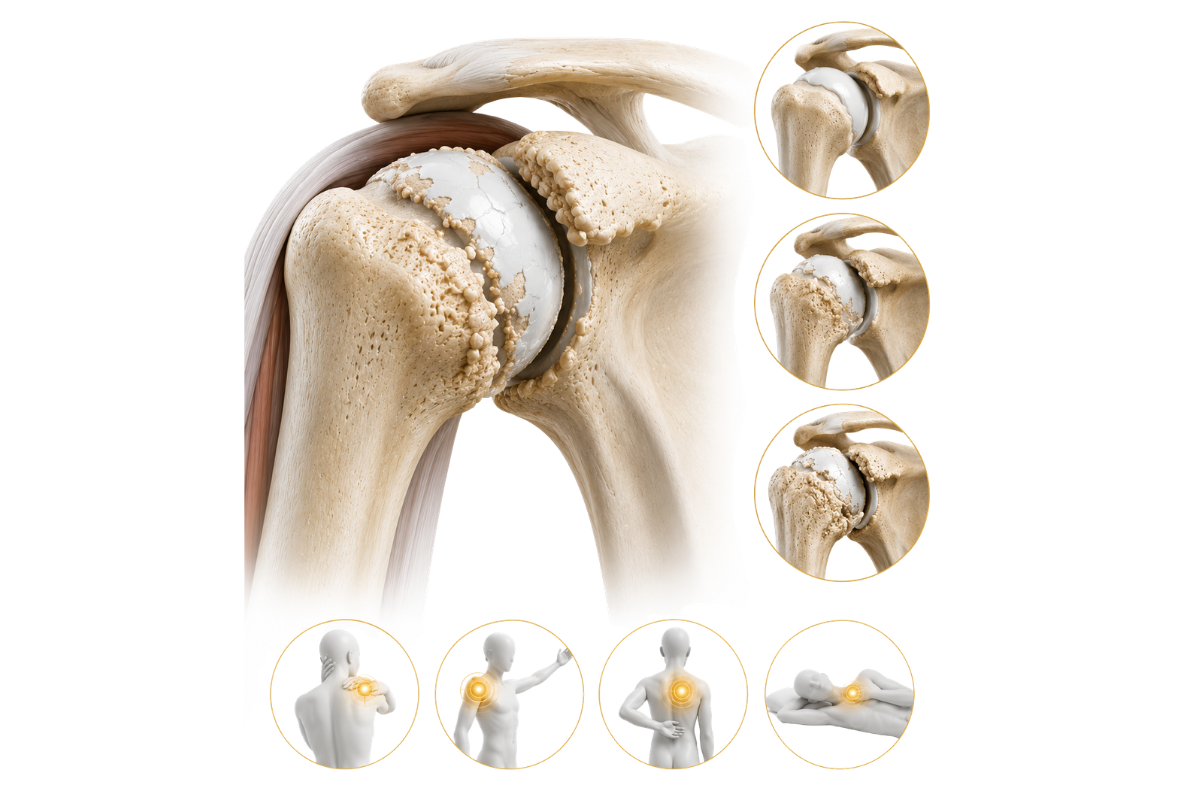
QUICK OVERVIEW
Osteoarthritis at a Glance
COMMON SIGNS & SYMPTOMS
Is This What You're Feeling?
Joint Pain
Pain during or after movement that may improve with rest during the early stages.
Morning Stiffness
Stiffness lasting less than 30 minutes after waking or after periods of inactivity.
Pain After Activity
Symptoms may increase after prolonged walking, standing, climbing stairs, or repetitive tasks.
Reduced Joint Movement
Difficulty fully bending or straightening the affected joint.
Swelling
Some people experience mild swelling around the joint, particularly after activity.
Grinding or Clicking
A grinding or crackling sensation (crepitus) may occur during movement.
Muscle Weakness
Reduced strength around the affected joint can contribute to pain and reduced function.
Difficulty with Daily Activities
Tasks such as climbing stairs, standing from a chair, or dressing may become more difficult.
COMMON CAUSES
Why Does It Happen?
Age-Related Joint Changes
Joint tissues gradually change over time, making osteoarthritis more common with increasing age.
Previous Joint Injury
Previous ligament injuries, fractures, or meniscal injuries can increase the risk later in life.
Genetics
Family history can influence an individual's likelihood of developing osteoarthritis.
Repetitive Joint Loading
Occupations or sports involving repeated high joint loads may contribute in some individuals.
Muscle Weakness
Reduced strength around a joint may increase mechanical stress and reduce joint support.
Higher Body Weight
Additional body weight increases loading through weight-bearing joints such as the knees and hips.
Metabolic and Systemic Factors
Metabolic health, inflammation, and other biological processes may also contribute.
RISK FACTORS
Who Is Most at Risk?
Adults Over 45 Years
The likelihood of osteoarthritis increases with age.
People with Previous Joint Injuries
Especially ACL injuries, meniscal tears, fractures, or recurrent joint instability.
Individuals with Higher Body Weight
Greater loading on weight-bearing joints.
Manual Workers
Frequent lifting, kneeling, squatting, or repetitive joint loading.
Athletes
Previous sports injuries may increase the long-term risk of osteoarthritis.
Individuals with a Family History
Genetics can influence susceptibility.
DIAGNOSIS
How Is It Diagnosed?
Clinical Assessment
Medical History
- Pain pattern
- Morning stiffness
- Walking tolerance
- Functional limitations
- Previous injuries
- Occupation
- Exercise habits
- Medical history
Physical Examination
- Joint range of motion
- Muscle strength
- Walking pattern (gait)
- Functional movements
- Joint tenderness
- Swelling
- Balance
Imaging
Osteoarthritis is primarily diagnosed based on your symptoms and physical examination.
What X-rays May Show
- Joint space narrowing
- Osteophytes (bone spurs)
- Bone changes
However, imaging findings do not always correlate with pain. Many people have osteoarthritis on X-ray without symptoms. MRI is rarely required unless another condition is suspected.
SEEKING HELP
When Should You Get Help?
Self-Management
Appropriate if:
- Mild joint pain
- Symptoms improve with movement
- Able to perform daily activities
Book a Physiotherapy Assessment
Recommended if:
- Pain lasts longer than several weeks
- Walking or daily activities become difficult
- Increasing stiffness
- Recurrent joint swelling
- Reduced quality of life
Seek Medical Assessment
Seek prompt medical evaluation if you experience:
- Severe joint pain following trauma
- Fever with a painful, swollen joint
- Red, hot, rapidly swollen joint
- Sudden inability to bear weight
- Unexplained weight loss with persistent joint pain
- Significant deformity following injury
TREATMENT
Treatment Options
Education
Understanding osteoarthritis and staying physically active are key parts of long-term management.
Exercise Therapy
Exercise is considered the first-line treatment and is strongly recommended by international guidelines.
Weight Management
Even modest weight loss can reduce symptoms and improve function, particularly in knee and hip osteoarthritis.
Manual Therapy
May provide short-term symptom relief for selected individuals but should be used alongside exercise.
Medication
Pain-relieving medication may be appropriate under medical supervision for symptom management.
Injections
Intra-articular corticosteroid injections may provide short-term symptom relief in selected cases.
Surgery
Joint replacement surgery may be appropriate for individuals with severe pain who have not improved with conservative management.
PHYSIOTHERAPY
How Physiotherapy Helps
Physiotherapy helps reduce pain, improve joint mobility, increase muscle strength, and maintain independence.
Treatment may include:
- Individualised exercise programmes
- Strength training
- Balance exercises
- Walking programmes
- Mobility exercises
- Functional movement retraining
- Weight management support
- Manual therapy when indicated
- Education on pacing activities
- Long-term self-management strategies
RECOVERY JOURNEY
Recovery Timeline
EXERCISE LIBRARY
Recommended Exercises
Sit-to-Stand
EasyTarget: Functional lower-limb strength
Repetitions: 10–15 × 2–3 sets
Mini Squats
ModerateTarget: Quadriceps and gluteal muscles
Repetitions: 10–15 × 2–3 sets
Heel Raises
EasyTarget: Calf muscles and balance
Repetitions: 10–15 × 2 sets
Bridge Exercise
ModerateTarget: Gluteal muscles
Repetitions: 10–15 × 2–3 sets
Walking Programme
EasyTarget: Cardiovascular fitness and joint health
Duration: Start with 10–20 minutes and gradually increase
Balance Training
ModerateTarget: Joint stability and fall prevention
Hold: 20–30 seconds × 3 repetitions
LONG-TERM HEALTH
Prevention Tips
Stay Physically Active
Regular exercise helps maintain joint health, muscle strength, and mobility.
Strengthen Supporting Muscles
Strong muscles reduce stress on joints and improve function.
Maintain a Healthy Body Weight
Reducing excess body weight can significantly decrease the load on weight-bearing joints.
Manage Joint Injuries Early
Appropriate rehabilitation after injuries may reduce the long-term risk of osteoarthritis.
Avoid Long Periods of Inactivity
Regular movement helps reduce stiffness and maintain joint mobility.
Build Activity Gradually
Increase exercise intensity and duration progressively to avoid overloading joints.
EXPLORE MORE
Related Conditions
Knee Osteoarthritis
Hip Osteoarthritis
Thumb Osteoarthritis
Knee Pain
Hip Pain
Shoulder Osteoarthritis
Frozen Shoulder
Low Back Pain
Meniscus Tear
Rheumatoid Arthritis
LEARN MORE
Related Resources
Keep Moving with Confidence
If osteoarthritis is making it harder to walk, climb stairs, exercise, or enjoy everyday activities, a physiotherapy assessment can help you understand your condition and develop a personalised treatment plan focused on reducing pain, improving strength, and helping you stay active for the long term.
Book Your Physiotherapy Assessment TodayEarly intervention and consistent management lead to better long-term outcomes.