
Affiliate disclosure: This post contains affiliate links. If you buy through them, PhysioGain may earn a small commission at no extra cost to you. I only list products I would be comfortable suggesting to my own patients. This guide is general information and not a substitute for a proper assessment by a doctor or physiotherapist.
“Doctor, which pillow should I use?” I hear this almost daily, usually from someone who wakes up with a stiff neck after trying two or three pillows already.
My honest answer is that there is no magic pillow. But the right height and shape can make your nights more comfortable, and a bad pillow can keep irritating a neck that is already unhappy. In this guide I will talk about the SleepyCat Cervical Memory Foam Pillow from the PhysioGain Healing Store: who it suits, who should skip it, how to use it properly, and when you need a physio more than a new pillow.
Why your pillow matters for neck pain
The NHS lists the neck getting locked in an awkward position while sleeping as one of the most common causes of neck pain. Its self-care advice includes using a low, firm pillow, keeping your head at the same height as the rest of your body when you sleep, and not sleeping on your front (NHS).
Cleveland Clinic gives similar advice. If you sleep on your back or side, use a pillow that keeps your head and neck in line with the rest of your body, and avoid sleeping on your stomach with your head turned to one side (Cleveland Clinic).
So the goal is simple: a neutral neck, not bent up by a high pillow or dropping down on a flat one.
What the research actually says
I want to be straight with you here. A 2021 systematic review and meta-analysis in Clinical Biomechanics looked at trials of different pillow designs in adults with neck pain (Chun-Yiu et al., 2021, PubMed). It found that certain pillows (mainly rubber and spring pillows in the included trials) were linked with less neck pain, less waking pain and better pillow satisfaction in people with chronic neck pain. Pillow design did not change sleep quality, and the authors suggested that the shape and height of a pillow may matter more for neck alignment than the material.
So the evidence for special pillows is limited and mixed, and memory foam was not shown to beat everything else. A contour pillow is a comfort and positioning tool, not a treatment.
What the SleepyCat Cervical Memory Foam Pillow is
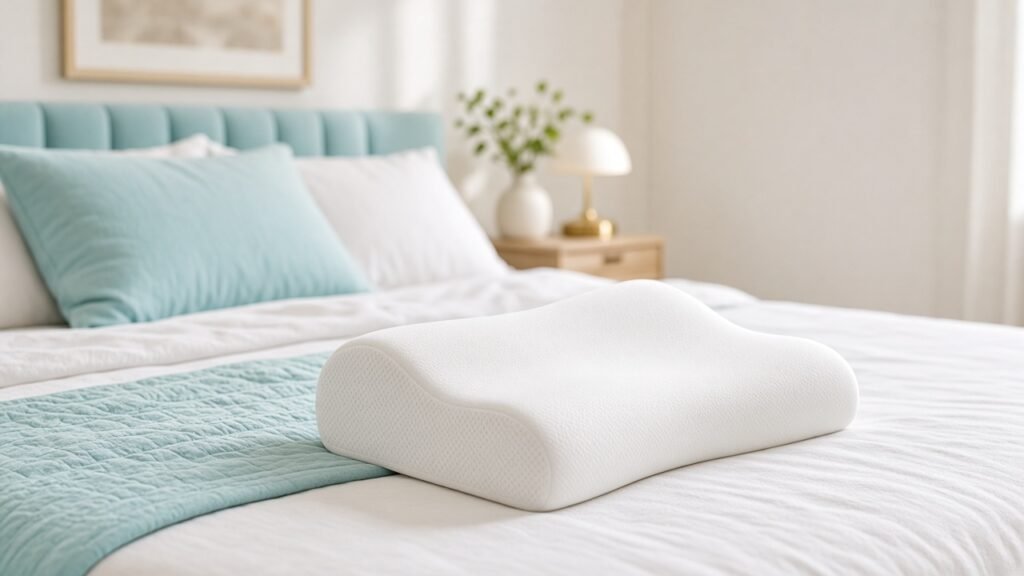
This is a contoured memory foam pillow with a raised edge for the neck. Going by the Amazon listing:
- It is full size, 25 x 16 inches, so it does not feel small on a normal bed
- It has two loft heights: the higher side is meant for side sleepers and the lower side for back sleepers
- It is made of memory foam that the brand says will not sag, break or flatten, backed by a 1-year manufacturer’s warranty
- The foam has ventilation holes for airflow, to reduce heat build-up at night
- The cover is a bamboo fabric described as hypoallergenic and resistant to dust mites
The two heights are what I like most, because pillow height is the first thing I adjust with patients.
Who this pillow may help
- Back sleepers who wake up with a stiff neck and feel their current pillow pushes the head forward
- Side sleepers whose pillow is too flat, so the head drops towards the mattress
- People with everyday neck stiffness from long laptop hours, who want better night support along with exercise
Who should skip it or check first
- Stomach sleepers. A contour pillow does not suit this position, and both the NHS and Cleveland Clinic advise against sleeping on your front with the head turned.
- People who love a soft, squishy pillow. Memory foam feels firmer, and some people never get used to it.
- Very broad-shouldered side sleepers. Even the higher side may feel low. Check the dimensions on the listing against your shoulder width.
- Anyone with a recent neck injury, surgery, or nerve symptoms like arm pain, numbness or weakness. Get assessed first, then choose a pillow.
If you are not sure which group you fall into, a quick online assessment with me can help you work out your sleeping setup and the exercises your neck needs.
How to use it properly
Pick the right side for your position
If you sleep on your back, start with the lower loft. Your chin should not be pushed towards your chest, and your head should not tip backwards. If you sleep on your side, try the higher loft. Your nose should line up roughly with the centre of your chest, with your head neither drooping down nor bent up.
Place it correctly
The raised edge goes under the curve of your neck, not under your head. Your shoulders should rest on the mattress, just below the pillow. A very common mistake is pushing the pillow down under the shoulders, which changes the whole angle.
Give it one to two weeks
A new pillow shape feels odd for the first few nights. Use it every night for one to two weeks before deciding. Check the return window on the listing before you buy, so you have time to test it.
Support the rest of your body too
Cleveland Clinic suggests back sleepers place a pillow under the knees to ease pressure on the lower back. Side sleepers often feel better with a pillow between the knees.
If this sounds like the setup you need, you can check the SleepyCat Cervical Memory Foam Pillow on Amazon.in.
What to pair it with
A pillow only covers your nights. The NHS advises keeping the neck moving, trying neck flexibility exercises, and not keeping the neck in one position for a long time, for example at a desk. It also says not to wear a neck collar unless a doctor tells you to.
Simple habits I give most of my neck patients:
- Raise your screen closer to eye level, so you are not looking down for hours
- Take a short movement break every 30 to 45 minutes
- Do gentle neck turns, side bends and chin tucks during the day, within comfort
For a full routine, read my post on simple fixes for tech neck, and if mornings are your worst time, this plan for waking up stiff will help. You can also learn more on our neck pain condition page.
When to see a physio or doctor instead
The NHS advises seeing a GP if neck pain or stiffness does not go away after a few weeks, if painkillers have not worked, or if you have other symptoms like pins and needles or a cold arm. Cleveland Clinic advises urgent care if your neck pain:
- Started after an accident or fall
- Comes with loss of bowel or bladder control
- Is there whether you move or stay still
- Comes with headache, dizziness, nausea or vomiting
- Comes with fever, chills or unexplained weight loss
- Comes with numbness or tingling in the arms, shoulders or legs, weakness in the legs, or loss of coordination
In these situations, please get checked rather than buying a pillow.
Quick buying checklist
- Do you sleep mainly on your back or side? If you are a stomach sleeper, this is not the pillow for you.
- Are you okay with a firmer memory foam feel?
- Have you checked the size and loft against your shoulder width?
- Have you checked the return window, so you can try it for one to two weeks?
- Are you ready to pair it with daily neck movement and better screen habits?
FAQ
Will a cervical pillow cure my neck pain?
No. It may make sleep more comfortable, but research on special pillows is limited. Movement and daily habits matter more.
Can I use it if I switch between back and side sleeping?
Yes. The two loft heights help here, and many people find one side that works for both.
My verdict
The SleepyCat Cervical Memory Foam Pillow is a sensible choice for back and side sleepers who want a firmer, contoured pillow with two height options. I like that it gives you room to adjust the loft, which is what matters most for neck alignment. It is not for stomach sleepers or for people who love soft pillows, and it is not a treatment for neck pain.
Use it as one part of your plan, along with movement, good screen habits and proper care when needed. If that fits you, here is the SleepyCat Cervical Memory Foam Pillow on Amazon.in. And if your neck has been bothering you for weeks, book an assessment with me so we can find the real cause.
Dr. Lakshay Sharma PT, BPT (Delhi University), MPT in Sports and Musculoskeletal Physiotherapy