
Plantar Fasciitis
Sharp heel pain with your first steps in the morning? Learn why plantar heel pain develops, how physiotherapy can help, and the safest way to return to pain-free walking and exercise.
Plantar fasciitis is one of the most common causes of heel pain. It affects the thick band of connective tissue (the plantar fascia) that supports the arch of your foot.
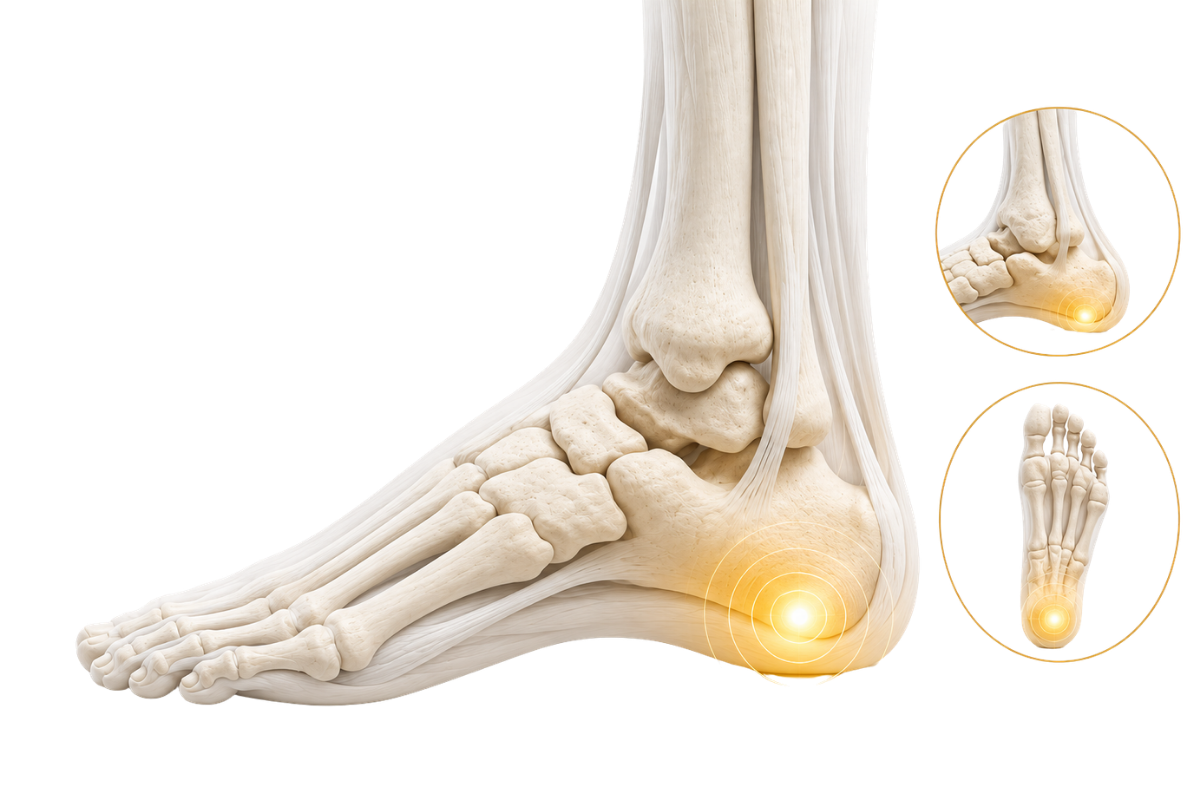
QUICK OVERVIEW
Plantar Fasciitis at a Glance
COMMON SIGNS & SYMPTOMS
Is This What You're Feeling?
Sharp Heel Pain
Pain underneath the heel, especially near the inner part of the heel.
First-Step Pain
Pain is often worst with the first few steps in the morning or after sitting for a long period.
Pain After Rest
Symptoms frequently return after periods of inactivity.
Pain During Prolonged Standing
Standing for long periods may increase discomfort.
Pain After Running or Exercise
Symptoms often worsen after activity rather than during it.
Tenderness Under the Heel
Pressing the bottom of the heel is often painful.
Reduced Walking Comfort
Walking longer distances may become increasingly uncomfortable.
Stiffness
The sole of the foot may feel tight or stiff, especially first thing in the morning.
COMMON CAUSES
Why Does It Happen?
Repetitive Overload
Repeated stress exceeds the plantar fascia's ability to recover.
Sudden Increase in Activity
Rapid increases in walking, running, or exercise volume are common contributing factors.
Tight Calf Muscles
Limited ankle dorsiflexion due to calf tightness may increase stress on the plantar fascia.
Reduced Foot Strength
Weak intrinsic foot muscles may reduce the foot's ability to absorb load efficiently.
Prolonged Standing
Occupations requiring long hours on hard surfaces can contribute to overload.
Running
Higher running volumes, particularly without gradual progression, increase loading through the plantar fascia.
Higher Body Weight
Greater body weight increases loading through the plantar fascia during walking and standing.
RISK FACTORS
Who Is Most at Risk?
Runners
Especially those who rapidly increase mileage or intensity.
Healthcare Workers
Long hours of standing and walking.
Teachers
Prolonged standing throughout the day.
Retail Workers
Extended standing on hard floors.
Adults Aged 40–60 Years
Peak age for plantar heel pain.
Individuals with Previous Heel Pain
Previous episodes increase the risk of recurrence.
People with Higher Body Weight
Increased loading through the foot may contribute to symptoms.
DIAGNOSIS
How Is It Diagnosed?
Clinical Assessment
Medical History
- Morning pain
- Pain location
- Walking tolerance
- Sporting activities
- Occupation
- Previous foot injuries
- Recent changes in activity
Physical Examination
- Walking pattern
- Foot posture
- Ankle mobility
- Calf flexibility
- Foot muscle strength
- Tenderness at the plantar fascia insertion
Special Tests & Imaging
Special Tests
- Windlass Test
- Plantar fascia palpation
- Functional loading assessment
- Calf flexibility testing
Diagnosis is based on the combination of your symptoms, physical examination, and clinical reasoning.
Imaging
Routine imaging is not usually necessary. Ultrasound or MRI may be considered when symptoms persist despite treatment, another diagnosis is suspected, or a plantar fascia tear is suspected. Heel spurs are commonly seen on X-rays but are not necessarily the cause of pain.
SEEKING HELP
When Should You Get Help?
Self-Management
Usually appropriate if:
- Mild heel pain
- Improving symptoms
- Able to walk comfortably
- No significant swelling
Book a Physiotherapy Assessment
Recommended if:
- Pain lasts longer than two weeks
- Morning pain is worsening
- Walking becomes difficult
- Running is affected
- Symptoms repeatedly return
Seek Medical Assessment
Seek prompt medical evaluation if you experience:
- Inability to bear weight after trauma
- Sudden severe heel pain with a popping sensation
- Significant swelling or bruising
- Fever with foot pain
- Persistent numbness or burning
- Suspected fracture or infection
TREATMENT
Treatment Options
Education
Understanding the condition, reducing excessive loading, and gradually returning to activity are essential.
Progressive Exercise Therapy
Strengthening and stretching exercises are considered first-line treatment.
Footwear Modification
Supportive footwear may help reduce stress on the plantar fascia during daily activities.
Orthoses
Foot orthoses or heel inserts may provide short-term pain relief for selected individuals but should complement exercise rather than replace it.
Manual Therapy
Joint mobilization and soft tissue techniques may improve short-term pain and mobility when combined with exercise.
Medication
Pain-relieving medication may be appropriate under medical supervision for short-term symptom management.
Injections
Corticosteroid injections may provide temporary pain relief but should be considered cautiously due to potential risks.
Surgery
Surgery is rarely required and is considered only after prolonged failure of comprehensive conservative treatment.
PHYSIOTHERAPY
How Physiotherapy Helps
Physiotherapy aims to reduce pain, improve tissue capacity, restore foot function, and help you safely return to work, walking, and sport.
Treatment may include:
- Progressive plantar fascia loading
- Calf strengthening
- Foot intrinsic muscle strengthening
- Stretching exercises
- Manual therapy
- Gait assessment
- Footwear advice
- Running modification
- Return-to-sport planning
- Long-term prevention strategies
RECOVERY JOURNEY
Recovery Timeline
EXERCISE LIBRARY
Recommended Exercises
Plantar Fascia Stretch
EasyTarget: Plantar fascia
Hold: 20–30 seconds
Repeat: 3–5 times
Calf Stretch
EasyTarget: Gastrocnemius and soleus
Hold: 30 seconds
Repeat: 3 times
Heel Raises
ModerateTarget: Calf muscles and plantar fascia
Repetitions: 10–15 × 3 sets
Short Foot Exercise
ModerateTarget: Intrinsic foot muscles
Hold: 5–10 seconds
Repeat: 10 times
Towel Curls
EasyTarget: Intrinsic foot muscles
Repetitions: 10–15
Toe Yoga
ModerateTarget: Foot muscle control
Repetitions: 10 repetitions
LONG-TERM HEALTH
Prevention Tips
Wear Supportive Footwear
Choose shoes appropriate for your daily activities and exercise.
Increase Activity Gradually
Avoid sudden increases in walking, running, or training volume.
Strengthen Your Feet
Regular intrinsic foot muscle exercises improve foot stability.
Maintain Calf Flexibility
Regular stretching helps maintain ankle mobility.
Manage Training Load
Allow adequate recovery between higher-impact activities.
Maintain a Healthy Body Weight
Maintaining a healthy body weight may reduce loading through the plantar fascia.
FREQUENTLY ASKED QUESTIONS
Common Questions
EXPLORE MORE
Related Conditions
Heel Pain
Achilles Tendinopathy
Foot & Ankle Pain
Flat Feet (Pes Planus)
High Arches (Pes Cavus)
Posterior Tibial Tendon Dysfunction
Tarsal Tunnel Syndrome
Stress Fracture of the Calcaneus
Baxter's Nerve Entrapment
Sever's Disease (Children and Adolescents)
LEARN MORE
Related Resources
Ready to Walk Without Heel Pain?
Whether your heel pain is affecting your morning routine, work, exercise, or daily walking, a physiotherapy assessment can identify the underlying cause and create a personalised rehabilitation programme to reduce pain, improve foot strength, and help you return to the activities you enjoy.
Book Your Physiotherapy Assessment TodayEarly intervention often leads to faster and better outcomes.