
MCL Injury
Pain on the inside of your knee after a twist or collision? Learn what an MCL injury is, how it's diagnosed, and how physiotherapy helps restore knee stability and confidence.
The medial collateral ligament (MCL) is a strong ligament on the inside of the knee that helps prevent excessive inward movement. Most isolated MCL injuries heal successfully without surgery through structured rehabilitation.
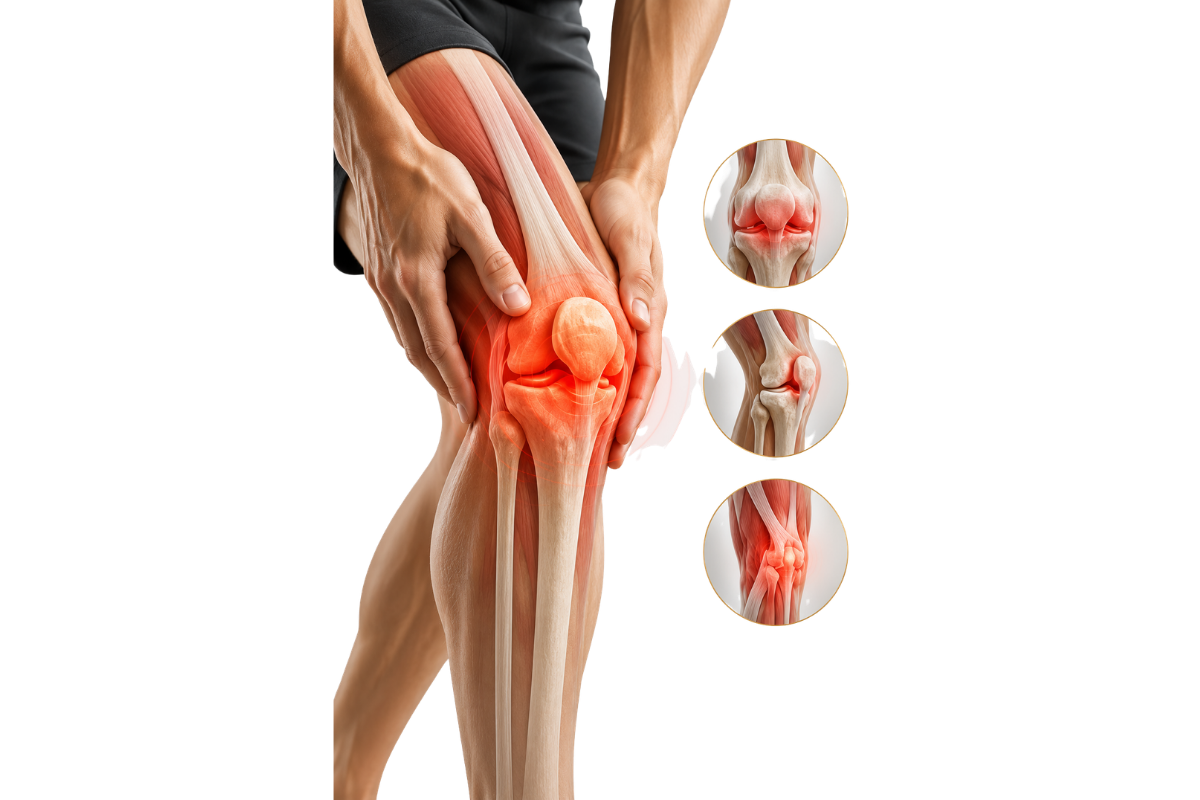
QUICK OVERVIEW
MCL Injury at a Glance
COMMON SIGNS & SYMPTOMS
Is This What You're Feeling?
Pain on the Inside of the Knee
Pain is usually localized along the medial aspect of the knee.
Swelling
Mild to moderate swelling may develop after the injury.
Tenderness
The ligament is often tender to touch along the inner knee.
Instability
The knee may feel unstable, particularly during side-to-side movements.
Difficulty Walking
Walking may be uncomfortable, especially in the early stages.
Pain During Twisting
Changing direction or pivoting often aggravates symptoms.
Reduced Knee Movement
Bending or straightening the knee may feel painful.
Difficulty Returning to Sport
Running, cutting, and pivoting may remain difficult until rehabilitation is complete.
COMMON CAUSES
Why Does It Happen?
Direct Blow to the Outside of the Knee
The most common mechanism, forcing the knee inward (valgus stress).
Twisting Injury
Rapid changes in direction while the foot is planted.
Contact Sports
Football, rugby, hockey, kabaddi, and martial arts commonly involve MCL injuries.
Skiing
Falls with the ski fixed to the boot can place excessive stress on the MCL.
Falls
Landing awkwardly or slipping may injure the ligament.
Combined Ligament Injury
MCL injuries may occur alongside ACL tears, meniscal injuries, or other ligament damage.
RISK FACTORS
Who Is Most at Risk?
Football Players
Rugby Players
Skiers
Hockey Players
Martial Arts Athletes
Individuals with Previous Knee Injuries
Previous ligament injuries may increase future risk.
Active Adults
Participation in pivoting or contact sports increases exposure.
DIAGNOSIS
How Is It Diagnosed?
Clinical Assessment
Medical History
- Injury mechanism
- Pain location
- Swelling
- Instability
- Ability to walk
- Sporting activities
- Previous knee injuries
Physical Examination
- Knee swelling
- Range of motion
- Tenderness
- Walking pattern
- Muscle strength
- Functional movements
Special Tests & Imaging
Special Tests
- Valgus Stress Test at 30° knee flexion (primary test)
- Valgus Stress Test in full extension
- Ligament testing for ACL, PCL, and LCL
- Meniscus assessment when indicated
Diagnosis is based on your history, examination findings, and imaging when appropriate.
Imaging
X-rays may be used to rule out fractures. MRI may be recommended when a Grade III injury is suspected, multiple ligament injuries are possible, meniscal injury is suspected, or surgery is being considered. Routine MRI is not necessary for every isolated MCL injury.
SEEKING HELP
When Should You Get Help?
Self-Management
Appropriate if:
- Mild pain
- Improving symptoms
- Able to walk comfortably
- No significant instability
Book a Physiotherapy Assessment
Recommended if:
- Persistent pain
- Knee instability
- Swelling continues
- Difficulty walking
- Difficulty returning to sport
Seek Immediate Medical Attention
Seek urgent medical assessment if you experience:
- Obvious knee deformity
- Inability to bear weight
- Severe trauma
- Significant numbness
- Loss of circulation
- Suspected fracture or knee dislocation
TREATMENT OPTIONS
Treatment Options
Education
Understanding the injury grade and expected healing timeline helps guide rehabilitation.
Bracing
Some Grade II and Grade III injuries may benefit from a hinged knee brace during the early stages to protect healing while allowing controlled movement.
Exercise Therapy
Progressive strengthening, balance training, and functional rehabilitation form the foundation of treatment.
Activity Modification
High-impact, cutting, and pivoting activities are temporarily reduced while the ligament heals.
Medication
Pain-relieving medication may be appropriate under medical supervision during the early recovery period.
Surgery
Surgery is rarely required for isolated MCL injuries. It may be considered when multiple ligaments are injured, the ligament does not heal adequately, or there is persistent instability despite comprehensive rehabilitation.
PHYSIOTHERAPY
How Physiotherapy Helps
Physiotherapy aims to restore knee stability, movement, strength, and confidence while reducing the risk of reinjury.
Treatment may include:
- Pain and swelling management
- Range-of-motion exercises
- Quadriceps and hamstring strengthening
- Hip strengthening
- Balance and proprioception training
- Walking retraining
- Running progression
- Agility drills
- Sport-specific rehabilitation
- Return-to-sport testing
RECOVERY JOURNEY
Recovery Timeline
Recovery is guided by symptoms, knee stability, strength, and function — not time alone.
EXERCISE LIBRARY
Recommended Exercises
Quadriceps Sets
EasyTarget: Quadriceps activation
Repetitions: 10–15 holds
Straight Leg Raise
EasyTarget: Quadriceps
Repetitions: 10–15 × 2–3 sets
Mini Squats
ModerateTarget: Functional lower-limb strength
Repetitions: 10–15 × 3 sets
Step-Ups
ModerateTarget: Knee stability
Repetitions: 10 each leg
Side-Lying Hip Abduction
ModerateTarget: Gluteus medius
Repetitions: 10–15 × 3 sets
Single-Leg Balance
ModerateTarget: Proprioception and stability
Hold: 30 seconds × 3 repetitions
LONG-TERM HEALTH
Prevention Tips
Strengthen the Lower Limb
Strong quadriceps, hamstrings, calves, and gluteal muscles support knee stability.
Improve Balance
Neuromuscular training reduces the risk of ligament injuries.
Warm Up Before Sport
Complete a structured warm-up before training and competition.
Practise Good Landing Mechanics
Proper jumping and landing techniques reduce knee loading.
Progress Training Gradually
Avoid sudden increases in training intensity or volume.
Complete Rehabilitation
Returning to sport before meeting objective criteria increases the risk of reinjury.
EXPLORE MORE
Related Conditions
ACL Injury Rehabilitation
PCL Injury
LCL Injury
Meniscus Injury
Knee Pain
Patellofemoral Pain Syndrome
Knee Osteoarthritis
Cartilage Injury
Multi-Ligament Knee Injury
Post-Surgical Rehabilitation
Restore Knee Stability and Return with Confidence
Whether you've sustained a mild MCL sprain or a more significant ligament injury, early physiotherapy plays a key role in recovery. A personalised rehabilitation programme can reduce pain, rebuild strength, restore knee stability, and help you safely return to work, sport, and everyday activities.
Book Your Knee Assessment TodayMost isolated MCL injuries heal successfully with structured physiotherapy and progressive rehabilitation.