
Elbow Pain
Understand what may be causing your elbow pain, how physiotherapy can help, and the safest way to regain strength and comfortable movement.
Elbow pain can make everyday tasks such as lifting, gripping, typing, carrying groceries, playing sports, or shaking hands uncomfortable.
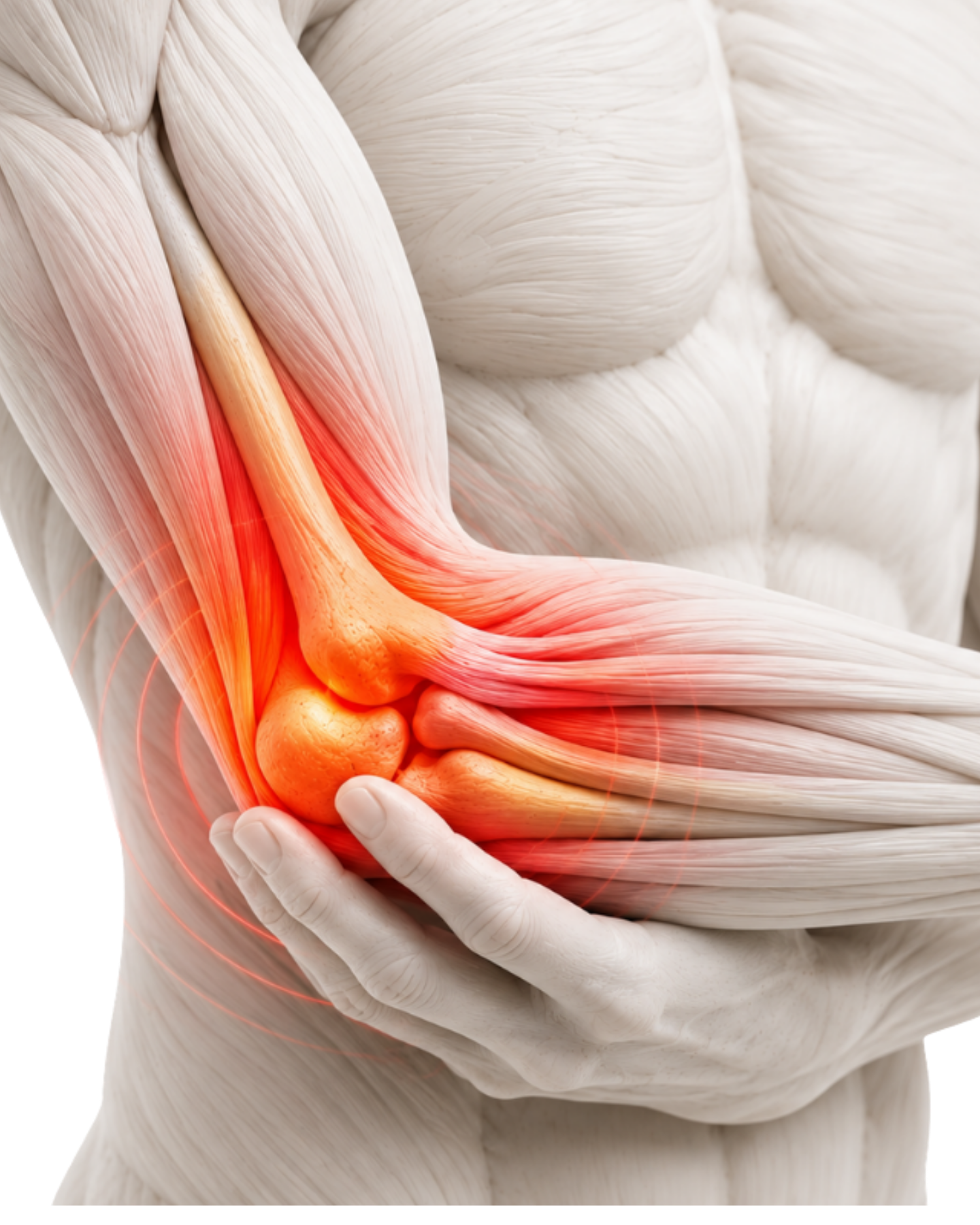
QUICK OVERVIEW
Elbow Pain at a Glance
COMMON SIGNS & SYMPTOMS
Is This What You're Feeling?
Elbow Pain
Pain around the elbow during daily activities or at rest.
Pain While Gripping
Difficulty holding tools, opening jars, carrying bags, or shaking hands.
Pain During Lifting
Discomfort while lifting objects or performing household tasks.
Tenderness
Pain when pressing on the inner or outer part of the elbow.
Stiffness
Difficulty fully bending or straightening the elbow.
Weak Grip Strength
Reduced ability to grip objects firmly due to pain or weakness.
Tingling or Numbness
Tingling or numbness in the ring and little fingers (possible ulnar nerve irritation).
Pain During Sports
Symptoms may worsen with tennis, golf, weightlifting, or racquet sports.
COMMON CAUSES
Why Does It Happen?
Lateral Elbow Tendinopathy (Tennis Elbow)
Most common cause of outer elbow pain due to overload of wrist extensor tendons.
Medial Elbow Tendinopathy (Golfer's Elbow)
Pain on the inner elbow related to overload of wrist flexor tendons.
Repetitive Overuse
Repeated gripping, lifting, typing, or manual work can overload elbow tissues.
Ligament Injury
Sports or traumatic injuries can strain or tear elbow ligaments.
Nerve Compression
Ulnar nerve or other nerves around the elbow can become compressed.
Arthritis
Age-related joint changes or inflammatory conditions may cause pain and stiffness.
Trauma
Falls, direct blows, fractures, or dislocations can injure the elbow.
RISK FACTORS
Who Is Most at Risk?
Office Workers
Frequent keyboard and mouse use with prolonged static positions.
Manual Workers
Repeated gripping, lifting, hammering, or tool use.
Racquet Sport Athletes
Tennis, badminton, squash, and pickleball players.
Golfers
Repeated swinging may overload the inner elbow.
Weightlifters
Heavy gripping and repetitive loading of forearm muscles.
Throwing Athletes
Baseball, cricket, javelin, and overhead throwing sports.
Individuals with Previous Elbow Injuries
Previous injury increases likelihood of future symptoms.
DIAGNOSIS
How Is It Diagnosed?
Clinical Assessment
Medical History
- When symptoms started
- Pain location
- Repetitive activities
- Sporting participation
- Previous injuries
- Tingling or numbness
- Aggravating movements
- Occupation
Physical Examination
- Elbow range of motion
- Grip strength
- Muscle strength
- Joint stability
- Functional tasks
- Neck and shoulder screening
Special Tests & Imaging
Special Tests
- Tennis elbow
- Golfer's elbow
- Ligament injuries
- Ulnar nerve irritation
- Distal biceps tendon injury
- Joint instability
Diagnosis is based on your history, examination findings, and clinical reasoning.
Imaging
Routine imaging is not necessary for many elbow conditions. X-rays, ultrasound, or MRI may be recommended when a fracture is suspected, significant trauma has occurred, tendon rupture is suspected, symptoms persist despite rehabilitation, or surgery is being considered.
SEEKING HELP
When Should You Get Help?
Self-Management
Usually appropriate if:
- Mild pain
- Improving symptoms
- Full elbow movement
- No numbness or weakness
Book a Physiotherapy Assessment
Recommended if:
- Pain lasts longer than 1–2 weeks
- Reduced grip strength
- Pain affecting work or sport
- Increasing stiffness
- Recurrent elbow pain
Seek Immediate Medical Attention
Seek urgent assessment if you experience:
- Obvious elbow deformity after trauma
- Inability to move the elbow after injury
- Sudden severe swelling
- Suspected fracture or dislocation
- Fever with painful swollen elbow
- Progressive numbness/weakness in hand
- Loss of circulation in the arm
TREATMENT
Treatment Options
Education
Understanding your diagnosis and remaining appropriately active are key for recovery.
Exercise Therapy
Progressive strengthening of forearm, wrist, shoulder, and upper limb.
Manual Therapy
Joint mobilization and soft tissue techniques may help when combined with exercise.
Activity Modification
Temporarily reducing aggravating activities supports recovery.
Medication
Short-term pain relief may be appropriate under medical supervision.
Injections
May be considered for persistent tendinopathy after specialist evaluation.
Surgery
Reserved for tendon ruptures, persistent nerve compression, significant ligament injuries, or severe arthritis.
PHYSIOTHERAPY
How Physiotherapy Helps
Treatment may include:
- Individualized rehabilitation programmes
- Tendon loading programmes
- Grip strengthening
- Wrist and forearm strengthening
- Shoulder and scapular strengthening
- Manual therapy when indicated
- Activity modification advice
- Return-to-work & return-to-sport planning
RECOVERY JOURNEY
Recovery Timeline
EXERCISE LIBRARY
Recommended Exercises
Wrist Extensor Isometric Hold
EasyTarget: Wrist extensor tendons
Hold: 10–20 seconds × 8–10 reps
Precaution: Mild discomfort is acceptable, but avoid severe pain.
Wrist Extension with Band
ModerateTarget: Wrist extensors
Reps: 10–15 × 2–3 sets
Wrist Flexion with Band
ModerateTarget: Wrist flexors
Reps: 10–15 × 2–3 sets
Forearm Pronation/Supination
EasyTarget: Forearm rotators
Reps: 10–15 × 2 sets
Grip Strengthening
ModerateTarget: Hand & forearm muscles
Reps: 10–15 squeezes × 2–3 sets
Biceps Curl (Light)
ModerateTarget: Biceps & elbow flexors
Reps: 10–12 × 2 sets
LONG-TERM HEALTH
Prevention Tips
Build Forearm Strength
Regular strengthening improves tendon and muscle capacity.
Warm Up Before Sport
Prepare wrist, forearm, and shoulder before activity.
Improve Technique
Correct technique reduces excessive stress on the elbow.
Progress Gradually
Avoid sudden increases in training volume or gripping tasks.
Take Regular Breaks
Schedule movement breaks during repetitive work.
Strengthen the Shoulder
Strong shoulders help distribute forces better through the arm.
EXPLORE MORE
Related Conditions
Tennis Elbow
Golfer's Elbow
Cubital Tunnel Syndrome
Radial Tunnel Syndrome
Distal Biceps Tendon Injury
Triceps Tendinopathy
Elbow Osteoarthritis
Ulnar Collateral Ligament Injury
Olecranon Bursitis
Cervical Radiculopathy
Ready to Use Your Arm Without Pain?
If elbow pain is affecting your work, sport, exercise, or everyday activities, a physiotherapy assessment can help identify the underlying cause and create a personalised rehabilitation plan.
Book Your Physiotherapy Assessment TodayEarly intervention often leads to faster and better outcomes.