
Rotator Cuff Injury
Pain when lifting your arm or reaching overhead? Learn what rotator cuff injuries are, how they're diagnosed, and how physiotherapy can help restore shoulder strength and movement.
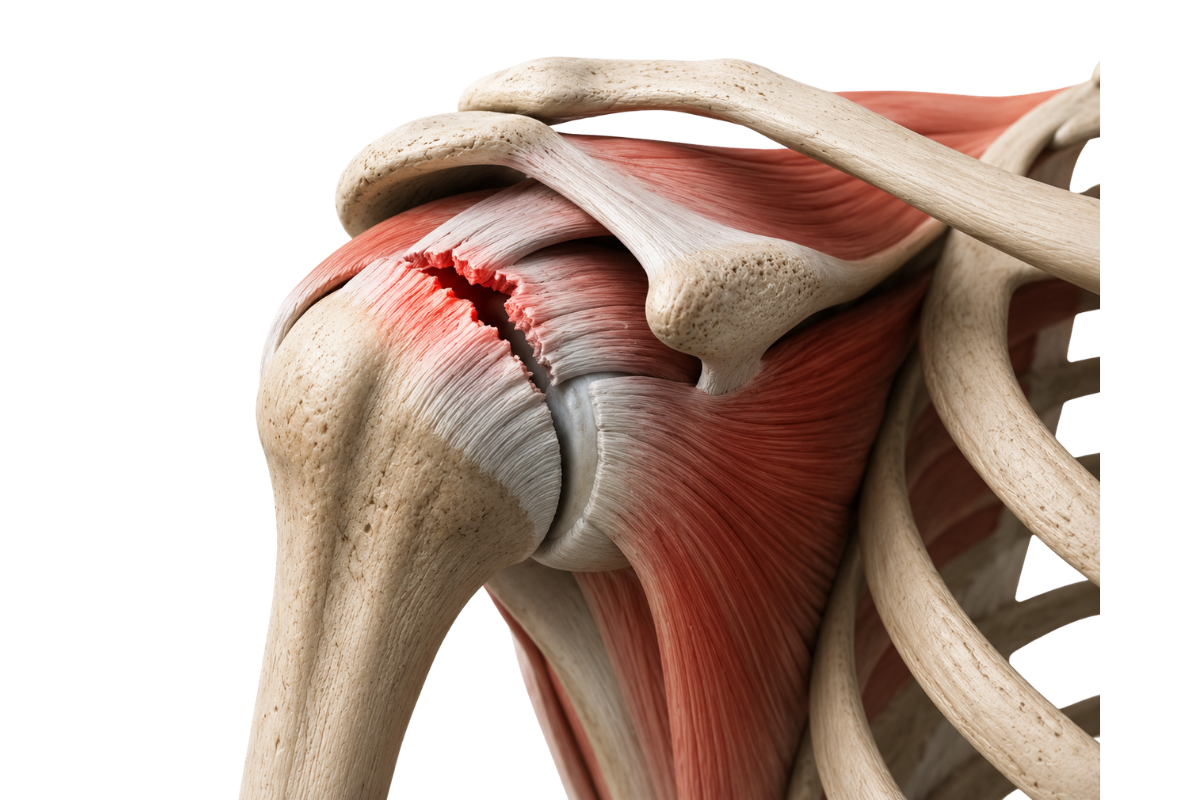
The rotator cuff is a group of four muscles and tendons that help stabilize and move the shoulder. Injuries can range from tendon overload (tendinopathy) to partial or full-thickness tears. Many people recover successfully with physiotherapy.
QUICK OVERVIEW
Rotator Cuff Injury at a Glance
COMMON SIGNS & SYMPTOMS
Is This What You're Feeling?
Shoulder Pain
Pain over the outer shoulder that may spread into the upper arm.
Pain During Overhead Activities
Reaching into cupboards, lifting objects, or throwing may increase symptoms.
Night Pain
Pain when lying on the affected shoulder is common.
Weakness
Difficulty lifting the arm or reduced strength during pushing, pulling, or reaching.
Painful Arc
Pain while raising the arm, particularly between approximately 60° and 120° of elevation.
Difficulty Reaching Behind Your Back
Activities such as fastening a bra or tucking in a shirt may become painful.
Reduced Shoulder Function
Tasks such as dressing, washing your hair, or lifting groceries may become difficult.
Clicking or Catching
Some people notice clicking or catching during shoulder movement. This alone does not necessarily indicate a tear.
COMMON CAUSES
Why Does It Happen?
Tendon Overload
Repeated overhead activity can exceed the tendon's ability to recover.
Degenerative Changes
Age-related changes make rotator cuff tendons more susceptible to injury over time.
Traumatic Injury
Falls onto an outstretched arm, heavy lifting, or shoulder dislocations can cause acute tears.
Repetitive Overhead Work
Painting, construction work, swimming, throwing sports, and racquet sports increase tendon loading.
Muscle Weakness
Weakness of the rotator cuff or shoulder blade muscles can alter shoulder mechanics and increase tendon stress.
Poor Load Management
Sudden increases in gym training, throwing volume, or overhead work may overload the rotator cuff.
RISK FACTORS
Who Is Most at Risk?
Adults Over 50 Years
Degenerative tendon tears become more common with age.
Overhead Athletes
Swimmers, tennis players, volleyball players, baseball and cricket players.
Manual Workers
Painters, electricians, carpenters, mechanics, and construction workers.
Weightlifters
Heavy overhead pressing and repetitive upper-body training.
Individuals with Previous Shoulder Injuries
Prior shoulder injuries increase the likelihood of future symptoms.
People Performing Repetitive Overhead Tasks
Occupational or recreational activities involving frequent overhead reaching.
DIAGNOSIS
How Is It Diagnosed?
Clinical Assessment
Medical History
- Pain location
- Night pain
- Weakness
- Previous injuries
- Sporting activities
- Occupation
- Difficulty with daily activities
- Sudden or gradual onset
Physical Examination
- Shoulder range of motion
- Muscle strength
- Functional tasks
- Shoulder blade movement
- Cervical spine screening when appropriate
Special Tests & Imaging
Special Tests
- Empty Can (Jobe) Test
- Full Can Test
- External Rotation Lag Sign
- Drop Arm Test
- Lift-Off Test
- Belly Press Test
- Hawkins-Kennedy Test
- Painful Arc Assessment
No single special test can accurately diagnose every rotator cuff injury. Diagnosis is based on your history, examination findings, and imaging when appropriate.
Imaging
Ultrasound and MRI can identify tendon tears and other shoulder pathology. Imaging may be recommended when a traumatic full-thickness tear is suspected, significant weakness is present, symptoms persist despite rehabilitation, or surgery is being considered.
Important: Many people, particularly over the age of 50, have rotator cuff tears on imaging without any pain or functional limitation.
SEEKING HELP
When Should You Get Help?
Self-Management
Usually appropriate if:
- Mild shoulder pain
- Improving symptoms
- Able to lift the arm comfortably
- No significant weakness
Book a Physiotherapy Assessment
Recommended if:
- Pain lasts longer than two weeks
- Difficulty lifting the arm
- Night pain affecting sleep
- Reduced shoulder strength
- Difficulty working or playing sport
Seek Immediate Medical Attention
Seek urgent assessment if you experience:
- Sudden inability to lift the arm after trauma
- Obvious shoulder deformity
- Severe pain following a fall
- Fever with a painful, swollen shoulder
- Progressive numbness or weakness affecting the arm or hand
- Suspected fracture or shoulder dislocation
TREATMENT OPTIONS
Treatment Options
Education
Understanding your diagnosis, modifying aggravating activities, and gradually reloading the shoulder are essential for recovery.
Exercise Therapy
Progressive strengthening of the rotator cuff and scapular muscles is considered the cornerstone of treatment.
Manual Therapy
Joint mobilization and soft tissue techniques may provide short-term symptom relief when combined with exercise.
Activity Modification
Temporary reduction of painful overhead activities while maintaining comfortable movement supports tendon recovery.
Medication
Pain-relieving medication may be appropriate under medical supervision during the early stages.
Injections
Subacromial corticosteroid injections may provide short-term pain relief for selected individuals but should be considered alongside rehabilitation.
Surgery
Surgery may be appropriate for acute traumatic full-thickness tears, persistent symptoms despite rehabilitation, significant functional weakness, or selected large or repairable tears. Many degenerative tears improve without surgery.
PHYSIOTHERAPY
How Physiotherapy Helps
Physiotherapy aims to reduce pain, restore movement, improve shoulder strength, and safely return you to work, exercise, and sport.
Treatment may include:
- Progressive rotator cuff strengthening
- Scapular strengthening
- Shoulder mobility exercises
- Manual therapy when indicated
- Load management advice
- Postural education
- Functional retraining
- Return-to-work planning
- Return-to-sport progression
- Long-term injury prevention
RECOVERY JOURNEY
Recovery Timeline
EXERCISE LIBRARY
Recommended Exercises
Pendulum Exercise
EasyTarget: Gentle shoulder mobility
Repetitions: 30–60 seconds × 2–3 sets
Isometric External Rotation
EasyTarget: Rotator cuff activation
Hold: 10 seconds × 10 repetitions
Resistance Band External Rotation
ModerateTarget: Infraspinatus and teres minor
Repetitions: 10–15 × 3 sets
Scaption Raise
ModerateTarget: Supraspinatus and deltoid
Repetitions: 10–15 × 3 sets
Wall Slides
ModerateTarget: Shoulder mobility and scapular control
Repetitions: 10–15
Serratus Anterior Punch
ModerateTarget: Serratus anterior
Repetitions: 10–15 × 2–3 sets
LONG-TERM HEALTH
Prevention Tips
Strengthen the Rotator Cuff
Regular strengthening improves tendon capacity and shoulder stability.
Strengthen the Shoulder Blade Muscles
Scapular control plays an important role in efficient shoulder movement.
Warm Up Before Sport
Prepare the shoulder before throwing, swimming, weight training, or racquet sports.
Progress Training Gradually
Avoid sudden increases in overhead activity or gym volume.
Improve Lifting Technique
Use appropriate technique during work and exercise to reduce unnecessary shoulder loading.
Complete Rehabilitation After Injury
Returning to sport too early increases the risk of reinjury.
EXPLORE MORE
Related Conditions
Shoulder Pain
Frozen Shoulder
Shoulder Bursitis
Biceps Tendinopathy
Calcific Tendinopathy
Shoulder Instability
Acromioclavicular Joint Pain
Cervical Radiculopathy
Shoulder Osteoarthritis
Subacromial Pain Syndrome
LEARN MORE
Related Resources
Restore Strong, Pain-Free Shoulder Movement
If shoulder pain is making it difficult to lift your arm, sleep comfortably, work, or play sport, a physiotherapy assessment can help identify whether a rotator cuff injury is contributing to your symptoms. We'll create a personalised rehabilitation plan to reduce pain, rebuild strength, and help you return to the activities you enjoy with confidence.
Book Your Shoulder Assessment TodayMost rotator cuff injuries improve well with structured physiotherapy and progressive loading.