
TMJ Disorders
Jaw pain, clicking, or difficulty opening your mouth? Learn what TMJ disorders are, how they're diagnosed, and how physiotherapy can help restore comfortable jaw movement.
Temporomandibular disorders affect the jaw joint, chewing muscles, and surrounding tissues. They can cause jaw pain, clicking, stiffness, headaches, and difficulty eating or speaking. Most people improve with education, self-management, exercise, and physiotherapy without the need for surgery.
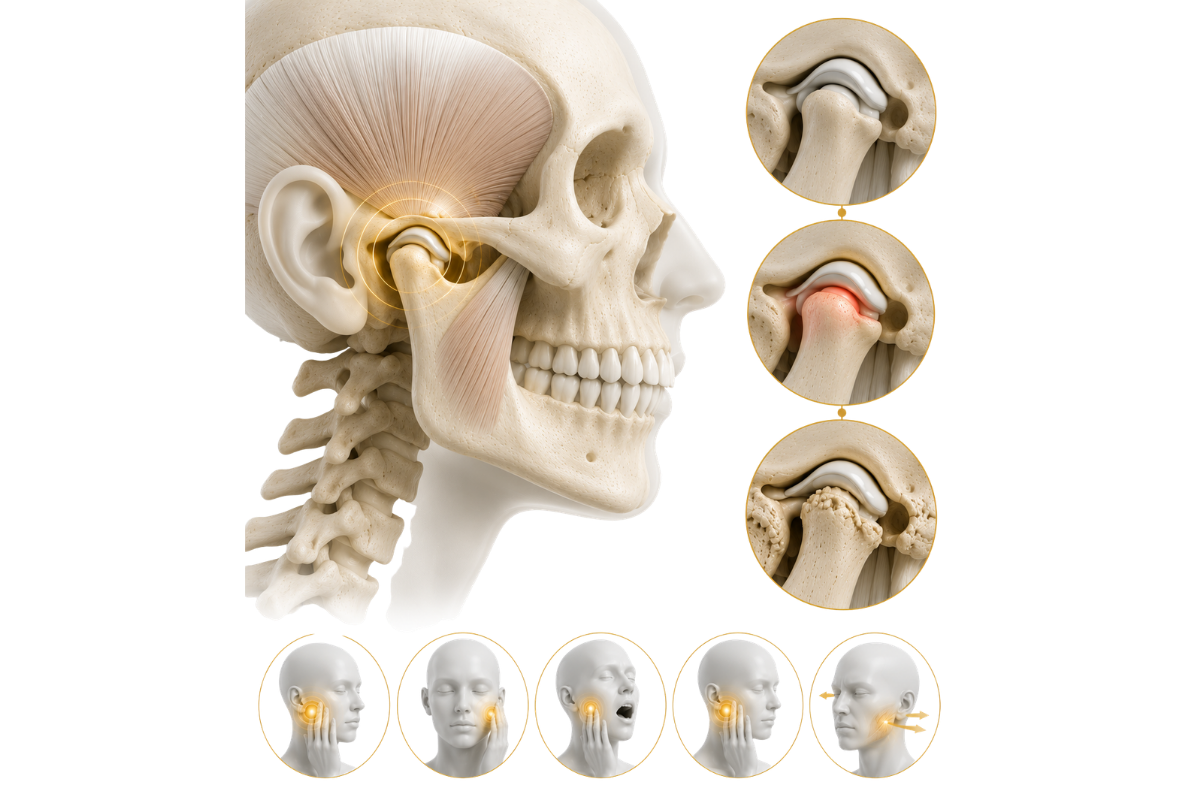
QUICK OVERVIEW
TMJ Disorders at a Glance
COMMON SIGNS & SYMPTOMS
Is This What You're Feeling?
Jaw Pain
Pain around one or both jaw joints, especially during chewing or talking.
Clicking or Popping
A clicking or popping sound when opening or closing the mouth. This may or may not be painful.
Difficulty Opening the Mouth
Reduced mouth opening or a feeling of stiffness.
Jaw Locking
The jaw may temporarily lock in an open or closed position, making movement difficult.
Pain While Chewing
Eating tough or chewy foods may increase symptoms.
Headaches
Pain around the temples or forehead, often associated with jaw muscle tension.
Ear Symptoms
Some people experience a feeling of fullness around the ear, although hearing loss or infection is not typically caused by TMD.
Neck Pain
Jaw disorders often coexist with neck pain due to the close relationship between jaw and cervical muscle function.
COMMON CAUSES
Why Does It Happen?
Jaw Muscle Overload
Overuse of the chewing muscles can lead to pain and muscle tenderness.
Teeth Clenching or Grinding (Bruxism)
Clenching or grinding, particularly during sleep, can overload the jaw muscles and joints.
Disc Displacement
The cushioning disc inside the joint may move out of its normal position, causing clicking or locking.
Trauma
Falls, sports injuries, or direct blows to the jaw may damage the joint or surrounding tissues.
Osteoarthritis
Age-related changes may affect the temporomandibular joint in some individuals.
Stress
Stress may contribute to jaw muscle tension and increased clenching in susceptible individuals.
Prolonged Mouth Opening
Dental procedures or prolonged mouth opening can temporarily aggravate symptoms.
RISK FACTORS
Who Is Most at Risk?
Adults Aged 20–50 Years
The condition is most commonly diagnosed in this age group.
People Who Clench or Grind Their Teeth
Bruxism increases loading on the jaw muscles and joints.
Individuals with Neck Pain
Neck dysfunction commonly coexists with TMD.
People Under High Stress
Stress may contribute to increased jaw muscle activity.
Musicians
Instrument use involving prolonged jaw positioning may increase loading.
Individuals with Previous Jaw Trauma
History of facial injury increases the risk of TMJ disorders.
DIAGNOSIS
How Is It Diagnosed?
Clinical Assessment
Medical History
- Jaw pain
- Clicking or locking
- Difficulty chewing
- Headaches
- Neck pain
- Teeth grinding
- Previous dental work
- Trauma
- Stress
Physical Examination
- Mouth opening range
- Jaw movement
- Muscle tenderness
- Joint sounds
- Neck movement
- Cervical muscle assessment
Special Tests & Imaging
Special Tests
- Jaw opening measurement
- Joint palpation
- Muscle palpation
- Functional chewing assessment
- Cervical spine screening
Diagnosis follows internationally accepted Diagnostic Criteria for Temporomandibular Disorders (DC/TMD) where appropriate.
Imaging
Routine imaging is not required for most individuals. MRI may be considered when persistent jaw locking occurs, disc displacement is suspected, or surgery is being considered. CT scans may be used when significant joint degeneration or fracture is suspected.
SEEKING HELP
When Should You Get Help?
Self-Management
Usually appropriate if:
- Mild jaw discomfort
- Occasional clicking without pain
- Symptoms improve with rest
Book a Physiotherapy Assessment
Recommended if:
- Jaw pain lasts longer than two weeks
- Difficulty opening the mouth
- Pain while eating
- Frequent headaches
- Associated neck pain
- Recurrent jaw locking
Seek Immediate Medical Attention
Seek urgent assessment if you experience:
- Jaw dislocation that will not relocate
- Significant facial trauma
- Fever with facial swelling
- Rapidly worsening swelling
- Difficulty breathing or swallowing
- Suspected fracture
TREATMENT OPTIONS
Treatment Options
Education
Understanding the condition, avoiding excessive jaw loading, and modifying habits are essential parts of treatment.
Exercise Therapy
Gentle jaw mobility, coordination, and strengthening exercises help restore normal jaw function.
Manual Therapy
Joint mobilization and soft tissue techniques targeting the jaw and cervical spine may reduce pain and improve movement when combined with exercise.
Behavioural Strategies
Reducing clenching habits, improving relaxation, and addressing contributing factors can help reduce symptom recurrence.
Oral Appliances
Night guards or occlusal splints may be recommended by a dentist for selected individuals with significant bruxism.
Medication
Pain-relieving medication may be appropriate under medical supervision for short-term symptom management.
Surgery
Surgery is rarely required and is generally reserved for severe structural joint disorders that do not respond to comprehensive conservative treatment.
PHYSIOTHERAPY
How Physiotherapy Helps
Physiotherapy aims to reduce pain, improve jaw movement, restore muscle function, and address contributing neck dysfunction.
Treatment may include:
- Jaw mobility exercises
- Motor control training
- Manual therapy
- Cervical spine treatment
- Postural education
- Relaxation strategies
- Home exercise programme
- Advice on eating and jaw loading
- Long-term self-management strategies
RECOVERY JOURNEY
Recovery Timeline
EXERCISE LIBRARY
Recommended Exercises
Controlled Jaw Opening
EasyTarget: Jaw movement coordination
Repetitions: 10 slow repetitions
Tongue-Up Exercise
EasyTarget: Controlled jaw opening
Repetitions: 10 repetitions
Keep the tongue lightly against the roof of the mouth while opening.
Chin Tucks
EasyTarget: Deep neck flexors
Repetitions: 10–15 × 2 sets
Gentle Isometric Jaw Exercise
ModerateTarget: Jaw stabilizing muscles
Hold: 5 seconds × 10 repetitions
Scapular Retraction
EasyTarget: Postural muscles
Repetitions: 12–15 × 2 sets
Cervical Rotation
EasyTarget: Neck mobility
Repetitions: 10 each direction
LONG-TERM HEALTH
Prevention Tips
Avoid Clenching Your Teeth
Keep your teeth slightly apart when resting, with your lips gently closed.
Avoid Excessive Chewing
Limit gum chewing and very hard or chewy foods during symptom flare-ups.
Manage Stress
Relaxation techniques may help reduce jaw muscle tension in some individuals.
Maintain Good Neck Posture
Improving cervical posture may reduce strain on the jaw and surrounding muscles.
Take Breaks During Long Conversations
If speaking for prolonged periods, give your jaw regular rest.
Complete Your Rehabilitation
Continue prescribed exercises even after symptoms improve to reduce the likelihood of recurrence.
EXPLORE MORE
Related Conditions
Neck Pain
Cervical Spondylosis
Cervicogenic Headache
Tension-Type Headache
Migraine
Facial Pain
Bruxism (Teeth Grinding)
Shoulder Pain
Upper Crossed Syndrome
Myofascial Pain Syndrome
Eat, Speak, and Smile Without Jaw Pain
If jaw pain, clicking, headaches, or difficulty chewing are affecting your daily life, a physiotherapy assessment can help determine whether a temporomandibular disorder is contributing to your symptoms. We'll create a personalised rehabilitation plan to improve jaw movement, reduce pain, and restore comfortable function.
Book Your TMJ Assessment TodayMost people with TMJ disorders recover well with conservative physiotherapy and self-management strategies.