
Frozen Shoulder
Struggling to lift your arm or reach behind your back? Learn why frozen shoulder develops, what to expect during recovery, and how physiotherapy can help restore movement safely.
Frozen shoulder causes pain and progressive stiffness of the shoulder joint, making everyday activities such as dressing, reaching overhead, fastening a bra, or sleeping on the affected side increasingly difficult.
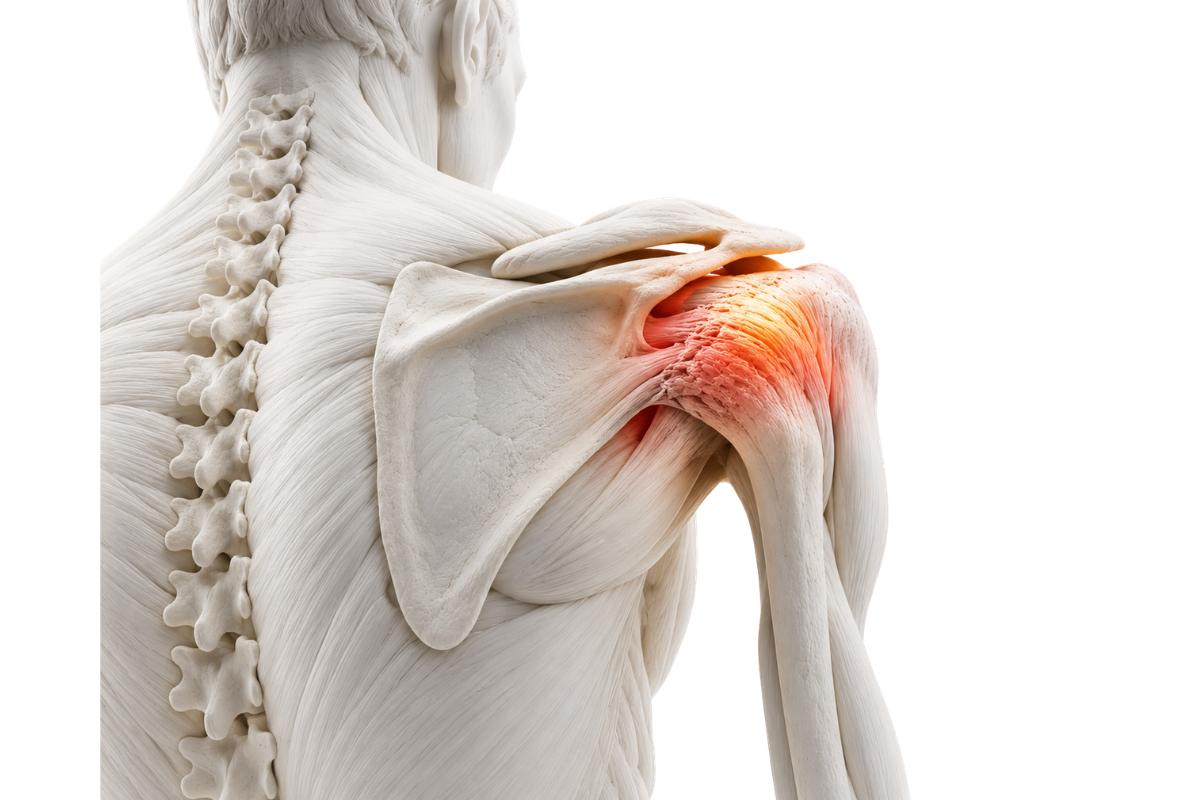
QUICK OVERVIEW
Frozen Shoulder at a Glance
COMMON SIGNS & SYMPTOMS
Is This What You're Feeling?
Progressive Shoulder Pain
Pain usually begins gradually and worsens over time.
Severe Stiffness
Difficulty lifting your arm, reaching overhead, or reaching behind your back.
Pain at Night
Pain often disrupts sleep, particularly when lying on the affected shoulder.
Difficulty Dressing
Simple tasks such as putting on a shirt, fastening a bra, or putting on a jacket become challenging.
Limited Shoulder Movement
Both active and passive shoulder movement become restricted.
Pain While Reaching
Activities such as reaching into a cupboard or washing your hair become difficult.
Reduced Function
Everyday activities become increasingly limited due to stiffness rather than weakness alone.
COMMON CAUSES
Why Does It Happen?
Primary (Idiopathic) Frozen Shoulder
Develops without a clearly identifiable cause. The exact reason remains unclear.
Secondary Frozen Shoulder
May develop after shoulder surgery, fractures, rotator cuff injuries, prolonged immobilisation, or previous shoulder trauma.
Diabetes
People with diabetes have a significantly higher risk and may experience a longer recovery.
Thyroid Disorders
Both hypothyroidism and hyperthyroidism are associated with an increased risk.
Prolonged Immobilisation
Keeping the shoulder still for long periods after injury or surgery may contribute to stiffness.
Age-Related Risk
Frozen shoulder most commonly affects adults between 40 and 60 years of age.
RISK FACTORS
Who Is Most at Risk?
Adults Aged 40–60 Years
The condition is uncommon in younger adults.
People with Diabetes
One of the strongest known risk factors.
People with Thyroid Disorders
Higher prevalence compared with the general population.
Individuals Recovering from Shoulder Injury or Surgery
Periods of reduced shoulder movement increase the risk.
Women
Frozen shoulder is reported slightly more frequently in women than men.
Individuals with Previous Frozen Shoulder
Higher chance of developing it in the opposite shoulder.
DIAGNOSIS
How Is It Diagnosed?
Clinical Assessment
Medical History
- Gradual onset of symptoms
- Night pain
- Shoulder stiffness
- Difficulty with daily activities
- Previous injuries or surgery
- Diabetes or thyroid disease
- Duration of symptoms
Physical Examination
- Active shoulder movement
- Passive shoulder movement
- Functional limitations
- Pain pattern
- Shoulder strength (where possible)
Special Tests & Imaging
Special Tests
- Used primarily to rule out other conditions
- Rotator cuff tears
- Shoulder instability
- Acromioclavicular joint disorders
- Cervical spine referral
A hallmark feature is a global reduction in both active and passive shoulder range of motion, particularly external rotation.
Imaging
Frozen shoulder is primarily a clinical diagnosis. X-rays may be used to exclude arthritis or fractures. MRI or ultrasound is generally not required unless another condition is suspected.
SEEKING HELP
When Should You Get Help?
Monitor Symptoms
Appropriate if:
- Mild stiffness
- Symptoms are stable
- Daily activities remain manageable
Book a Physiotherapy Assessment
Recommended if:
- Shoulder stiffness progressively worsens
- Pain affects sleep
- Difficulty dressing or reaching overhead
- Symptoms persist for more than two weeks
- Loss of movement continues to increase
Seek Urgent Medical Assessment
Seek prompt medical evaluation if you experience:
- Severe pain following significant trauma
- Fever with a painful, swollen shoulder
- Obvious shoulder deformity
- Sudden inability to move the arm after an injury
- Progressive numbness or weakness affecting the arm or hand
- Unexplained weight loss with persistent shoulder pain
TREATMENT
Treatment Options
Education
Understanding the natural course of frozen shoulder and maintaining appropriate shoulder movement are important parts of treatment.
Exercise Therapy
Gentle stretching and mobility exercises tailored to the stage of the condition help improve movement while respecting symptom irritability.
Manual Therapy
Joint mobilization may help improve pain and mobility when combined with exercise. The intensity should match the stage of the condition.
Pain Management
Pain-relieving medication may be appropriate under medical supervision to facilitate participation in rehabilitation.
Corticosteroid Injection
Intra-articular corticosteroid injections may provide short-term pain relief, particularly during the early painful stage.
Hydrodilatation
In selected cases, joint capsule distension (hydrodilatation) may be considered after specialist assessment.
Surgery
Manipulation under anaesthesia or arthroscopic capsular release may be considered for persistent severe stiffness after an adequate trial of conservative management.
PHYSIOTHERAPY
How Physiotherapy Helps
Physiotherapy aims to reduce pain, restore shoulder mobility, improve function, and guide you through each stage of recovery.
Treatment may include:
- Individualised mobility programme
- Gentle stretching
- Joint mobilization when appropriate
- Pain management strategies
- Progressive strengthening as movement improves
- Functional retraining
- Home exercise programme
- Education on pacing activities
- Long-term prevention of shoulder deconditioning
RECOVERY JOURNEY
Recovery Timeline
Increasing pain with gradually worsening stiffness. Treatment focuses on pain control, education, and maintaining gentle movement.
Pain often begins to settle, but stiffness remains significant. Rehabilitation emphasises restoring mobility and maintaining function.
Movement gradually improves, strength returns, and daily activities become easier. Continued exercise supports long-term recovery.
Recovery times vary between individuals and may overlap.
EXERCISE LIBRARY
Recommended Exercises
Pendulum Exercise
EasyTarget: Gentle shoulder mobility
Repetitions: 30–60 seconds × 2–3 sets
Table Slides
EasyTarget: Shoulder flexion mobility
Repetitions: 10–15
Assisted External Rotation with a Stick
ModerateTarget: External rotation mobility
Repetitions: 10 repetitions
Precaution: Stretch gently without forcing into severe pain.
Wall Walks
ModerateTarget: Shoulder elevation
Repetitions: 10 repetitions
Cross-Body Stretch
ModerateTarget: Posterior shoulder capsule
Hold: 20–30 seconds
Repeat: 3 times
Scapular Retraction
EasyTarget: Shoulder blade muscles
Repetitions: 12–15 × 2 sets
LONG-TERM HEALTH
Prevention Tips
Keep Your Shoulder Moving After Injury
Follow professional guidance to regain movement safely after surgery or injury.
Manage Medical Conditions
Good control of diabetes and appropriate management of thyroid disorders may reduce the risk of complications.
Stay Physically Active
Regular shoulder movement helps maintain mobility.
Follow Rehabilitation Programmes
Complete prescribed rehabilitation after shoulder injuries or surgery to minimise prolonged stiffness.
Avoid Prolonged Immobilisation
Use slings only for as long as medically necessary and begin guided movement when appropriate.
EXPLORE MORE
Related Conditions
Shoulder Pain
Rotator Cuff Tendinopathy
Rotator Cuff Tear
Shoulder Impingement
Shoulder Bursitis
Biceps Tendinopathy
Glenohumeral Osteoarthritis
Cervical Radiculopathy
Calcific Tendinopathy
Acromioclavicular Joint Pain
LEARN MORE
Related Resources
Ready to Get Your Shoulder Moving Again?
If shoulder pain and stiffness are making it difficult to dress, work, sleep, or reach overhead, a physiotherapy assessment can help confirm whether frozen shoulder is the cause and guide you through a personalised rehabilitation programme designed to restore movement safely and effectively.
Book Your Physiotherapy Assessment TodayEarly intervention often leads to faster and better outcomes.