
Affiliate disclosure: This post contains affiliate links. If you buy through them, PhysioGain may earn a small commission at no extra cost to you. I only list products I would be comfortable suggesting to my own patients. This guide is general information and not a substitute for a proper assessment by a doctor or physiotherapist.
“Sir, should I wear a belt for my back?” I get asked this almost daily in clinic. Sometimes by a young engineer whose back caught while lifting a suitcase, sometimes by an uncle who has worn the same belt for two years straight.
My honest answer is: a belt can help for a short while, in the right situation, if you use it the right way. It is a support, not a treatment. In this guide I will talk about the Tynor Lumbo Sacral Belt from the PhysioGain Healing Store: what it does, when it makes sense, when it does not, and how to wear it so it helps you get moving instead of keeping you stuck.
What the Tynor Lumbo Sacral Belt is
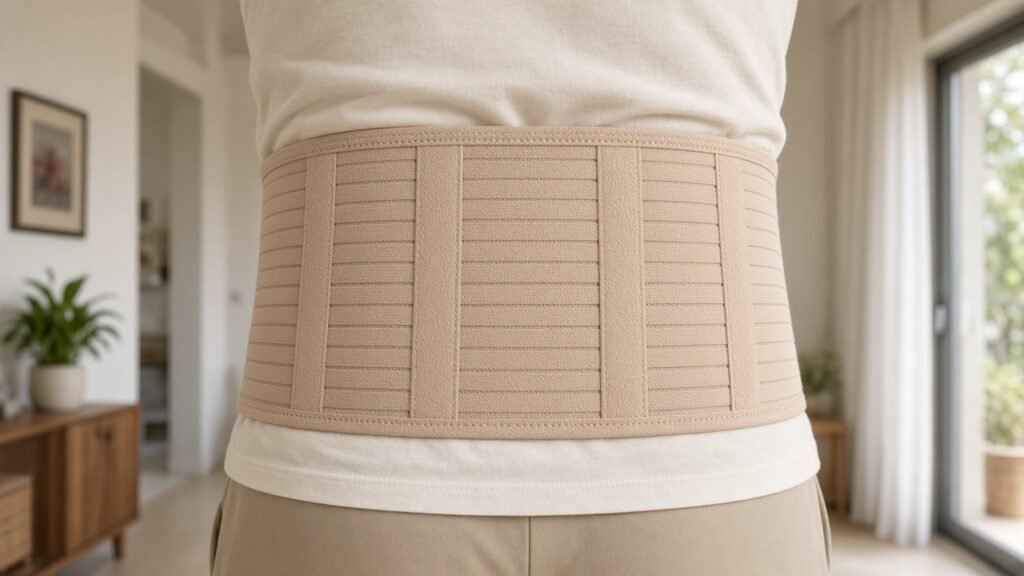
A lumbo sacral belt (often called an LS belt) wraps around the lowest part of your back, where the lumbar spine meets the sacrum, and the front of your tummy. Going by Tynor’s own product page (Tynor) and the Amazon listing, this belt has:
- Flexible back splints that follow the shape of your back and give firm but not rigid support
- Porous, breathable elastic so it does not get as sweaty as a solid fabric belt
- A double pull mechanism, which lets you add extra compression around the lower back
- A soft cushioned back pad and broad hook and loop panels for easy fitting and removal
- Sizes from S to XXL, measured around the navel (the Amazon link in this post is for size Large, which Tynor lists as 40 to 46 inches, or about 102 to 117 cm)
In simple words, it gives your lower back a firm hug, which can make movement feel safer when your back is sore.
What the evidence actually says about back belts
I want to be straight with you here. The UK’s NICE guideline on low back pain and sciatica (NICE NG59) advises clinicians not to offer belts or corsets for managing low back pain. The same guideline puts exercise, staying active and self-management at the centre of care.
So a belt is not going to fix a back problem on its own. The NHS also advises staying active and carrying on with your daily activities, and notes that back pain usually improves within a few weeks (NHS).
So why is it on our recommended list? Because some people are so scared of the pain that they stop moving. For a few of them, a firm belt for a few days gives enough confidence to get up, walk and start their exercises. That is the only job I want it to do.
When a lumbo sacral belt can help
In my experience, a belt like this is most useful as a short term comfort aid in situations like these:
- A fresh flare-up of ordinary low back pain, where you feel stiff and guarded and moving out of bed or a chair is tough
- A long commute or travel day during a sore phase, such as a bumpy auto or bike ride or a long train journey
- A day of household work during a flare-up, like cleaning or shifting things, when you cannot avoid bending
Who should not use it, and when to see a doctor first
Please do not self-treat with a belt in these cases. See a doctor or physiotherapist first:
- Back pain after a fall, accident or injury, or if you have osteoporosis and the pain started suddenly
- Pain, tingling, numbness or weakness going down one or both legs, especially if it is getting worse
- Numbness around the private parts or bottom, or new trouble controlling your bladder or bowels. This needs emergency care right away, not a belt (NHS)
- Fever, feeling generally unwell, unexplained weight loss, severe pain at night, or a history of cancer (Cleveland Clinic)
- Pregnancy, recent abdominal or spine surgery, or a hernia, unless your doctor has cleared a belt for you
- Pain that is not improving after a few weeks of sensible self-care
If your back has been hurting for months, a belt is usually the wrong tool. Long-standing pain needs a proper plan.
How to wear the Tynor Lumbo Sacral Belt properly
Getting the fit right
- Stand up straight and wrap the belt so the cushioned back panel sits on your lower back, centred over the spine, with the lower edge near the top of your buttocks
- Close the front panel first, snug but not tight
- Then use the double pull straps to add a little extra support. You should be able to breathe deeply and sit down comfortably
- If your legs tingle, your tummy feels squeezed or you feel breathless, loosen it
- Wearing it over a thin layer of clothing helps with sweat and skin irritation
How long to wear it each day
This is where most people go wrong. Do not wear it all day, every day, for weeks. My usual advice to patients is:
- Wear it only for the activities that hurt, like travel or a busy stretch of work, and take it off when you are resting, sitting at home or sleeping
- Use it for days, not months. Ordinary back pain usually improves within a few weeks, so your need for the belt should shrink too
- Start weaning off as soon as you feel a bit better. First drop it for easy tasks, then for longer periods, until you only reach for it on a tough day
Your own back and tummy muscles are your best belt. If the belt does their job for too long, you may start feeling you cannot manage without it.
Pair it with movement and exercise
A belt should come with a plan to move. Short walks through the day, gentle back mobility and, as pain settles, strengthening for the hips, trunk and legs. If you are not sure where to start, my back pain guide explains common causes and how we approach them in physio. You may also like The Real Reason Your Back Hurts.
If most of your pain comes from sitting long hours rather than moving or lifting, a chair support may suit you better than a belt. I have covered that in my guide to the Tynor Back Rest Full.
If you have decided a short term belt suits your situation, you can check the Tynor Lumbo Sacral Belt (Large) on Amazon here.
Buying checklist before you order
- Measure first: stand straight and measure around your navel with a tape. Tynor’s chart lists Large as 40 to 46 inches (about 102 to 117 cm). If you are at the upper limit of a size, Tynor suggests going one size up
- Check the variant: the link in this post is for the grey Large belt. Choose a different size on the listing if your measurement does not match
- Check comfort features: breathable elastic and a padded back panel matter if you live in a hot, humid city
Quick FAQ
Can I sleep with the lumbo sacral belt on?
I do not advise it for ordinary back pain. Your back needs rest from compression too. Take it off at night unless a doctor has told you otherwise.
Will wearing a belt weaken my back muscles?
Short term use for painful activities is unlikely to cause a problem. Wearing it all day for weeks without exercise is what I want you to avoid.
Can I wear it to the gym for heavy lifting?
This is a medical support belt for everyday activities during a sore phase. It is not a weightlifting belt. If your back hurts with lifting, get it assessed and adjust your training first.
My verdict
The Tynor Lumbo Sacral Belt is a sensible, well-made option if you want short term support during a flare-up of ordinary lower back pain, for travel, work or chores. But it is a crutch, not a cure. Wear it for the hard parts of the day, wean off as your pain settles, and put your real effort into movement and strengthening.
If that matches what you need, you can view the Tynor Lumbo Sacral Belt on Amazon. And if your back keeps coming back, or you have any of the warning signs above, please book an assessment with me so we can find out what is really going on and build a plan for you.
Dr. Lakshay Sharma PT, BPT (Delhi University), MPT in Sports and Musculoskeletal Physiotherapy, Sports Rehab Certification (CSPR London). This article is for general information and does not replace a personal assessment by a qualified healthcare professional.