
Affiliate disclosure: This post contains affiliate links. If you buy through them, PhysioGain may earn a small commission at no extra cost to you. I only list products I would be comfortable suggesting to my own patients, and this never changes my advice.
Almost every week, a patient asks me, “Sir, should I wear a knee cap?” Usually it is someone in their 40s, 50s or 60s whose knees ache after a long day, on the stairs, or after a morning walk. Sometimes it is a young person who has started running or going to the gym and feels the knee “is not happy”.
My honest answer is: a good knee sleeve can help, but only if you choose it for the right reason and use it the right way. In this guide I will talk about one simple sleeve I have listed in the PhysioGain Healing Store, the Tynor Knee Cap Air (Black and Orange), and explain who it suits, who should skip it, and how to get the most out of it.
What is the Tynor Knee Cap Air?
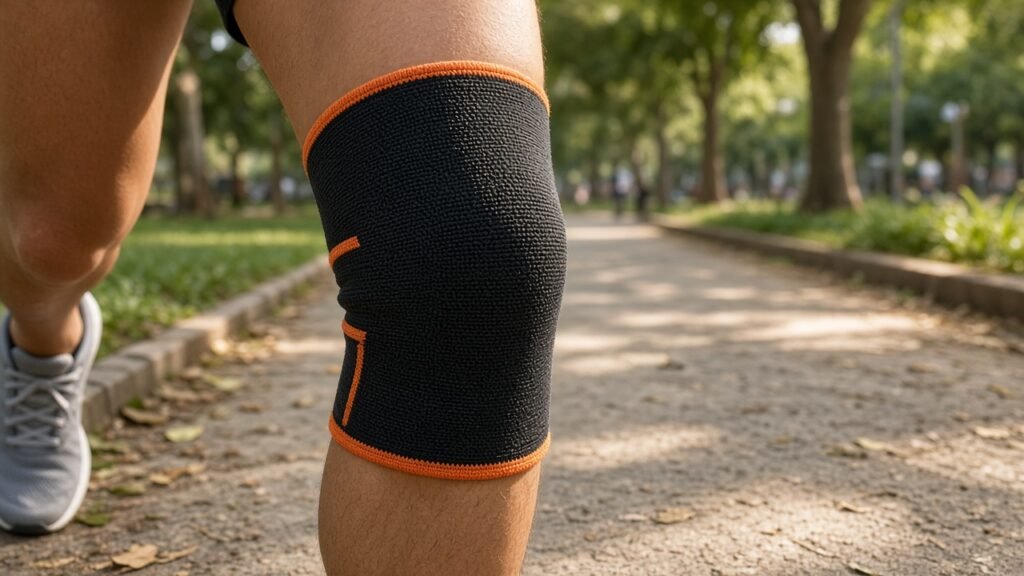
The Tynor Knee Cap Air is a light, breathable, pull-on knee sleeve from Tynor, an Indian orthotics brand you will see in many clinics and chemist shops. It has no hinges, no straps and no metal parts. You simply slide it over your foot and up to your knee, and it gives the joint gentle, even compression.
Think of it as a comfortable “hug” for the knee. It is not a brace that holds a loose joint in place. That difference matters a lot, and I will come back to it.
Check the Tynor Knee Cap Air on Amazon.in
How can a simple knee sleeve help?
A soft sleeve does not change the shape of your bones or “fix” arthritis. What it can do is make the knee feel more comfortable and more secure while you move. Research on soft knee braces and sleeves points to a few reasons:
- Less pain for some people with knee osteoarthritis. A systematic review with meta-analyses in the Archives of Physical Medicine and Rehabilitation found that soft braces had a moderate effect on pain and a small to moderate effect on physical function in people with knee osteoarthritis. The authors also noted that the quality of many included studies was low, so we should be realistic.
- Better joint awareness. The light pressure on the skin seems to improve your sense of where the knee is during movement (doctors call this proprioception). A 2024 review of knee orthoses explains that sleeves are thought to work mainly through this feedback from skin receptors, not through structural support.
- A feeling of confidence. Many patients simply feel steadier and more willing to walk, climb stairs or exercise when they wear one. That extra confidence can help you stay active, which is the real treatment.
The same review is very clear on one point: a knee sleeve gives no stiff support, so it is not enough for an unstable knee.
Who the Tynor Knee Cap Air is good for
From a physio’s point of view, I think of a soft sleeve like this for:
- People with mild to moderate knee osteoarthritis who get achy, tired knees with walking, standing or stairs.
- Older adults who want a little extra comfort and confidence on a morning walk or while doing their home exercises.
- People returning to walking, light jogging or gym work who like the feeling of mild compression.
- Anyone who finds that a little warmth and snug pressure makes the knee feel less stiff during the day.
If you are in this group and want to read more about the early signs of joint wear, see my post on why the knee hurts before arthritis is diagnosed.
Who should NOT rely on it
This is the part most product pages skip. Please do not use a soft knee cap as your main solution if:
- Your knee gives way or feels loose, for example after a ligament injury such as an ACL tear. You need a proper assessment and possibly a hinged brace, not a sleeve.
- You had a recent injury with sudden swelling, a pop, or you cannot put weight on the leg. Get it checked first.
- The knee is locking or catching and will not straighten fully. This can point to a meniscus problem that needs examination.
- The knee is red, hot and very swollen, or you have a fever. This needs a doctor urgently.
- You have poor circulation, diabetes with reduced feeling in the legs, skin problems, or a history of blood clots. Ask your doctor or physio before wearing any compression.
- You have just had knee surgery. Follow your surgeon’s and physio’s plan for supports.
How to use it safely at home
1. Get the size right
This is the most common mistake I see. A sleeve that is too tight can dig in and feel uncomfortable, and one that is too loose slides down and does nothing. Measure around your leg as the size chart on the product page asks, and choose based on that number, not your trouser size. On Amazon.in this listing opens on Medium, so change it if your measurement says otherwise.
2. Put it on properly
Sit down, slide the sleeve over your foot, and pull it up evenly so the kneecap sits in the middle. There should be no folds or bunching behind the knee, because a fold there can pinch when you bend.
3. Wear it when you are active
I usually advise wearing it during walks, stairs, housework, long standing or exercise. Take it off when you are resting, sleeping or sitting for a long time. Give your skin a break.
4. Watch for warning signs
Remove it straight away if you notice tingling, numbness, swelling below the sleeve, colour change in the foot, or skin irritation.
5. Keep it clean
Follow the washing instructions on the pack. A clean, dry sleeve is kinder to your skin, especially in Indian summers.
What to pair it with
A knee cap is a helper, not the treatment. The NHS calls exercise one of the most important treatments for osteoarthritis, along with keeping a healthy weight. It also lists leg braces and supports among the supportive options that can make everyday activities easier. So I always pair a sleeve with:
- Strengthening: thigh (quadriceps) and hip exercises, done slowly and regularly. My guide on building strong knees with osteoarthritis is a good place to start.
- Staying active: regular walking at a comfortable pace, building up gradually.
- Weight management: even modest weight loss reduces the load on the knees.
- Good footwear: cushioned, supportive shoes for daily walking.
Quick buying checklist
- Is your knee stable (no giving way, no locking)? If not, see a physio first.
- Have you measured your leg and checked the size chart?
- Do you want mild compression and comfort, not rigid support?
- Will you also do your exercises? The sleeve works best alongside them.
- Do you have any circulation, skin or diabetes concerns? Check with your doctor first.
If you ticked the boxes, you can see the Tynor Knee Cap Air (Black and Orange) on Amazon.in and pick your size there.
When to see a physio instead
If your knee pain has lasted more than a few weeks, keeps coming back, wakes you at night, or stops you from doing normal things, a sleeve alone will not sort it out. A proper assessment finds out why the knee hurts, whether it is the joint, the kneecap, the tendons or weak muscles around the hip and thigh, and gives you a plan that fits your body.
You can book an assessment with me at PhysioGain, either online or at home in Delhi NCR.
FAQ
Can I wear the Tynor Knee Cap Air all day?
Wear it during activity and remove it when resting or sleeping. If you feel any tingling, numbness or swelling, take it off.
Will a knee cap cure my arthritis?
No. A sleeve may ease pain and help you feel steadier, but it does not reverse arthritis. Exercise, weight management and guidance from a physio matter much more.
Can I use it after a ligament injury?
A soft sleeve is not designed for an unstable knee. After a ligament injury, get assessed first. You may need a hinged brace and a proper rehab plan.
Should I wear it on one knee or both?
Only on the knee that bothers you. There is no need to wear one on a pain-free knee.
Will my muscles become weak if I wear it?
A light sleeve like this does not do the work for your muscles. Keep doing your strengthening exercises and the sleeve will not hold you back.
My verdict
The Tynor Knee Cap Air is a simple, comfortable, no-fuss knee sleeve. For people with mild to moderate knee osteoarthritis or tired, achy knees, it is a sensible add-on that may make walking, stairs and exercise feel easier. It is not a brace for a loose or freshly injured knee, and it is not a replacement for exercise.
Used with the right expectations, the right size and a good exercise routine, it is one of the easier first steps you can take for knee comfort. If that sounds like you, get the Tynor Knee Cap Air on Amazon.in.
This article is general physiotherapy information and is not a substitute for a professional assessment. If you have ongoing or severe knee pain, please consult a qualified physiotherapist or doctor.
About the author: Dr. Lakshay Sharma PT is the founder of PhysioGain. He holds a BPT (Delhi University), an MPT in Sports and Musculoskeletal Physiotherapy, and a sports rehabilitation certification from CSPR London.