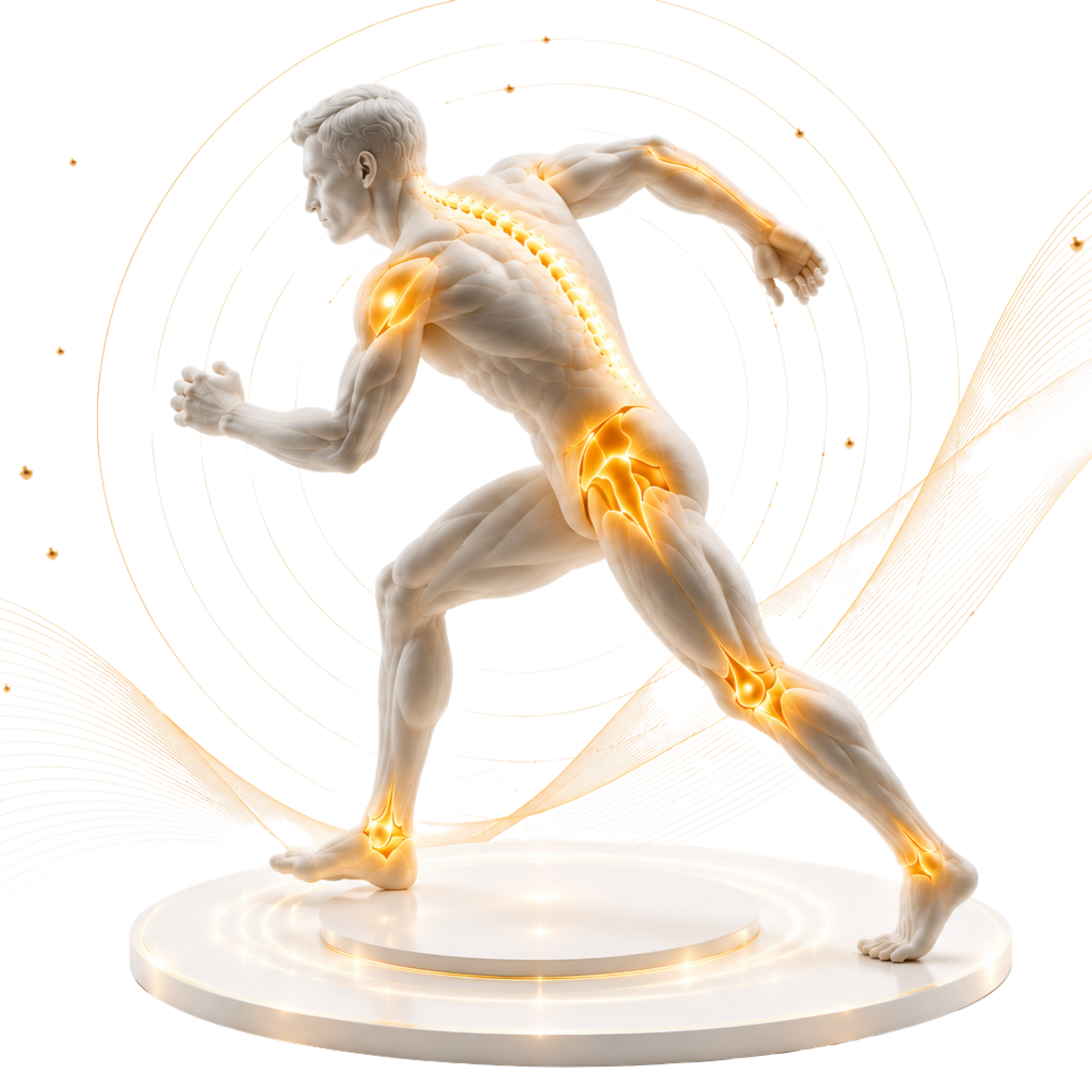
Recover Better While You Sleep
Every night, your body repairs tissues, regulates hormones, and prepares for the next day. Quality sleep is one of the most powerful tools for recovery, healing, and performance.
THE SCIENCE
Why Sleep Matters
Sleep is not passive β it is an active period of biological recovery. During sleep, your body supports muscle repair, tissue healing, energy restoration, memory consolidation, hormonal regulation, and pain modulation.
How Sleep Affects Your Body
π§ Brain
Supports learning, memory, concentration, and emotional regulation.
πͺ Muscles
Supports recovery after exercise and helps muscles adapt to training.
𦴠Bones & Joints
Supports normal tissue repair and recovery after injury.
β€οΈ Immune System
Supports immune function and the bodyβs response to stress.
π Pain
Poor sleep is associated with increased pain sensitivity. Improving sleep can support pain management.
SELF-CHECK
Are You Recovering Well?
If you answered "Yes" to several questions, improving your sleep habits may help your recovery and overall wellbeing.
HEALTHY HABITS
Build a Better Sleep Routine
Keep a Consistent Schedule
Go to bed and wake up at similar times every day, including weekends.
Create a Comfortable Environment
Dark, quiet, cool room with a supportive mattress and pillow.
Reduce Screen Time Before Bed
Limit bright screens 1 hour before sleep or use night mode.
Stay Physically Active
Regular exercise is associated with better sleep quality.
Manage Caffeine
Avoid caffeine in the late afternoon and evening.
Wind Down
Develop a relaxing pre-sleep routine (reading, stretching, breathing).
EVENING ROUTINE
10β15 Minute Evening Recovery Routine
1. Gentle Walking
2β3 minutes β Transition from work.
2. Neck Stretch
20β30 sec each side
3. Chest Stretch
20β30 seconds
4. Cat-Camel
8β10 repetitions
5. Hip Flexor Stretch
20β30 seconds
6. Deep Breathing
2β3 minutes β Slow diaphragmatic breathing.
Sleep & Pain: The SleepβPain Cycle
Poor Sleep May:
- Increase pain sensitivity
- Reduce physical recovery
- Increase fatigue
- Affect mood
Persistent Pain Can:
- Disrupt sleep quality
- Increase nighttime awakenings
- Make falling asleep harder
Sleep for Different People
Office Workers
Prioritize movement breaks and a consistent bedtime routine.
Athletes
Recovery sleep supports training adaptation and performance.
Students
Maintain consistent sleep despite changing study schedules.
Older Adults
Maintain regular routines and stay physically active.
People Recovering From Injury
Sleep supports the bodyβs natural healing processes.
Recovery Beyond Sleep
Frequently Asked Questions
How much sleep do adults need?
Most adults are recommended to aim for 7β9 hours per night.
Can poor sleep make pain worse?
Yes. Poor sleep can increase pain sensitivity and affect recovery.
What's the best sleeping position?
The most appropriate position is one that is comfortable and allows good sleep.
Can physiotherapy help if pain disrupts sleep?
Yes. Physiotherapy can help identify contributing factors and develop a personalized plan.
Recommended Recovery Products
Explore More MOVE Guides
Better Recovery Starts Tonight
Small, consistent improvements in your sleep habits and daily movement can make a meaningful difference to how you feel, perform, and recover.
π΄ Book a Recovery AssessmentREADY TO
move better?
Book your assessment today.
Your recovery journey starts with a single step.
We're here to help you move with confidence, strength, and freedom.

Patients Trust Us Around the world
Evidence-informed experts. Stronger, lasting results.
Better every day.
for real results