
Meniscus Injury
Twisted your knee and now it hurts, swells, or clicks? Learn what a meniscus injury is, how it's diagnosed, and how physiotherapy can help you recover safely.
The menisci are two C-shaped pieces of cartilage that help cushion and stabilize the knee. Many people recover successfully with rehabilitation and do not require surgery.
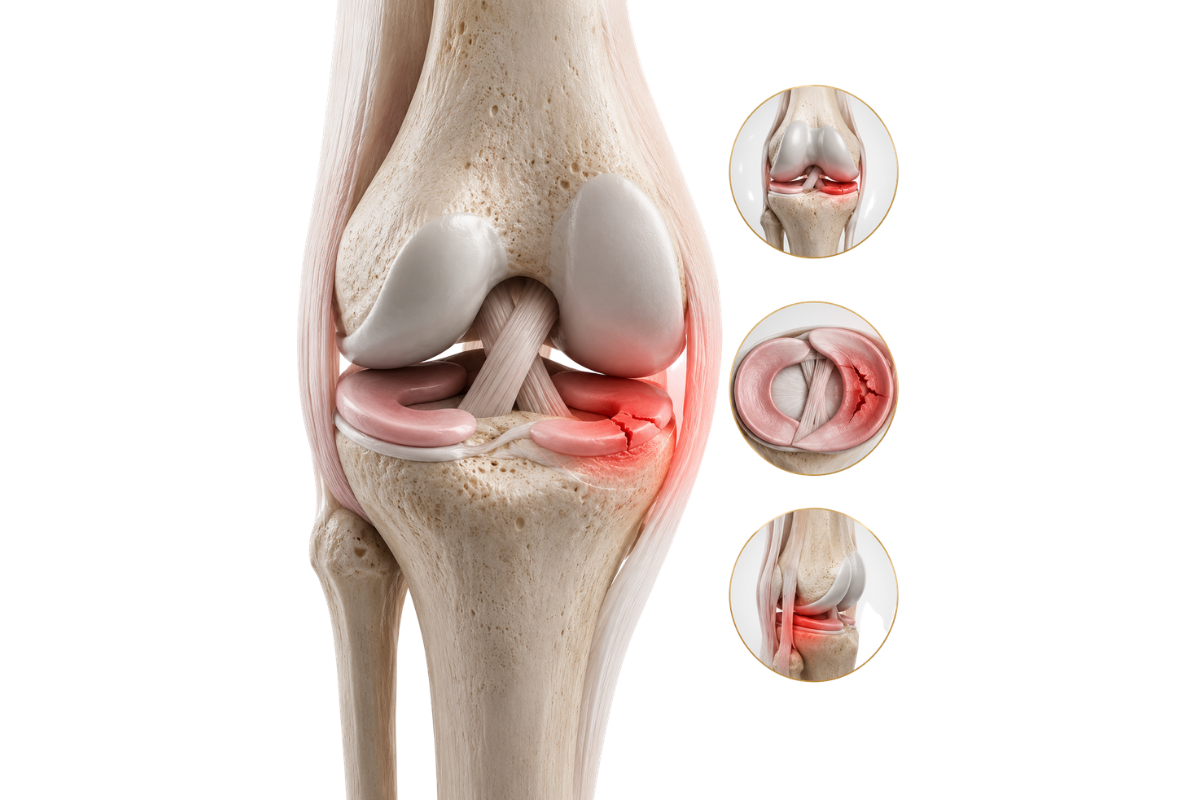
QUICK OVERVIEW
Meniscus Injury at a Glance
COMMON SIGNS & SYMPTOMS
Is This What You're Feeling?
Knee Pain
Pain along the inner or outer side of the knee, particularly during twisting or squatting.
Swelling
Swelling may develop within hours or over the following day after injury.
Clicking or Catching
The knee may click or catch during movement.
Locking
The knee becomes stuck and cannot fully straighten. This requires prompt assessment.
Stiffness
Difficulty bending or straightening the knee fully.
Pain While Squatting
Deep knee bending often aggravates symptoms.
Pain During Twisting
Turning, pivoting, or changing direction may increase discomfort.
Feeling of Instability
Some individuals feel the knee is less stable.
COMMON CAUSES
Why Does It Happen?
Twisting Injury
The most common cause in younger people, often occurring when the foot remains planted while the body twists.
Sports Injuries
Football, basketball, skiing, rugby, cricket, badminton, and other pivoting sports commonly involve meniscal injuries.
Degenerative Changes
With age, the meniscus becomes less resilient and may tear during relatively minor movements.
Deep Squatting
Repeated deep squatting or kneeling may contribute to meniscal loading in some individuals.
Combined Ligament Injury
Meniscus tears frequently occur alongside ACL injuries.
Trauma
Falls, direct blows, or awkward landings may injure the meniscus.
RISK FACTORS
Who Is Most at Risk?
Athletes
Sports involving cutting, pivoting, and jumping.
Adults Over 40 Years
More likely to develop degenerative meniscal tears.
Manual Workers
Frequent kneeling, squatting, or lifting.
Individuals with Previous Knee Injuries
History of ACL injury or previous meniscus injury.
People with Knee Osteoarthritis
Degenerative meniscal tears commonly occur alongside osteoarthritis.
Active Individuals
High training volumes and sudden changes in activity increase risk.
DIAGNOSIS
How Is It Diagnosed?
Clinical Assessment
Medical History
- Twisting mechanism
- Swelling
- Locking
- Clicking
- Knee instability
- Sporting activities
- Previous injuries
- Functional limitations
Physical Examination
- Knee movement
- Joint line tenderness
- Swelling
- Muscle strength
- Walking pattern
- Functional tasks such as squatting
Special Tests & Imaging
Special Tests
- Thessaly Test
- McMurray Test
- Joint Line Tenderness Assessment
- Apley's Compression Test
- Ligament testing to exclude ACL or MCL injuries
No single test confirms a meniscus tear. Diagnosis is based on your history, examination findings, and clinical reasoning.
Imaging
X-rays do not show the meniscus but may help exclude fractures or osteoarthritis. MRI is the preferred imaging test when surgery is being considered, the diagnosis is uncertain, or persistent symptoms remain despite rehabilitation.
SEEKING HELP
When Should You Get Help?
Self-Management
Usually appropriate if:
- Mild pain
- Minimal swelling
- Improving symptoms
- Able to walk normally
Book a Physiotherapy Assessment
Recommended if:
- Knee pain lasts longer than one week
- Swelling persists
- Pain during squatting or twisting
- Difficulty returning to sport
- Recurrent knee symptoms
Seek Immediate Medical Attention
Seek urgent assessment if you experience:
- A locked knee that cannot fully straighten
- Obvious deformity
- Inability to bear weight after injury
- Severe swelling immediately after trauma
- Fever with a swollen knee
- Progressive numbness or loss of circulation
TREATMENT
Treatment Options
Education
Understanding your injury and gradually returning to activity are key components of recovery.
Exercise Therapy
Progressive strengthening, balance training, and functional rehabilitation are considered first-line treatment.
Activity Modification
Reducing high-impact or twisting activities during the early stages allows symptoms to settle.
Manual Therapy
Manual therapy may improve knee mobility and reduce pain when combined with exercise.
Medication
Pain-relieving medication may be appropriate under medical supervision during the early stages.
Injections
Injections are not routinely recommended for isolated meniscus tears.
Surgery
Arthroscopic surgery may be appropriate for true mechanical locking, certain displaced tears, or associated ligament injuries.
PHYSIOTHERAPY
How Physiotherapy Helps
Physiotherapy aims to reduce pain, restore knee movement, improve strength, and safely return you to work, sport, and daily activities.
Treatment may include:
- Individualised strengthening programme
- Quadriceps strengthening
- Hamstring strengthening
- Hip strengthening
- Balance and proprioception training
- Walking retraining
- Running progression
- Sport-specific rehabilitation
- Return-to-sport testing
- Long-term injury prevention
RECOVERY JOURNEY
Recovery Timeline
EXERCISE LIBRARY
Recommended Exercises
Heel Slides
EasyTarget: Knee mobility
Repetitions: 10–15
Quadriceps Sets
EasyTarget: Quadriceps activation
Hold: 5–10 seconds
Repeat: 10–15 times
Straight Leg Raise
EasyTarget: Quadriceps
Repetitions: 10–15 × 2 sets
Mini Squats
ModerateTarget: Quadriceps and gluteals
Repetitions: 10–15 × 2–3 sets
Step-Ups
ModerateTarget: Functional lower-limb strength
Repetitions: 10 each leg
Single-Leg Balance
ModerateTarget: Knee stability and proprioception
Hold: 20–30 seconds × 3 repetitions
LONG-TERM HEALTH
Prevention Tips
Strengthen the Legs
Strong quadriceps, hamstrings, and gluteal muscles help support the knee.
Improve Balance
Balance and neuromuscular training reduce the risk of knee injuries.
Warm Up Before Sport
Prepare the muscles and joints before training or competition.
Progress Training Gradually
Avoid sudden increases in training intensity or volume.
Use Good Landing Technique
Learning proper jumping and cutting mechanics reduces knee stress.
Complete Rehabilitation After Injury
Returning to sport before fully recovering increases the risk of reinjury.
EXPLORE MORE
Related Conditions
Knee Pain
ACL Injury
MCL Injury
Knee Osteoarthritis
Patellofemoral Pain Syndrome
Patellar Tendinopathy
Baker's Cyst
Iliotibial Band Syndrome
Cartilage Injury
Plica Syndrome
Get Back to Pain-Free Movement
If knee pain, swelling, or locking is limiting your work, sport, or daily activities, a physiotherapy assessment can help determine whether a meniscus injury is the cause and create a personalised rehabilitation plan to restore movement, improve strength, and support a safe return to activity.
Book Your Physiotherapy Assessment TodayEarly and appropriate rehabilitation leads to better outcomes and reduces the risk of long-term problems.