
Lumbar Disc Bulge
Been told you have a disc bulge on your MRI? Learn what it really means, when it causes symptoms, and how physiotherapy can help you recover safely.
A lumbar disc bulge occurs when one of the discs between the bones of your lower back extends beyond its usual boundaries. While disc bulges are common with ageing and often cause no symptoms, most people improve with conservative treatment and do not need surgery.
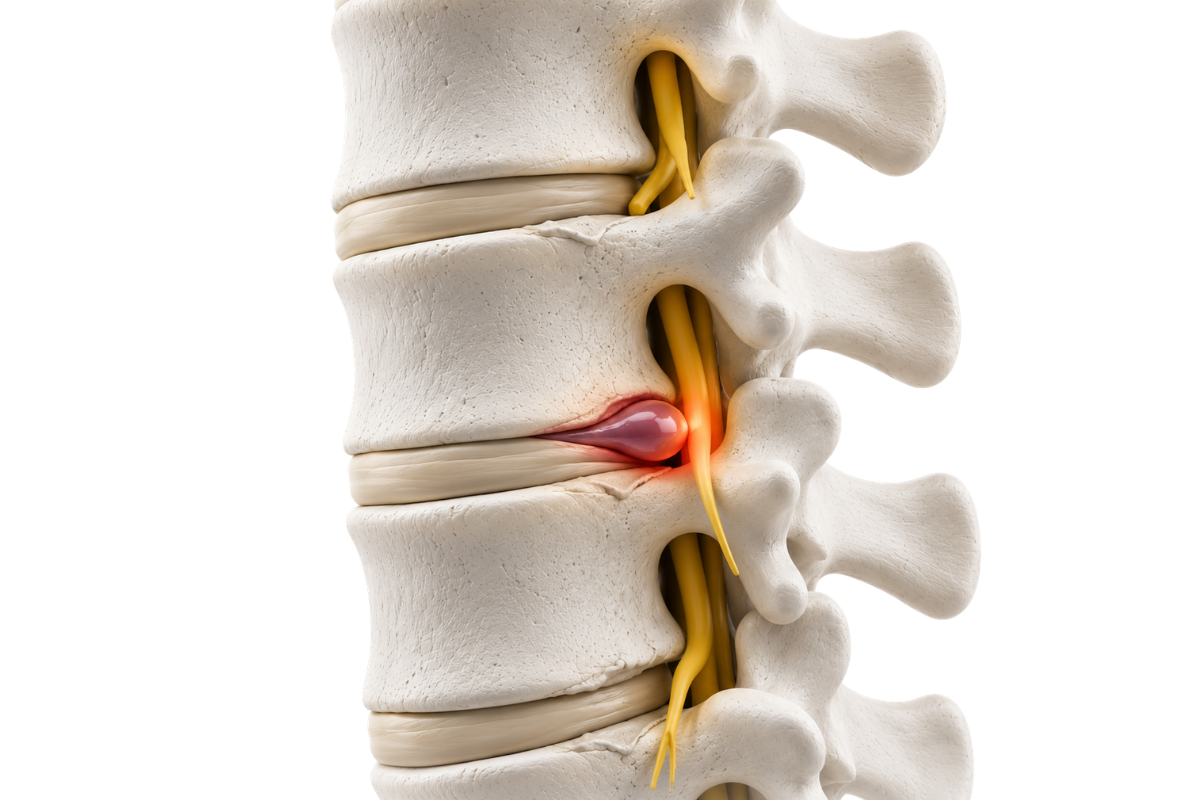
QUICK OVERVIEW
Lumbar Disc Bulge at a Glance
COMMON SIGNS & SYMPTOMS
Is This What You're Feeling?
Lower Back Pain
Pain may be localised or spread across the lower back.
Pain into the Buttock or Leg
If a nerve root is irritated, pain may travel into the buttock, thigh, calf, or foot.
Tingling or Pins and Needles
Some people experience altered sensation in the leg or foot.
Numbness
Numbness may occur in the area supplied by the affected nerve.
Muscle Weakness
Some individuals notice weakness in the leg or foot if nerve function is affected.
Pain While Sitting
Prolonged sitting may increase symptoms in some people.
Pain During Bending
Forward bending, lifting, or prolonged flexed postures may aggravate symptoms.
Difficulty Walking
Walking tolerance may be reduced during more symptomatic periods.
COMMON CAUSES
Why Does It Happen?
Age-Related Disc Changes
Discs naturally lose water content and elasticity with age, making bulging more common.
Repetitive Loading
Frequent bending, lifting, or twisting may contribute to disc stress over time.
Heavy Lifting
Poor lifting technique combined with heavy loads can increase strain on the lumbar discs.
Prolonged Sitting
Long periods of sitting may increase discomfort in some people, particularly if symptoms are already present.
Previous Back Injury
Past injuries may contribute to ongoing spinal symptoms.
Genetics
Inherited factors influence disc health and degeneration.
Smoking
Smoking has been associated with poorer disc health and slower healing.
RISK FACTORS
Who Is Most at Risk?
Adults Aged 30–60 Years
Disc changes become more common with age.
Office Workers
Long periods of sitting and reduced physical activity.
Manual Workers
Frequent lifting, carrying, bending, and twisting.
Drivers
Prolonged sitting and vibration exposure.
People with Previous Back Pain
History of low back pain increases the likelihood of future episodes.
Smokers
Smoking is associated with poorer spinal disc health.
DIAGNOSIS
How Is It Diagnosed?
Clinical Assessment
Medical History
- Pain location
- Leg symptoms
- Numbness or weakness
- Aggravating and easing factors
- Previous episodes
- Occupation
- Physical activity
- Medical history
Physical Examination
- Lumbar range of motion
- Neurological examination
- Muscle strength
- Reflexes
- Sensation
- Walking pattern
- Functional movements
Special Tests & Imaging
Special Tests
- Straight Leg Raise (SLR)
- Slump Test
- Neurological screening
- Repeated movement assessment
- Hip examination to exclude other causes
Diagnosis is based on your history, examination findings, and clinical reasoning — not MRI alone.
Imaging
MRI is the best imaging test for assessing lumbar discs when clinically indicated. Many people without back pain have disc bulges on MRI. Imaging findings do not always explain symptoms.
SEEKING HELP
When Should You Get Help?
Self-Management
Usually appropriate if:
- Mild back pain
- No leg weakness
- Symptoms are improving
- Daily activities remain manageable
Book a Physiotherapy Assessment
Recommended if:
- Pain lasts longer than two weeks
- Pain radiates into the leg
- Sitting becomes difficult
- Recurrent episodes occur
- Symptoms interfere with work or daily life
Seek Immediate Medical Attention
Seek urgent medical care if you experience:
- Loss of bladder or bowel control
- Saddle numbness
- Progressive leg weakness
- Severe pain after major trauma
- Fever with severe back pain
- Unexplained weight loss
TREATMENT OPTIONS
Treatment Options
Education
Understanding that many disc bulges improve naturally and that imaging findings do not always reflect symptom severity is an important part of recovery.
Exercise Therapy
Progressive exercise is considered first-line treatment. Programmes are tailored to your symptoms and may include mobility, strengthening, and walking.
Activity Modification
Staying active while temporarily modifying aggravating activities is generally preferred over prolonged bed rest.
Manual Therapy
For selected individuals, spinal mobilization or manipulation may provide short-term symptom relief when combined with exercise.
Medication
Pain-relieving medication may be appropriate under medical supervision during the early stages.
Epidural Steroid Injection
Some individuals with significant nerve root pain may benefit from an epidural steroid injection after specialist assessment.
Surgery
Surgery is considered only for carefully selected individuals with significant neurological deficits or emergencies such as cauda equina syndrome.
PHYSIOTHERAPY
How Physiotherapy Helps
Physiotherapy focuses on reducing pain, improving movement, restoring strength, and helping you return to normal activities.
Treatment may include:
- Education and reassurance
- Symptom-guided exercise
- Core and hip strengthening
- Walking programmes
- Mobility exercises
- Manual therapy when appropriate
- Ergonomic advice
- Return-to-work planning
- Long-term prevention strategies
RECOVERY JOURNEY
Recovery Timeline
EXERCISE LIBRARY
Recommended Exercises
Prone Press-Up (Extension Exercise)
EasyTarget: Lumbar mobility (only if appropriate based on symptom response)
Repetitions: 10 repetitions
Pelvic Tilt
EasyTarget: Core activation
Repetitions: 10–15
Bird Dog
ModerateTarget: Core stability
Repetitions: 8–12 each side
Bridge Exercise
ModerateTarget: Gluteal muscles and posterior chain
Repetitions: 10–15 × 2–3 sets
Walking Programme
EasyTarget: Endurance and spinal health
Duration: Start with a comfortable distance and gradually increase.
Sciatic Nerve Slider (Only if Appropriate)
ModerateTarget: Neural mobility
Repetitions: 10 gentle repetitions
LONG-TERM HEALTH
Prevention Tips
Stay Physically Active
Regular movement supports spinal health and reduces the risk of recurrent back pain.
Build Core and Hip Strength
Strong supporting muscles improve spinal control and load distribution.
Avoid Prolonged Sitting
Stand up, stretch, or walk every 30–60 minutes during prolonged sitting.
Lift Smart
Use controlled lifting techniques and avoid sudden twisting under heavy loads.
Stop Smoking
Smoking is associated with poorer disc health and slower recovery.
Progress Activity Gradually
Increase exercise intensity and workload progressively to reduce the risk of flare-ups.
EXPLORE MORE
Related Conditions
Low Back Pain
Sciatica
Lumbar Disc Herniation
Lumbar Spondylosis
Degenerative Disc Disease
Lumbar Spinal Stenosis
Persistent Pain
Post-Surgical Rehabilitation
Cauda Equina Syndrome
Core Stability Dysfunction
LEARN MORE
Related Resources
Don't Let an MRI Report Define Your Recovery
A disc bulge doesn't automatically mean you need surgery — or that your back is permanently damaged. If lower back or leg pain is affecting your work, sleep, or daily activities, a physiotherapy assessment can identify the source of your symptoms and create a personalised rehabilitation plan to help you move with confidence.
Book Your Spine Assessment TodayMost people with disc bulges recover well with conservative physiotherapy and do not require surgery.