
Foot & Ankle Pain
Discover what may be causing your foot or ankle pain, how physiotherapy can help, and the safest way to return to comfortable walking, exercise, and daily activities.
Foot and ankle pain can affect every step you take, making walking, running, climbing stairs, standing, or playing sports uncomfortable.
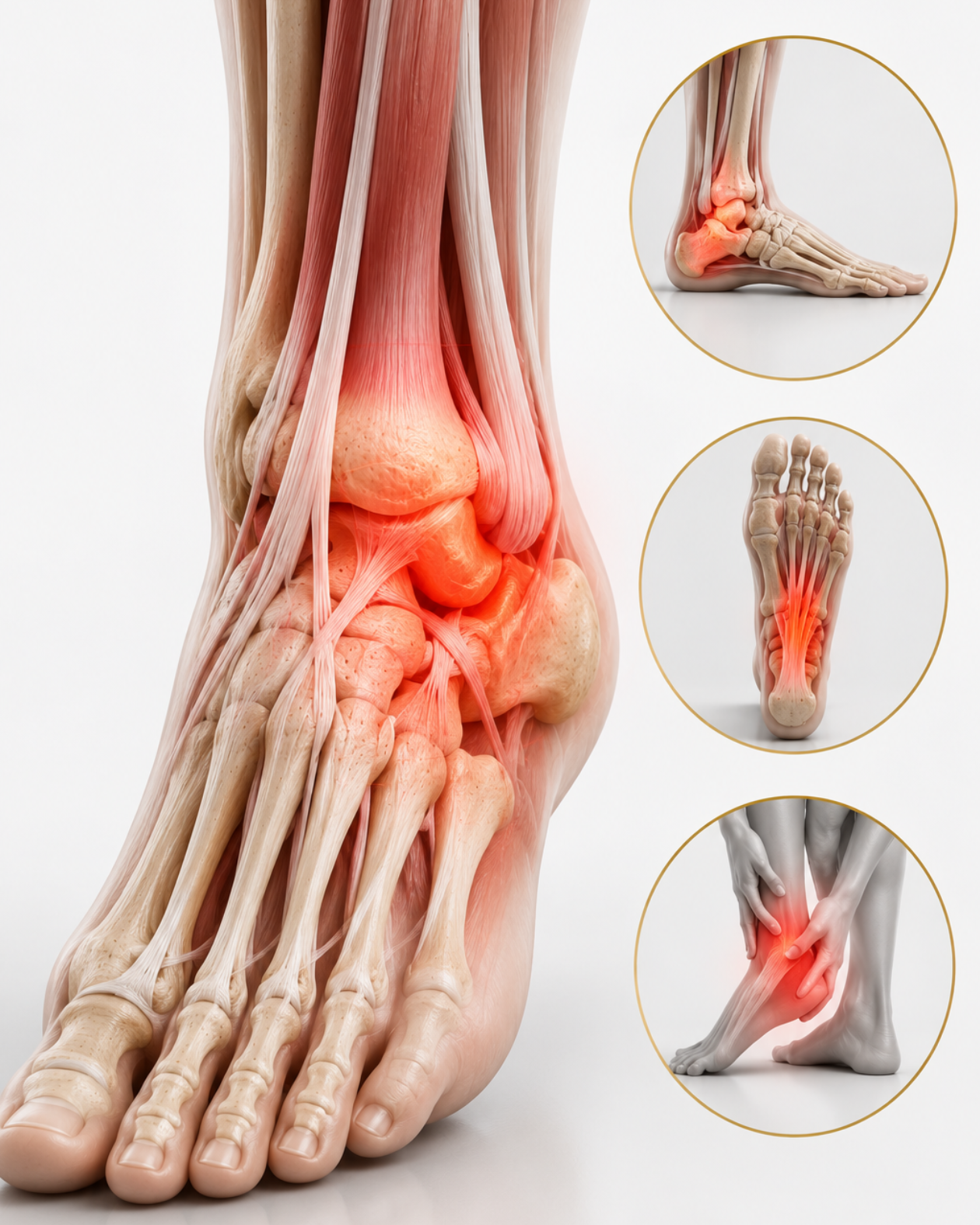
QUICK OVERVIEW
Foot & Ankle Pain at a Glance
COMMON SIGNS & SYMPTOMS
Is This What You're Feeling?
Foot Pain
Pain in the heel, arch, forefoot, or toes during standing or walking.
Ankle Pain
Pain around the ankle joint, especially during walking, running, or changing direction.
Heel Pain
Pain under or behind the heel, often worse with the first few steps after resting.
Swelling
Visible swelling around the ankle or foot following injury or overuse.
Stiffness
Difficulty moving the ankle or toes, particularly after rest or in the morning.
Instability
A feeling that the ankle may give way, especially on uneven ground.
Difficulty Walking
Pain that alters your walking pattern or limits how far you can walk.
Pain During Running or Sport
Symptoms that increase during jumping, sprinting, or recreational activities.
Numbness or Tingling
Pins and needles or numbness in the foot or toes may indicate nerve involvement.
COMMON CAUSES
Why Does It Happen?
Ankle Sprain
Stretching or tearing of the ankle ligaments, commonly occurring after rolling the ankle inward.
Plantar Heel Pain
Pain at the bottom of the heel, often related to irritation of the plantar fascia and surrounding tissues.
Achilles Tendinopathy
Overload of the Achilles tendon causing pain and stiffness, particularly during walking, running, or jumping.
Tendon Disorders
The tendons around the foot and ankle can become overloaded with repetitive activity or sudden increases in training.
Osteoarthritis
Degenerative changes in the ankle or foot joints may lead to pain, stiffness, and reduced mobility.
Stress Fracture
Repeated loading may lead to small bone injuries, especially in runners and athletes.
Nerve Compression
Conditions such as tarsal tunnel syndrome can cause pain, burning, tingling, or numbness in the foot.
Trauma
Falls, sporting injuries, and direct impacts can damage bones, ligaments, tendons, or joints.
RISK FACTORS
Who Is Most at Risk?
Runners
Repetitive impact increases the risk of overuse injuries.
Athletes
Sports involving jumping, cutting, sprinting, or rapid direction changes.
Manual Workers
Prolonged standing, walking, or heavy lifting.
Older Adults
Higher risk of osteoarthritis, balance impairments, and falls.
People with Previous Ankle Sprains
A previous sprain increases the risk of recurrent ankle instability if rehabilitation is incomplete.
Individuals with Higher Body Weight
Greater loading through the feet and ankles during weight-bearing activities.
People Wearing Unsupportive Footwear
Shoes that do not provide appropriate support for the activity may contribute to symptoms in some individuals.
DIAGNOSIS
How Is It Diagnosed?
Clinical Assessment
Medical History
- When symptoms started
- Mechanism of injury
- Pain location
- Walking ability
- Swelling
- Sporting activities
- Previous foot or ankle injuries
- Occupation
Physical Examination
- Walking pattern (gait)
- Foot posture
- Ankle range of motion
- Muscle strength
- Balance
- Joint mobility
- Functional activities such as squatting, heel raises, and hopping
Special Tests & Imaging
Special Tests
- Ligament injuries
- Achilles tendon disorders
- Plantar heel pain
- Tendon dysfunction
- Joint instability
- Nerve involvement
Diagnosis is based on your history, examination findings, and clinical reasoning.
Imaging
Routine imaging is not necessary for many foot and ankle conditions. X-rays, ultrasound, MRI, or CT scans may be recommended when a fracture is suspected, significant trauma has occurred, tendon rupture is suspected, symptoms persist despite rehabilitation, or surgical planning is required.
SEEKING HELP
When Should You Get Help?
Self-Management
Usually appropriate if:
- Mild pain
- Improving symptoms
- Able to walk comfortably
- No major swelling or instability
Book a Physiotherapy Assessment
Recommended if:
- Pain lasts longer than one to two weeks
- Difficulty walking
- Recurrent ankle sprains
- Pain affecting work or sport
- Persistent swelling
- Increasing stiffness
Seek Immediate Medical Attention
Seek urgent assessment if you experience:
- Inability to bear weight after an injury
- Obvious deformity
- Severe swelling immediately after trauma
- Suspected fracture or dislocation
- Sudden loss of sensation or circulation
- Fever with a painful, swollen foot or ankle
- A wound with exposed bone or tendon
- Rapidly worsening pain with significant swelling
TREATMENT
Treatment Options
Education
Understanding your diagnosis and remaining appropriately active are essential for recovery.
Exercise Therapy
Progressive strengthening, mobility, balance, and functional exercises are the cornerstone of treatment for most foot and ankle conditions.
Manual Therapy
Joint mobilization and soft tissue techniques may improve movement and reduce pain when combined with exercise in selected individuals.
Footwear & Orthoses
Appropriate footwear and, in some cases, foot orthoses may help selected individuals depending on the diagnosis.
Medication
Pain-relieving medication may be appropriate under medical supervision for short-term symptom management.
Injections
Some conditions, such as plantar heel pain or arthritis, may occasionally be treated with injections after specialist evaluation.
Surgery
Surgery is generally reserved for selected conditions such as unstable fractures, complete tendon ruptures, severe ligament injuries, advanced arthritis, or persistent symptoms that do not improve with appropriate conservative care.
PHYSIOTHERAPY
How Physiotherapy Helps
Physiotherapy aims to reduce pain, restore movement, improve strength, and help you return safely to walking, work, sport, and everyday activities.
Treatment may include:
- Individualized rehabilitation programmes
- Ankle strengthening
- Foot intrinsic muscle training
- Balance and proprioception exercises
- Gait retraining
- Mobility exercises
- Manual therapy when indicated
- Return-to-running guidance
- Return-to-sport planning
- Long-term injury prevention strategies
RECOVERY JOURNEY
Recovery Timeline
EXERCISE LIBRARY
Recommended Exercises
Ankle Pumps
EasyTarget: Ankle mobility
Repetitions: 20 repetitions × 2 sets
Precaution: Perform gently within a comfortable range.
Calf Stretch
EasyTarget: Gastrocnemius and soleus
Hold: 20–30 seconds
Repeat: 3 times
Heel Raises
ModerateTarget: Calf muscles and Achilles tendon
Repetitions: 10–15 × 2–3 sets
Resistance Band Ankle Strengthening
ModerateTarget: Ankle invertors, evertors, dorsiflexors, and plantarflexors
Repetitions: 10–15 × 2–3 sets
Single-Leg Balance
ModerateTarget: Balance and ankle stability
Hold: 20–30 seconds
Repeat: 3 times each side
Short Foot Exercise
ModerateTarget: Intrinsic foot muscles
Repetitions: Hold for 5–10 seconds × 10 repetitions
LONG-TERM HEALTH
Prevention Tips
Wear Appropriate Footwear
Choose shoes that are comfortable, fit well, and are appropriate for your activity.
Build Foot and Ankle Strength
Regular strengthening helps improve joint stability and resilience.
Improve Balance
Balance exercises reduce the risk of ankle sprains and falls.
Warm Up Before Exercise
Prepare the muscles, tendons, and joints before running, jumping, or sport.
Progress Training Gradually
Avoid sudden increases in running distance, training intensity, or jumping volume.
Maintain a Healthy Body Weight
Maintaining a healthy weight may reduce loading on the feet and ankles during weight-bearing activities.
EXPLORE MORE
Related Conditions
Ankle Sprain
Plantar Heel Pain (Plantar Fasciitis)
Achilles Tendinopathy
Chronic Ankle Instability
Flat Feet (Pes Planus)
Posterior Tibial Tendon Dysfunction
Bunions (Hallux Valgus)
Morton’s Neuroma
Tarsal Tunnel Syndrome
Stress Fracture of the Foot
LEARN MORE
Related Resources
Ready to Take the Next Step Without Pain?
Whether you're dealing with heel pain, ankle pain, stiffness, or recurring injuries, a physiotherapy assessment can help identify the underlying cause and create a personalised rehabilitation plan to restore comfortable movement, improve strength, and get you back to the activities you enjoy.
Book Your Physiotherapy Assessment TodayEarly intervention often leads to faster and better outcomes.