
Wrist & Hand Pain
Discover what may be causing your wrist or hand pain, how physiotherapy can help, and the safest way to restore comfortable movement, strength, and function.
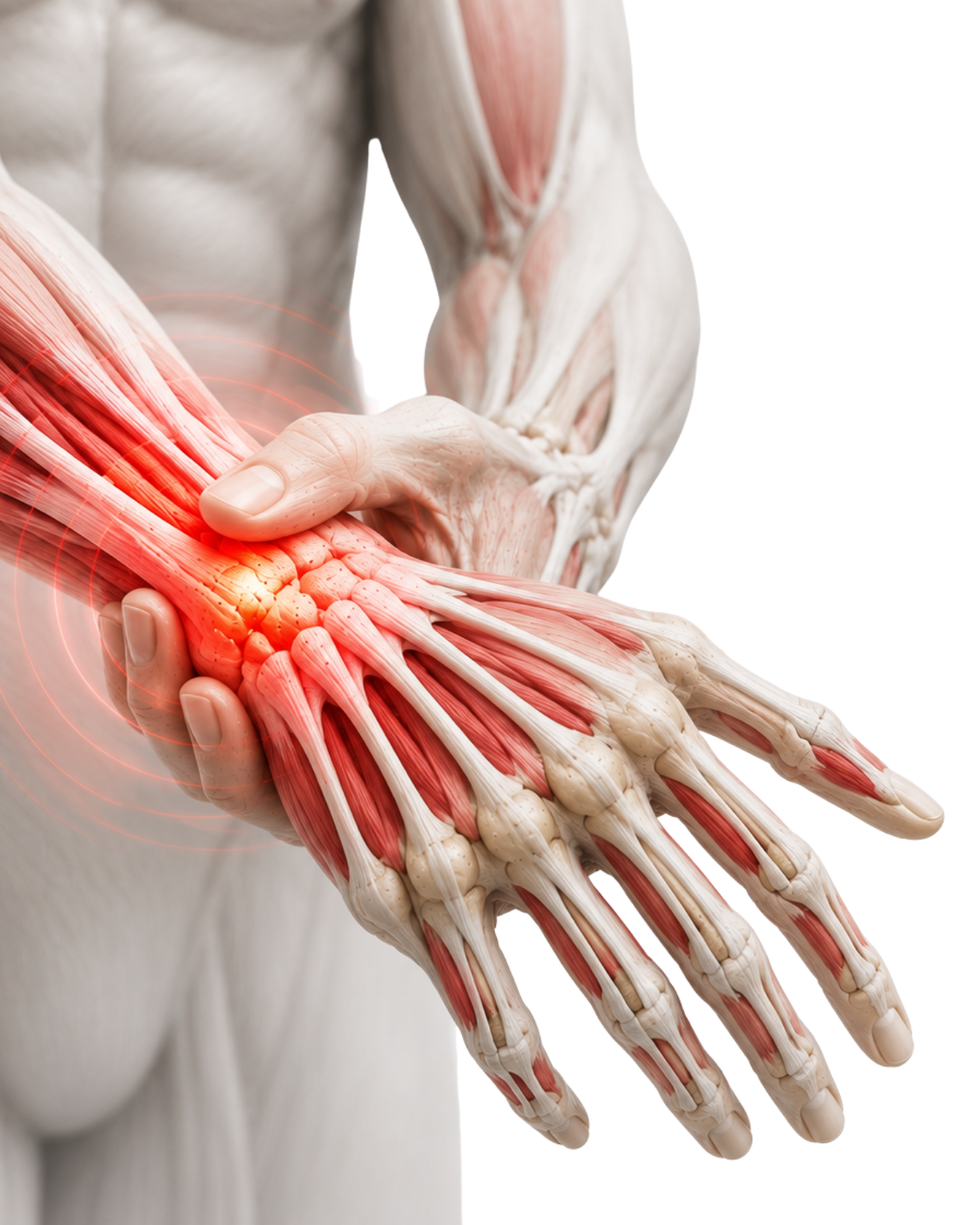
Wrist and hand pain can make everyday activities such as typing, writing, gripping, lifting, cooking, driving, or playing sports difficult.
QUICK OVERVIEW
Wrist & Hand Pain at a Glance
COMMON SIGNS & SYMPTOMS
Is This What You're Feeling?
Wrist Pain
Pain around the wrist during movement, lifting, or weight-bearing through the hand.
Hand Pain
Discomfort in the palm, fingers, or thumb that affects daily activities.
Thumb Pain
Pain at the base of the thumb or along the thumb tendons, especially during gripping or pinching.
Weak Grip Strength
Difficulty opening jars, carrying shopping bags, holding tools, or shaking hands.
Tingling or Numbness
Pins and needles or numbness, particularly in the thumb, index, middle, or ring finger.
Stiffness
Difficulty moving the wrist or fingers, especially after rest or in the morning.
Swelling
Visible swelling around the wrist, hand, or fingers following overuse or injury.
Clicking or Locking Finger
A finger may catch, click, or lock during movement (trigger finger).
Pain During Typing or Repetitive Tasks
Symptoms that worsen with prolonged computer use, handwriting, or repetitive hand activities.
COMMON CAUSES
Why Does It Happen?
Tendinopathy
Overuse of the wrist or thumb tendons can lead to pain, reduced strength, and difficulty performing repetitive tasks.
Carpal Tunnel Syndrome
Compression of the median nerve at the wrist may cause pain, tingling, numbness, and weakness in the hand.
De Quervain's Tenosynovitis
Irritation of the thumb tendons causing pain along the thumb side of the wrist, particularly during gripping or lifting.
Wrist Sprain
Stretching or tearing of wrist ligaments following a fall or sudden twist.
Thumb Osteoarthritis
Degenerative changes at the base of the thumb may lead to pain, stiffness, and reduced grip strength.
Trigger Finger
Thickening of a finger tendon may cause clicking, catching, or locking during movement.
Ganglion Cyst
A fluid-filled lump arising from a joint or tendon sheath that may or may not cause pain.
Trauma
Falls, fractures, direct blows, or sporting injuries can damage the bones, ligaments, or tendons of the wrist and hand.
Referred Pain
Pain from the neck or upper limb nerves may occasionally be felt in the wrist or hand.
RISK FACTORS
Who Is Most at Risk?
Office Workers
Frequent typing, mouse use, and prolonged computer work.
Manual Workers
Repetitive gripping, tool use, lifting, and vibration exposure.
Healthcare Professionals
Frequent manual handling and repetitive hand tasks.
Athletes
Gymnastics, climbing, racquet sports, golf, weightlifting, and contact sports.
Musicians
Repetitive finger and wrist movements over prolonged periods.
Older Adults
Higher risk of osteoarthritis and degenerative tendon changes.
Individuals with Previous Wrist or Hand Injuries
Previous injuries increase the likelihood of future symptoms.
DIAGNOSIS
How Is It Diagnosed?
Clinical Assessment
Medical History
- When symptoms began
- Pain location
- Numbness or tingling
- Hand dominance
- Occupation
- Sporting activities
- Previous injuries
- Aggravating tasks
Physical Examination
- Wrist and finger range of motion
- Grip strength
- Thumb function
- Joint mobility
- Swelling
- Functional tasks
- Neck screening when appropriate
Special Tests & Imaging
Special Tests
- Carpal tunnel syndrome
- De Quervain's tenosynovitis
- Ligament injuries
- Thumb instability
- Tendon disorders
- TFCC injury
Diagnosis is based on your history, examination findings, and clinical reasoning.
Imaging
Routine imaging is not required for many wrist and hand conditions. X-rays, ultrasound, MRI, or nerve conduction studies may be recommended when a fracture is suspected, significant trauma has occurred, persistent neurological symptoms are present, tendon rupture is suspected, or surgery is being considered.
SEEKING HELP
When Should You Get Help?
Self-Management
Usually appropriate if:
- Mild pain
- Improving symptoms
- Full movement
- No numbness or significant weakness
Book a Physiotherapy Assessment
Recommended if:
- Pain lasts longer than one to two weeks
- Difficulty gripping or lifting
- Persistent tingling or numbness
- Pain affecting work or hobbies
- Recurrent wrist or hand pain
Seek Immediate Medical Attention
Seek urgent assessment if you experience:
- Obvious deformity after trauma
- Inability to move the fingers or wrist
- Sudden loss of sensation or circulation
- Severe swelling after injury
- Suspected fracture or dislocation
- Fever with a painful, swollen hand
- Deep cuts with loss of movement
- Progressive weakness affecting hand function
TREATMENT
Treatment Options
Education
Understanding your diagnosis and modifying aggravating activities are essential for recovery.
Exercise Therapy
Progressive mobility, tendon loading, nerve-gliding, and strengthening exercises are central to rehabilitation.
Splinting or Bracing
Temporary splinting may be beneficial for selected conditions such as carpal tunnel syndrome, De Quervain's tenosynovitis, or thumb osteoarthritis.
Manual Therapy
Joint mobilization and soft tissue techniques may help improve movement and reduce pain when combined with exercise.
Medication
Pain-relieving medication may be appropriate under medical supervision.
Injections
Certain conditions, such as trigger finger, De Quervain's tenosynovitis, or thumb osteoarthritis, may benefit from corticosteroid injections after specialist evaluation.
Surgery
Surgery may be appropriate for selected conditions such as severe carpal tunnel syndrome, tendon ruptures, unstable fractures, or persistent symptoms that do not improve with conservative treatment.
PHYSIOTHERAPY
How Physiotherapy Helps
Physiotherapy aims to reduce pain, restore movement, improve strength, and help you safely return to work, hobbies, and sport.
Treatment may include:
- Individualized rehabilitation programmes
- Tendon loading exercises
- Wrist and hand strengthening
- Grip strengthening
- Nerve-gliding exercises (when indicated)
- Manual therapy
- Ergonomic advice
- Splint education
- Return-to-work planning
- Long-term injury prevention strategies
RECOVERY JOURNEY
Recovery Timeline
EXERCISE LIBRARY
Recommended Exercises
Wrist Flexion and Extension
EasyTarget: Wrist mobility
Repetitions: 10–15 × 2 sets
Precaution: Move within a comfortable range.
Tendon Gliding Exercises
EasyTarget: Finger flexor tendons
Repetitions: 10 repetitions
Median Nerve Glide
ModerateTarget: Median nerve mobility
Repetitions: 5–10 repetitions
Precaution: Perform gently and stop if symptoms significantly increase.
Grip Strengthening
ModerateTarget: Hand and forearm muscles
Repetitions: 10–15 squeezes × 2–3 sets
Rubber Band Finger Extension
ModerateTarget: Finger extensors
Repetitions: 10–15 × 2–3 sets
Thumb Opposition Exercise
EasyTarget: Thumb mobility and coordination
Repetitions: 10 repetitions each finger
LONG-TERM HEALTH
Prevention Tips
Take Regular Movement Breaks
Avoid maintaining the same wrist position for prolonged periods during typing or repetitive work.
Improve Ergonomics
Position your keyboard, mouse, and workstation to keep your wrists in a neutral position.
Build Grip and Forearm Strength
Regular strengthening improves tissue capacity and resilience.
Warm Up Before Sport
Prepare your wrists and hands before climbing, racquet sports, gymnastics, or weight training.
Progress Activity Gradually
Avoid sudden increases in training volume or repetitive hand-intensive tasks.
Protect Your Hands
Use appropriate protective equipment when performing high-risk work or sports.
EXPLORE MORE
Related Conditions
Carpal Tunnel Syndrome
De Quervain's Tenosynovitis
Trigger Finger
Thumb Osteoarthritis
Wrist Sprain
TFCC Injury
Ganglion Cyst
Ulnar Nerve Entrapment
Scaphoid Fracture
Intersection Syndrome
LEARN MORE
Related Resources
Ready to Get Your Hands Working Comfortably Again?
Whether you're experiencing wrist pain while typing, thumb pain during gripping, or hand discomfort affecting work, hobbies, or sport, a physiotherapy assessment can help identify the underlying cause and create a personalised rehabilitation plan to restore strength, movement, and confidence.
Book Your Physiotherapy Assessment TodayEarly intervention often leads to faster and better outcomes.