

Have you ever played badminton for just 20–30 minutes…
And suddenly your shin bone starts hurting?
That sharp, stretch-like pain that makes you stop and sit.
That weird pressure on the front of the leg that refuses to go away.
If yes, you’re not alone.
Almost 1 out of every 3 young players (according to sports rehab clinics) feel this — even if they’re fit and active.
And here’s the truth:
Your shin bone is not the real problem.
Your movement is.
Before I explain the science, let me make something very clear.
Shin pain in young players is extremely common — and extremely fixable.Have you ever played badminton for just 20–30 minutes…
And suddenly your shin bone starts hurting?
That sharp, stretch-like pain that makes you stop and sit.
That weird pressure on the front of the leg that refuses to go away.
If yes, you’re not alone.
Almost 1 out of every 3 young players (according to sports rehab clinics) feel this — even if they’re fit and active.
And here’s the truth:
Your shin bone is not the real problem.
Your movement is.
Before I explain the science, let me make something very clear.
Shin pain in young players is extremely common — and extremely fixable.
What Most People Call “Shin Pain” Is Usually This…
Most young badminton players experience something called:
Medial Tibial Stress Syndrome (MTSS)
or what everyone calls…
Shin Splints.
It sounds scary.
But it’s not.
It simply means your lower leg muscles, bones, and tendons are getting overloaded faster than they can recover.
Why It Happens in Badminton More Than Other Sports
Badminton looks light and fun.
But biomechanically, it’s brutal for your shins.
Here’s why 👇
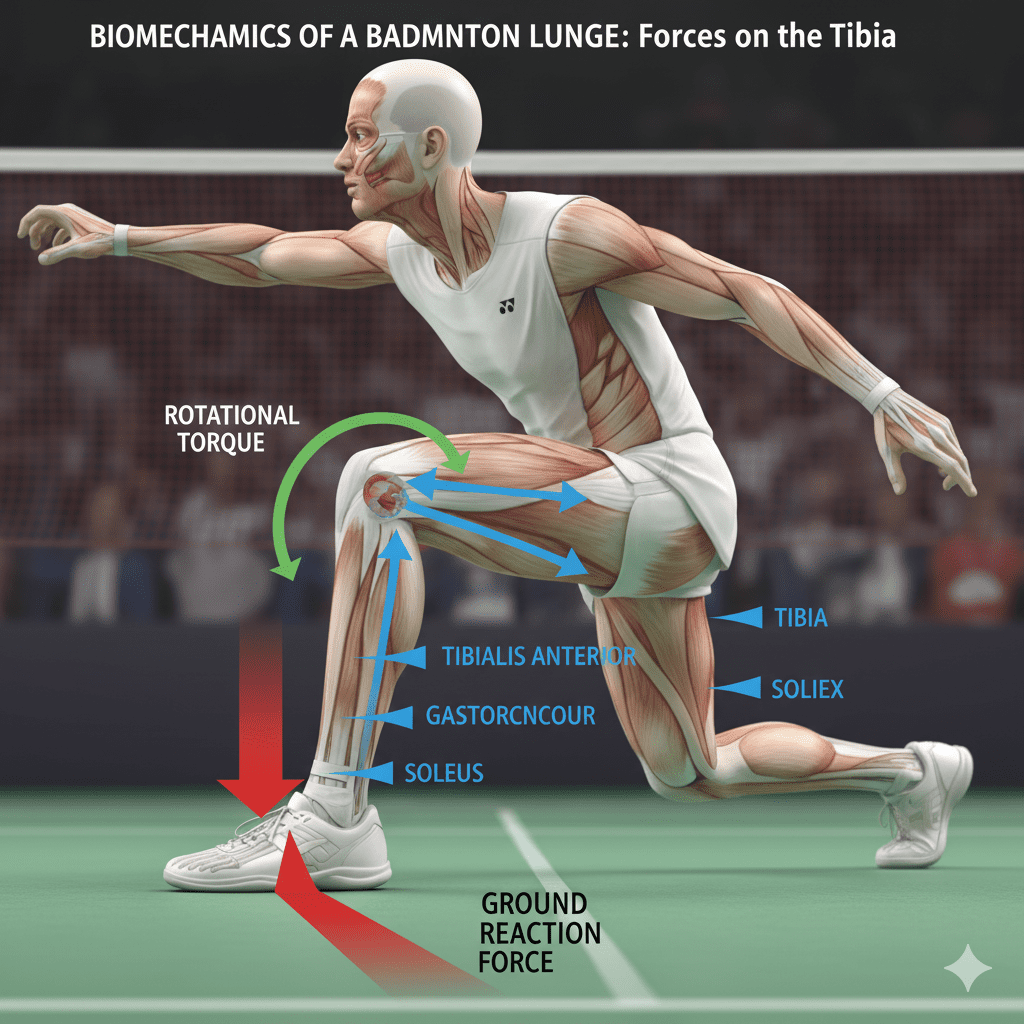
1. Sudden Stops & Quick Push-Offs Stress the Shin Bone
Badminton has fast footwork.
Constant stopping.
Starting.
Jumping.
Sliding.
Lunging.
All these movements increase the force on your tibia (shin bone) by 3–8 times your body weight depending on the intensity.
For a young body that is still adapting, this quickly becomes overload.
2. Weak Foot & Ankle Muscles = More Bone Stress
Most young adults have:
Weak arch muscles.
Weak tibialis posterior.
Weak calves.
When these muscles are weak, the bone takes more load than it should.
Research in sports medicine clearly shows:
The weaker the foot muscles → the higher the risk of shin pain.
3. Flat Feet or Overpronation Makes It Worse
When your feet roll inward while landing (pronation)…
The shin muscles work twice as hard to control the movement.
This repetitive strain irritates the shin bone lining.
Not dangerous.
But painful.
4. Hard Badminton Courts Increase Impact
Hard surfaces = more shock.
More shock = more tibial stress.
More tibial stress = more shin pain.
Simple science.
Not your fault.
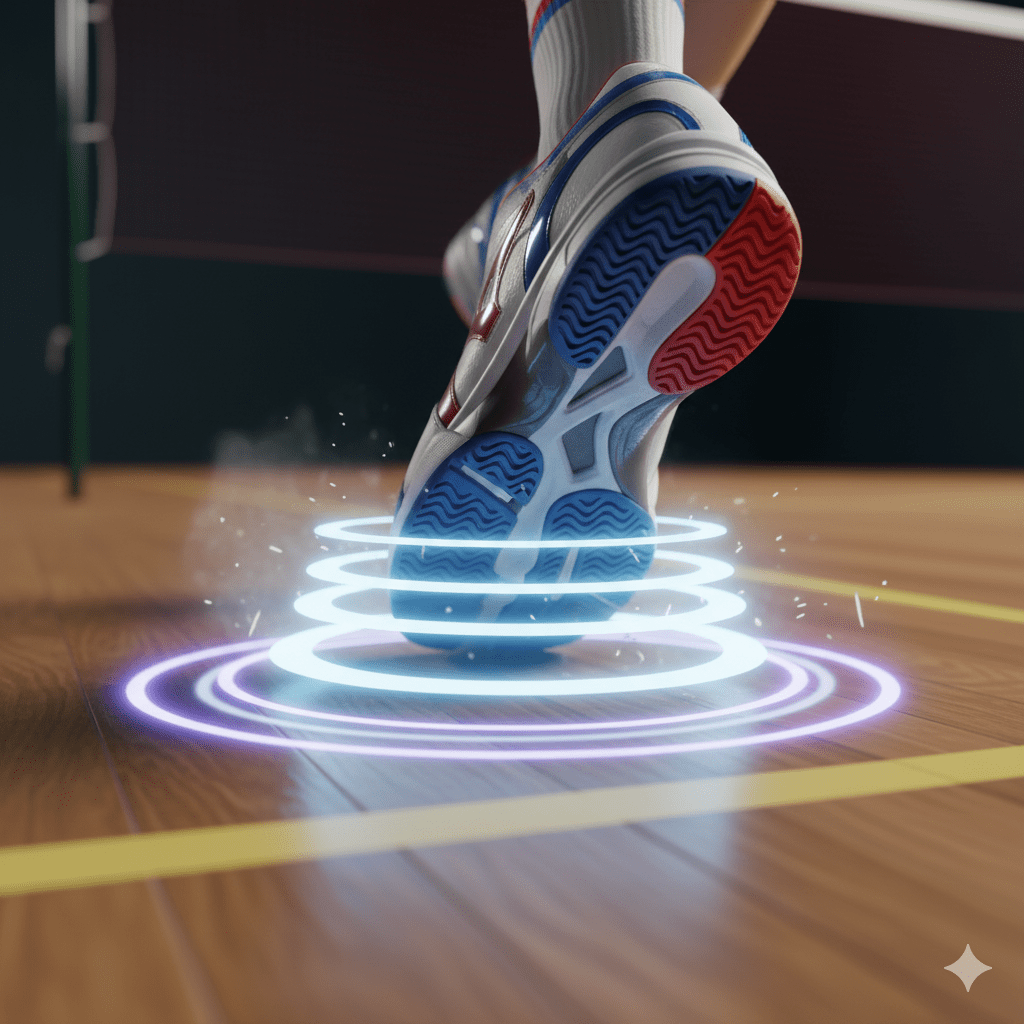
5. Poor Footwear = The Hidden Culprit
Most young players wear:
Running shoes
Walking shoes
Or cheap court shoes
These do NOT support lateral movements.
They do NOT absorb shock.
And they do NOT protect your tibia.
Good shoes = instant improvement.
6. Tight Calves Pull on the Shin Bone
If your calf muscles are tight…
Your tibialis anterior (front shin muscle) overworks to control foot movement.
This imbalance often triggers shin pain in teens and young players.
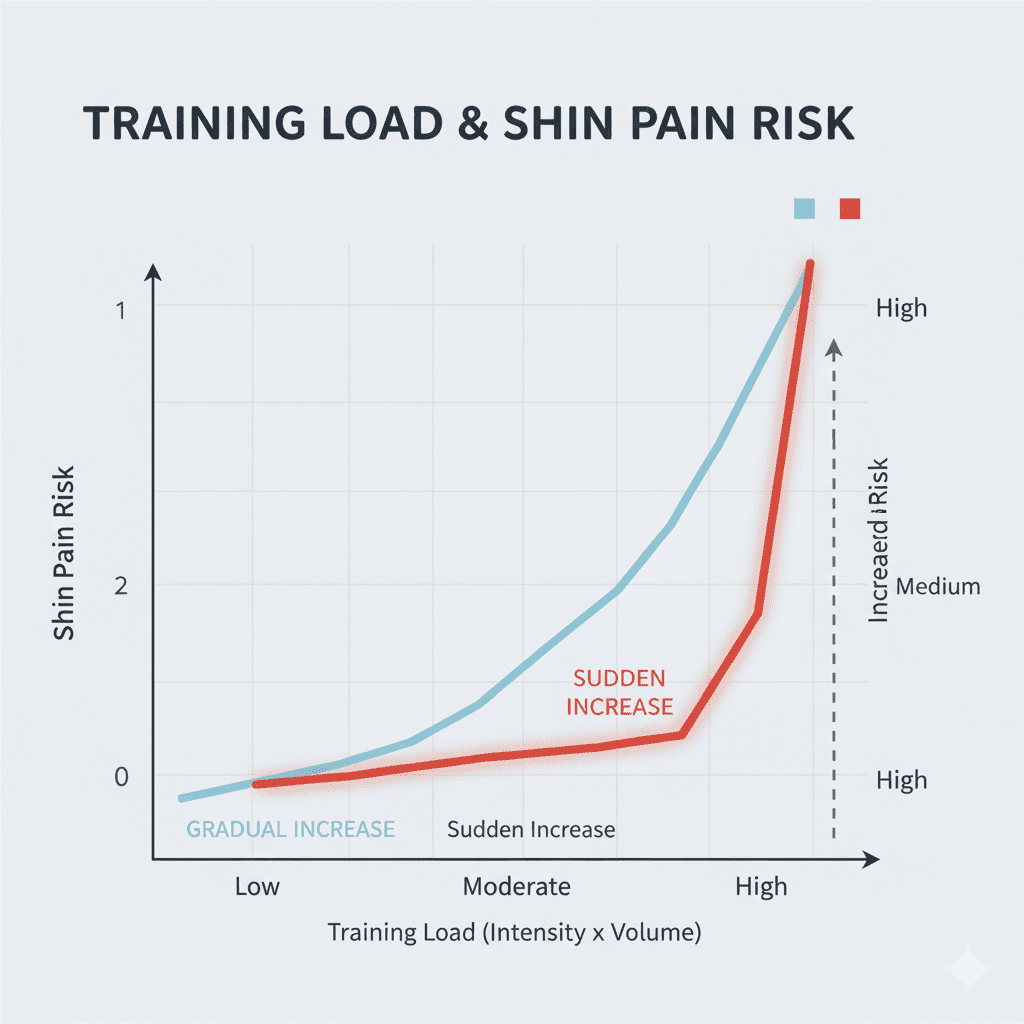
7. Increasing Training Load Too Fast
This is the #1 research-proven cause.
Young people jump from:
0 days → 4 days badminton
20 minutes → 1 hour
Light play → full intensity games
Your bone cannot keep up with this sudden shock.
This is why shin pain develops within the first 2–6 weeks of playing regularly.
How Physiotherapy Helps Young Players Recover Faster
This is the fun part.
Shin pain is one of the most treatable sports issues.
Here’s exactly what I help players with:
1. Foot Posture Analysis
We study:
• Arch position
• Foot alignment
• Landing mechanics
• Knee tracking
Once we fix these → pain reduces quickly.
2. Correcting Muscle Imbalances
Most young players need:
• Tibialis posterior strengthening
• Calf strengthening
• Ankle stability work
• Hip stability work
When these muscles are strong…
Your shin bone has less work to do.
3. Shock Absorption Training
We retrain how your foot hits the ground.
Small changes = big results.
This is research-proven across multiple sports studies.
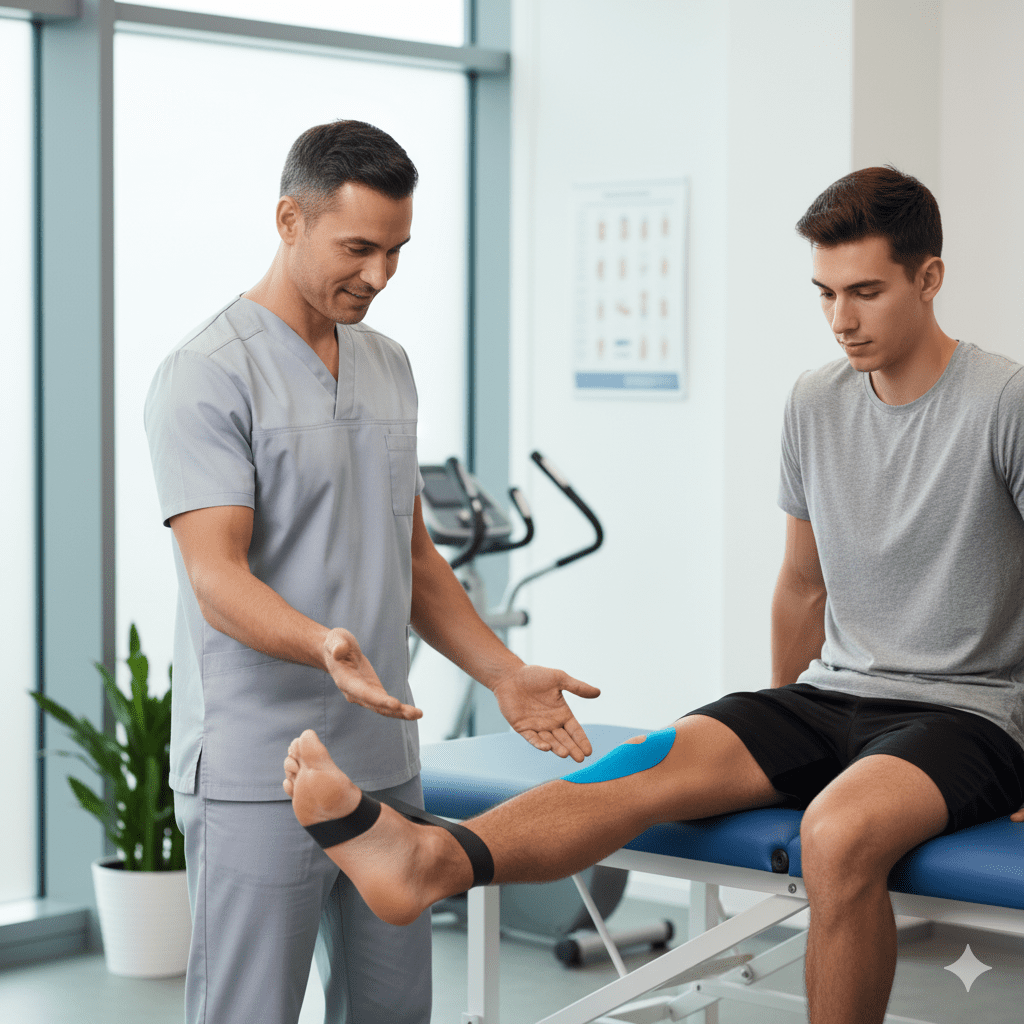
4. Taping if Needed
Sometimes we use:
• Arch taping
• Shin support taping
It gives quick relief during the early painful phase.
5. Progressive Return-to-Sport Plan
We never push you too fast.
We increase:
• Court time
• Game intensity
• Footwork drills
Slowly and safely.
Your body adapts.
Your pain fades.
Simple Things You Can Start Doing Today
Here’s the child-friendly, easy list:
✔ Stretch your calves
✔ Strengthen your foot muscles
✔ Warm up for 5 minutes before playing
✔ Wear proper badminton shoes
✔ Avoid sudden jumps in training
✔ Ice if the pain is sharp
✔ Rest if it hurts while walking
Small habits = big results.
When You Should Take Shin Pain Seriously
Only if you notice:
• Pain even at rest
• Pain at night
• Sharp pain on one exact point
• Swelling
These signs mean you need to slow down and check with a physiotherapist.
Your Body Isn’t Weak — It’s Adapting
This is the most important message I want you to remember:
Your body is not breaking.
Your bones are not fragile.
Your muscles are not failing you.
You are simply learning a new sport.
Your body is building new strength.
Your movement patterns are upgrading.
Badminton is a demanding sport.
Your shins are just asking for a little patience and support.
And once they adapt…
You become unstoppable.

Final Takeaway
Shin pain in young badminton players is common.
It is fixable.
And it is completely preventable with the right training and physiotherapy guidance.
Your body wants to heal.
You just have to help it a little.
If your shin pain is stopping you from enjoying badminton…
Or if you just want to play pain-free with confidence again…
Come visit Physiogain.
I’ll help you understand your body, fix the root cause, and get you back on the court stronger than before.
Your recovery starts the moment you decide to take the first step —
and Physiogain is here to guide you all the way.