
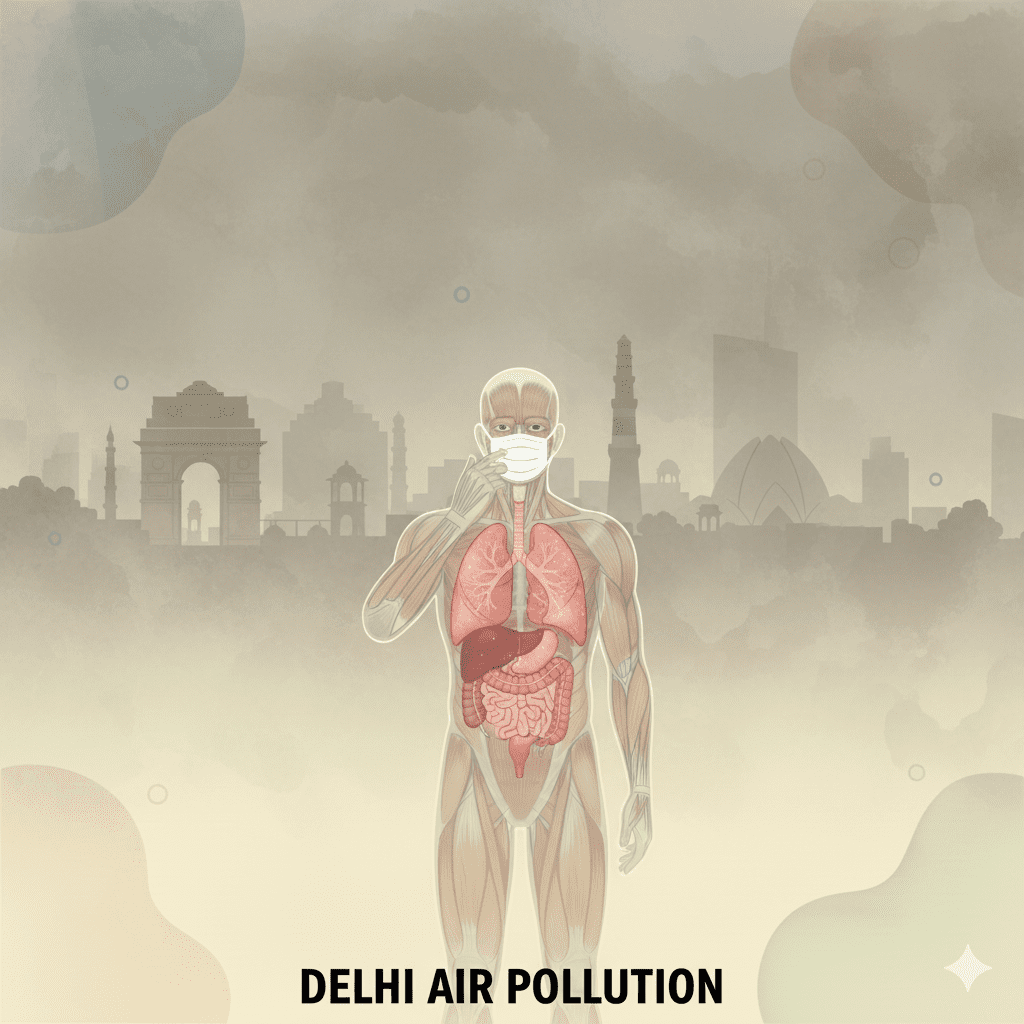
Have you ever wondered why joint pain or muscle weakness seems worse when the air in Delhi gets bad?
It’s not just in your head. The polluted air in the city can actually affect how your muscles and joints feel and how they heal.
As a physiotherapist, I believe in helping your body move well — even in tough environments. And right now, in places like Delhi where the air is often very polluted, that means understanding how bad air affects your muscles, strength, and joints. Then, we can use smart physiotherapy methods to protect and heal your body.
Why Air Pollution Is Not Just a Lung Problem
Most people think of air pollution in terms of breathing — asthma, coughs, or breathing being harder.
But pollution affects more than just your lungs.
Here’s how:
- Tiny particles in the air — called PM2.5 — are small enough to enter your bloodstream.
- These particles cause inflammation (your body’s defence system gets triggered).
- That inflammation doesn’t just stay in your lungs — it affects joints, muscles, and even your blood vessels.
In Delhi, doctors are now seeing more people with joint pain and arthritis who don’t have a family history of it. They believe long-term exposure to PM2.5 is a major factor. India Today+1
Autoimmune reactions are being reported, where the immune system attacks joint tissues. India Today
How Polluted Air Weakens Your Muscles
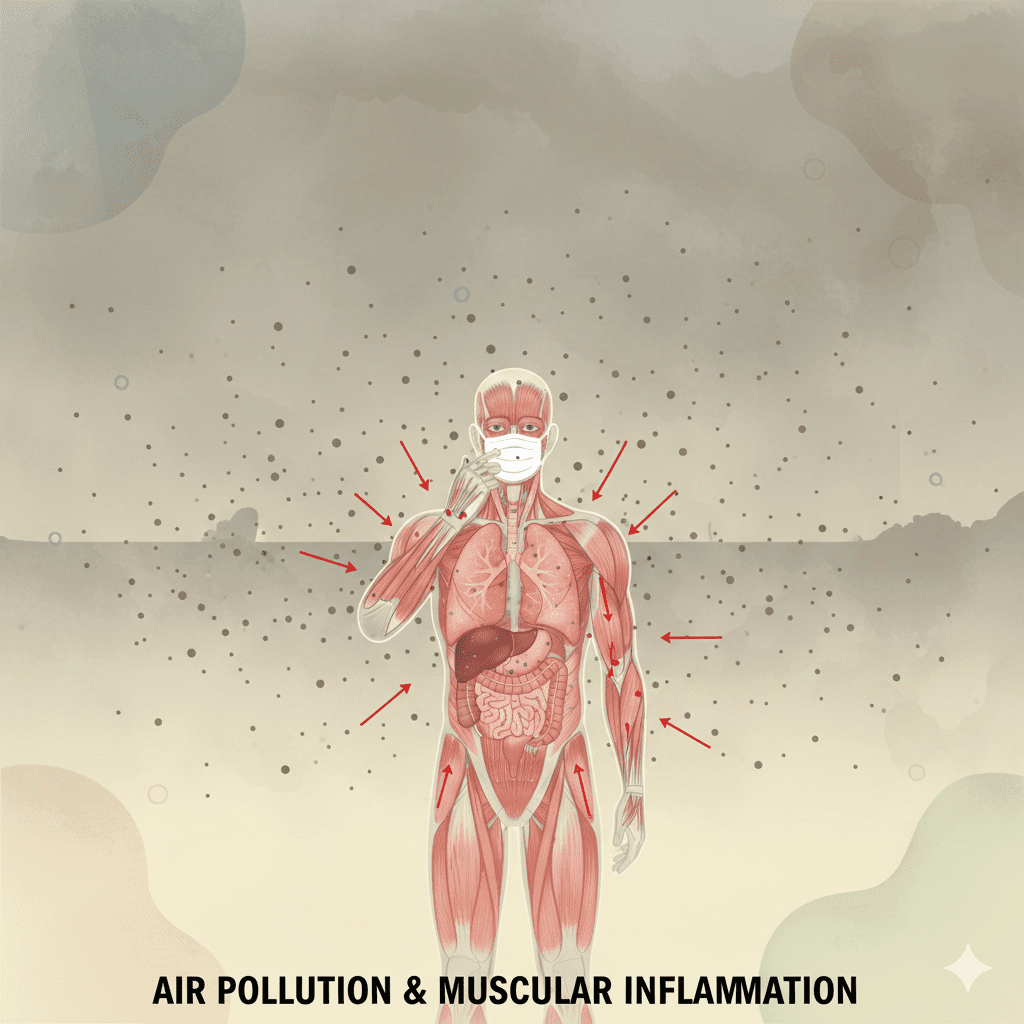
You might ask: “How does dirty air make my muscles weak?” That’s a very good question. There is strong scientific evidence for this.
Here’s what research shows:
- A 5-year study looked at older adults exposed to PM2.5 over time. It found that people with higher pollution exposure lost grip strength faster and lost skeletal muscle mass faster too. PMC+1
- In the same study, people exposed to more PM2.5 also gained more body fat. PubMed
- Another study in the UK showed that long-term exposure to things like PM2.5 and NO₂ is linked to a higher risk of sarcopenia (which means muscle loss) as people age. PubMed
- There is also research showing that very small particles can damage the mitochondria in muscle cells. Mitochondria are like powerhouses for your cells — when they don’t work well, muscles don’t recover or work as strongly. PubMed
How Pollution Makes Your Joints Hurt More
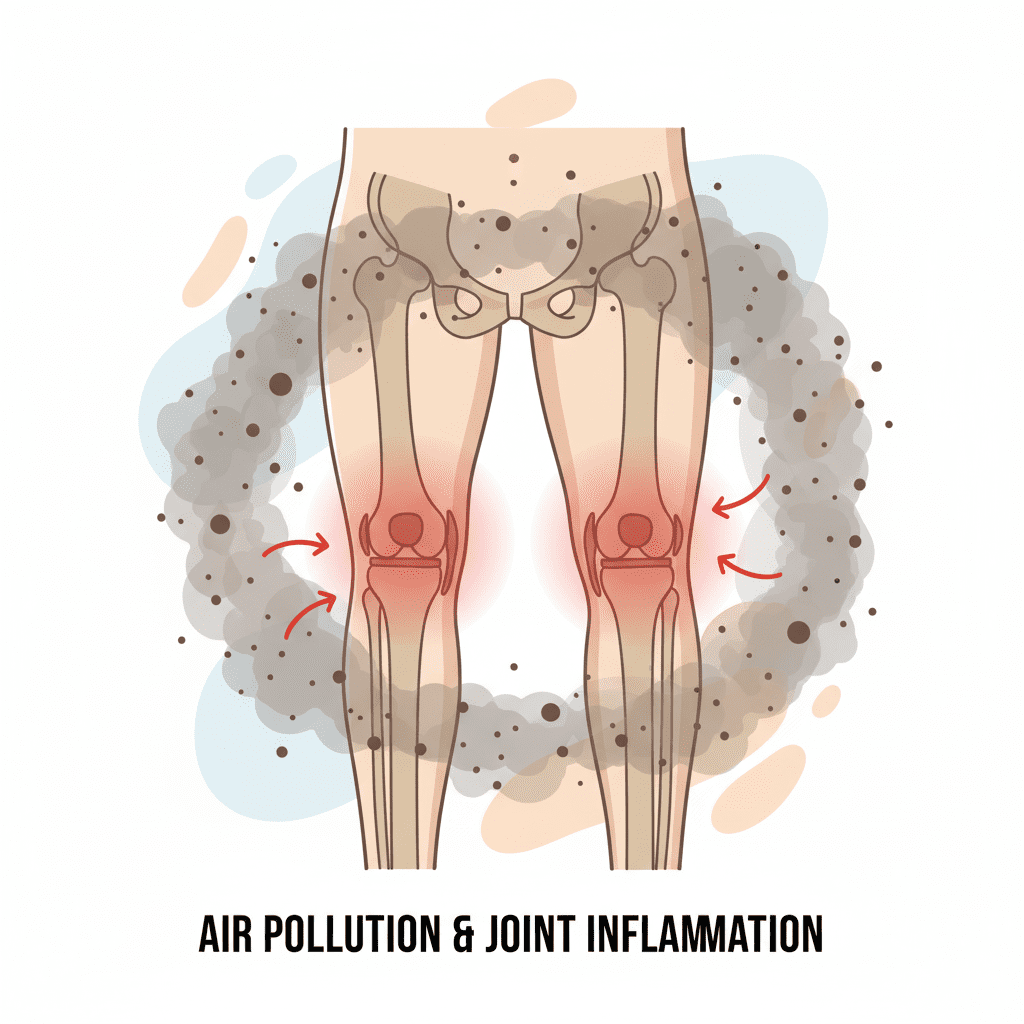
When pollution levels stay high, your immune system stays on “alert.” Over time, this chronic alertness can damage joint tissue.
Here’s how it plays out:
- Inflammation triggered by PM2.5 can make joints more sensitive.
- Doctors in Delhi are reporting more cases of arthritis and joint stiffness in younger people, even those who don’t normally have arthritis risk. India Today
- This inflammation may make existing joint conditions worse — or may even trigger new joint problems. India Today
How Air Pollution Slows Physical Movement and Function
Air pollution doesn’t just hurt muscles and joints — it can slow down your ability to move well.
Here’s what studies have found:
- In a large study, air pollution exposure was linked with declines in “physical functioning” — things like walking, standing, and grip strength went down when pollution was higher. PubMed
- Another study found that pollutants like PM2.5 and ozone can create oxidative stress and inflammation. These stressors damage cells and make walking or moving harder over time. BioMed Central
How Physiotherapy Can Help Protect You in Bad Air
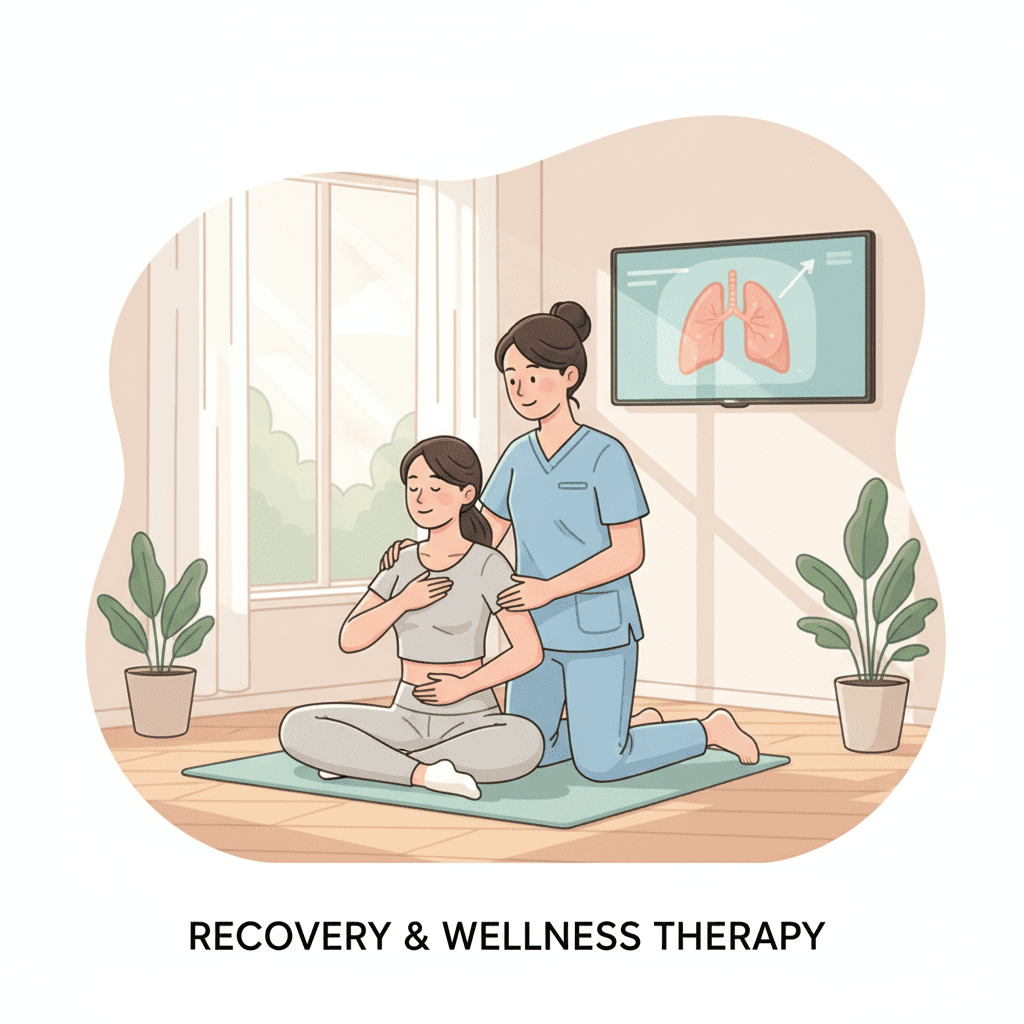
Okay — so what can you do about all this if you live in Delhi?
Here’s how physiotherapy (and smart habits) can help you fight the harmful effects of air pollution:
1. Strength & Mobility Work
- Low-impact exercises (like gentle squats, lunges, or resistance-band work) help you maintain muscle even if pollution is high.
- Balance and mobility exercises improve how well your joints move — and less stress on joints means less risk of inflammation.
2. Breathing & Respiratory Exercises
- Simple breathing exercises can improve lung capacity.
- Clearing your airways helps more oxygen reach your muscles, which is super important when your body is under stress from pollution.
3. Anti-Inflammatory Movement
- Use foam rollers or manual therapy (massaging tight muscles) to reduce tension and inflammation.
- Recovery sessions should include stretches + soft tissue work — so your muscles don’t stay “stressed” all the time.
4. Smart Workout Planning
- Train indoors when pollution is very bad.
- Use an air-quality app to check when AQI (Air Quality Index) is relatively better, then plan light outdoor activity.
- If you need to exercise outdoors, use a good-quality mask (like N95) to reduce the inhaled particles.
5. Strengthening Planning Over Time
- Build strength slowly — don’t rush. Rebuilding muscles when your body is also fighting pollution takes time.
- Consistency is key. Even short, regular sessions are more powerful than occasional strong workouts.
Simple Lifestyle Tips for Delhi Residents
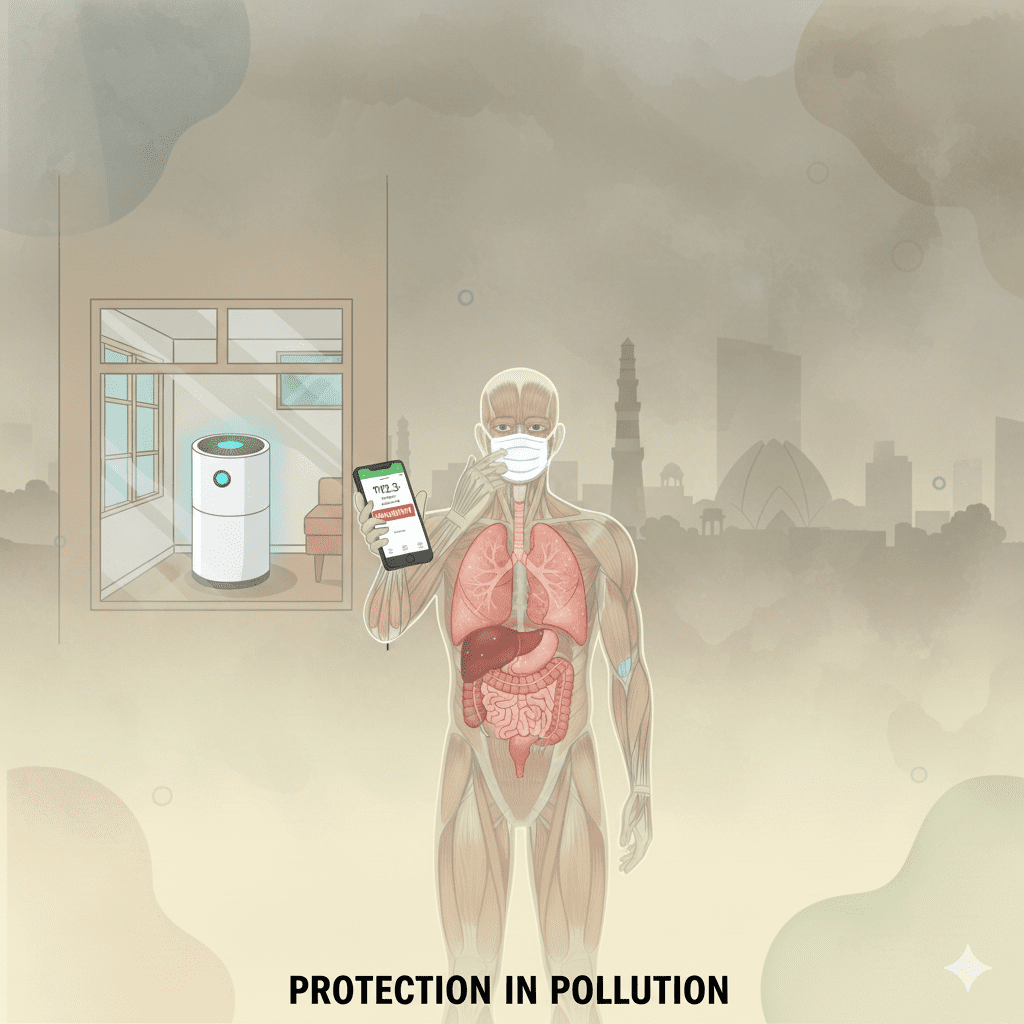
Here are a few practical things you can do in your daily life to reduce the impact of pollution on your body:
- Check the AQI daily with a reliable app before planning outdoor exercise.
- Use an air purifier at home — it helps reduce indoor PM2.5 levels.
- Eat anti-inflammatory foods like fruits, vegetables, nuts, and seeds.
- Stay hydrated — water helps your body flush out toxins.
- Wear a certified mask when going out, especially during high-pollution days.
- Talk to your physiotherapist about a “pollution-resilient” workout plan — one that helps your muscles and joints stay healthy even when the air is bad.
Real-Life Story
“I remember one of my patients — let’s call her Meera. She lived in east Delhi and had started having knee pain. When the smog got really bad in winter, she said her knees stiffened more than ever. We started working on gentle strength exercises and breathing drills. Over a few weeks, even when the air was bad, Meera told me she felt stronger, her knees didn’t ache as much, and she felt more confident moving around.”
Why This Matters for You
If you live in or around Delhi — or any city with high pollution — what you breathe is deeply connected to how your body moves.
Bad air doesn’t just hurt your lungs.
It affects your muscles, your joints, and how well you can recover from injury.
But here’s the hopeful truth: Physiotherapy can help.
With the right exercises, breathing work, and smart planning, you can protect your body, stay strong, and even heal better — despite the smog.
Key Take-Aways (What You Should Remember)
- Long-term exposure to PM2.5 (tiny polluted particles) can lead to muscle weakening and joint inflammation.
- Scientific research clearly shows a drop in muscle mass and strength when pollution is high. PMC+1
- Pollution increases the risk of arthritis, even in younger, otherwise healthy people. India Today+1
- Physiotherapy — when planned smartly — can protect your body by building strength and helping you move freely.
- Small lifestyle changes (like checking AQI, wearing masks, doing indoor exercise) can make a big difference.
🔬 Key Recent Research on Air Pollution & Musculoskeletal Health
Ambient Air Pollution and Sarcopenia (UK Biobank Study)
- A large prospective cohort study using UK Biobank data (303,031 participants) showed that long-term exposure to PM₂.₅, NO₂, and NOₓ significantly increased the risk of probable sarcopenia (loss of muscle strength/quality). PubMed
- For every 10 μg/m³ increase in PM₂.₅, the hazard ratio (HR) for sarcopenia went up (HR = 1.232). PubMed
- This suggests a strong link between air pollution and muscle decline.
Cross-Sectional Study on PM₂.₅ & Sarcopenia in Central China
- A 2023 study found a correlation between PM₂.₅ (plus PM₁₀ and O₃) exposure and higher odds of sarcopenia, especially in women. PubMed
- The “mixture analysis” showed increases in sarcopenia risk driven significantly by PM₂.₅.
Air Pollution & Musculoskeletal Diseases (Degenerative & Inflammatory)
- A large prospective cohort study examined long-term exposure to PM₂.₅, PM₁₀, NO₂, and NOₓ and found modest but significant associations with increased risk of musculoskeletal diseases — including inflammatory arthropathies (like arthritis) and osteoporosis. PubMed
- Specifically, higher PM₂.₅ was linked to an increased risk of osteoporosis. PubMed
PM₂.₅ Constituents & Arthritis / Rheumatoid Arthritis
- A 2024 study examined different chemical components of PM₂.₅ (e.g., black carbon) and found that some constituents have a stronger association with arthritis and RA. PubMed
- The study also considered the role of green space (NDVI) and found interaction effects, suggesting environment + pollution both matter. PubMed
Mendelian Randomization Study — Air Pollution & Rheumatoid Arthritis
- A two-sample Mendelian randomization (MR) study (2025) used genetic data to test if air pollution causes RA. Surprisingly, it found no significant causal effect for PM₂.₅, PM₁₀, NO₂, or NOₓ on RA risk (based on genetic instruments). PubMed+1
- This suggests that while there’s a correlation in observational studies, the direct genetically predicted causation isn’t fully established yet.
PM₂.₅ & Frailty (Aging / Physical Weakness)
- A BMC Public Health study (2024) covering 122 cities in China and 7 European countries used a “frailty index” (which includes physical decline) and found a possible causal association between long-term PM₂.₅ exposure and frailty. BioMed Central
- Their Mendelian randomization analysis also supported a potential causal link (OR = 1.2933 for frailty per PM₂.₅ exposure increment). BioMed Central