

Have you ever felt knee pain…
But your X-ray report came back saying
“Everything is normal”?
You walk out confused.
Scared.
Unsure of what’s actually happening inside your knee.
That confusion is real.
And honestly?
You’re not alone.
This blog will help you understand exactly why knee pain often starts before someone is officially diagnosed with “arthritis.”
And trust me…
Once you understand what’s happening inside the joint, everything finally makes sense.
🦴 What Happens Inside the Knee Before Arthritis Shows Up
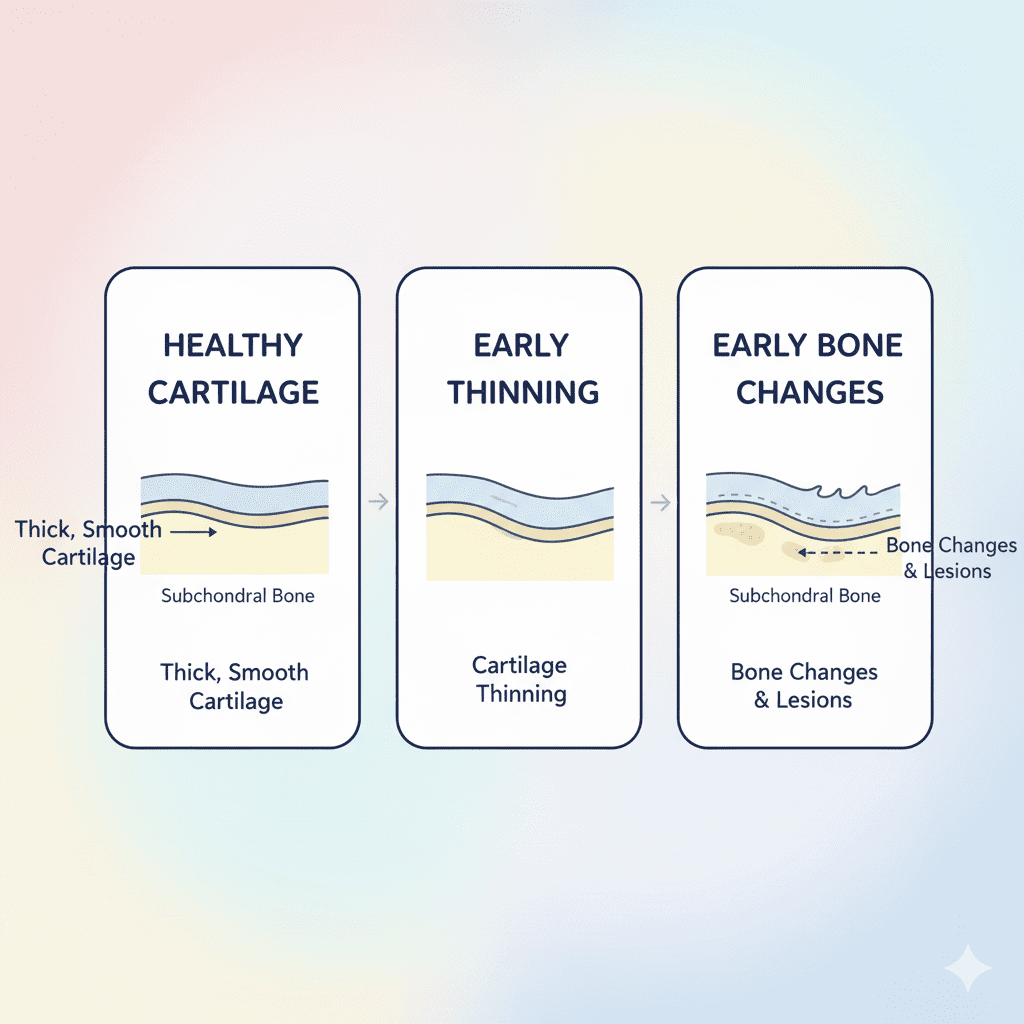
Cartilage has no nerves
This is the most important fact.
Cartilage cannot feel pain.
So when it gets damaged in the early stages…
You don’t feel it.
There are no alarms.
No warnings.
No signals.
This is why early arthritis is often called “silent degeneration.”
The pain starts when the bone reacts
Even though cartilage has no nerves…
The bone underneath it does.
So when cartilage becomes thinner, rougher, or uneven…
The bone starts taking more pressure.
And this is where the pain starts.
🔍 The Bone Tries to Protect Itself — And That’s When You Feel It
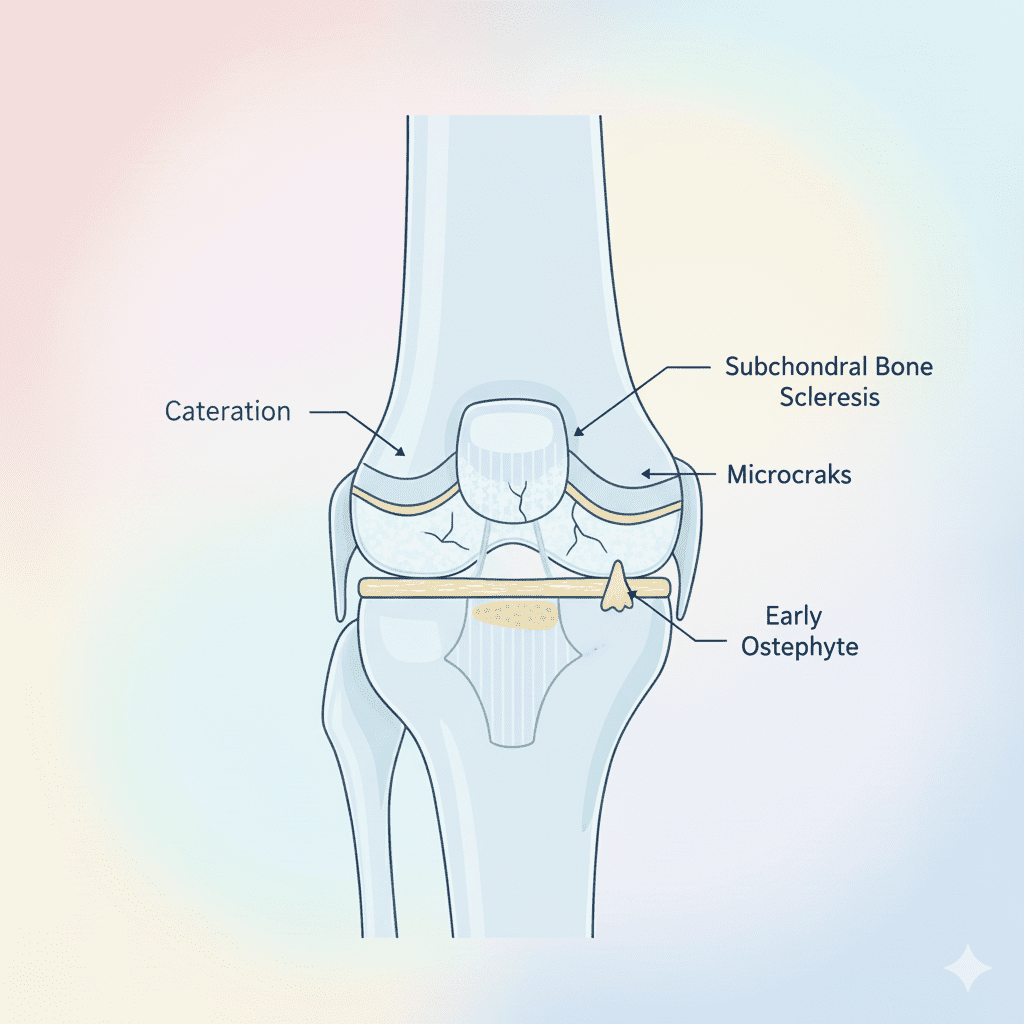
Based on trusted research from biomechanics and orthopaedic journals, the bone responds in a predictable way:
- It becomes denser (called subchondral sclerosis)
- Tiny cracks or micro-damage appear
- The smooth surface becomes slightly irregular
- The body may start forming early osteophytes (small bony growths)
These changes can hurt even before a doctor tells you that you have arthritis.
This means…
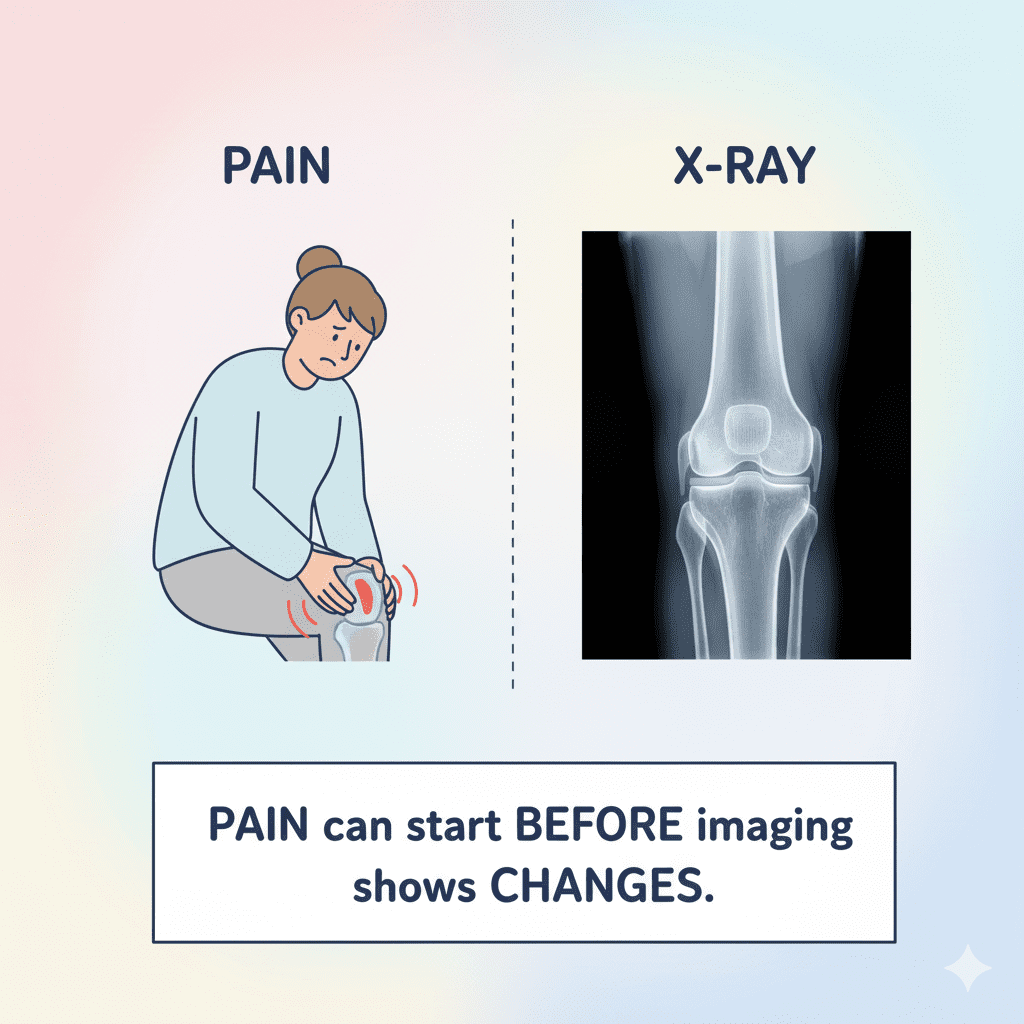
Your knee pain might be very real
even if your scan shows nothing.
🎯 Why Knee Pain Starts Before the X-Ray Shows Anything
Most people think arthritis is only real when it appears on an X-ray.
But the science says something different.
X-rays only show:
- late cartilage loss
- bigger osteophytes
- joint space narrowing
They do not show early cartilage damage.
They do not show early bone stress.
They do not show early inflammation.
That’s why you may have:
- Pain after walking
- Stiffness after sitting
- Pain while going downstairs
- Swelling after sports
- Clicking or grinding sensations
…and still be told:
“Your report is normal.”
But your knee is already showing early signs of degeneration.
Just not the kind that X-rays can capture yet.
Why Physiotherapy Helps Before Arthritis Develops
Early changes inside the joint are NOT permanent.
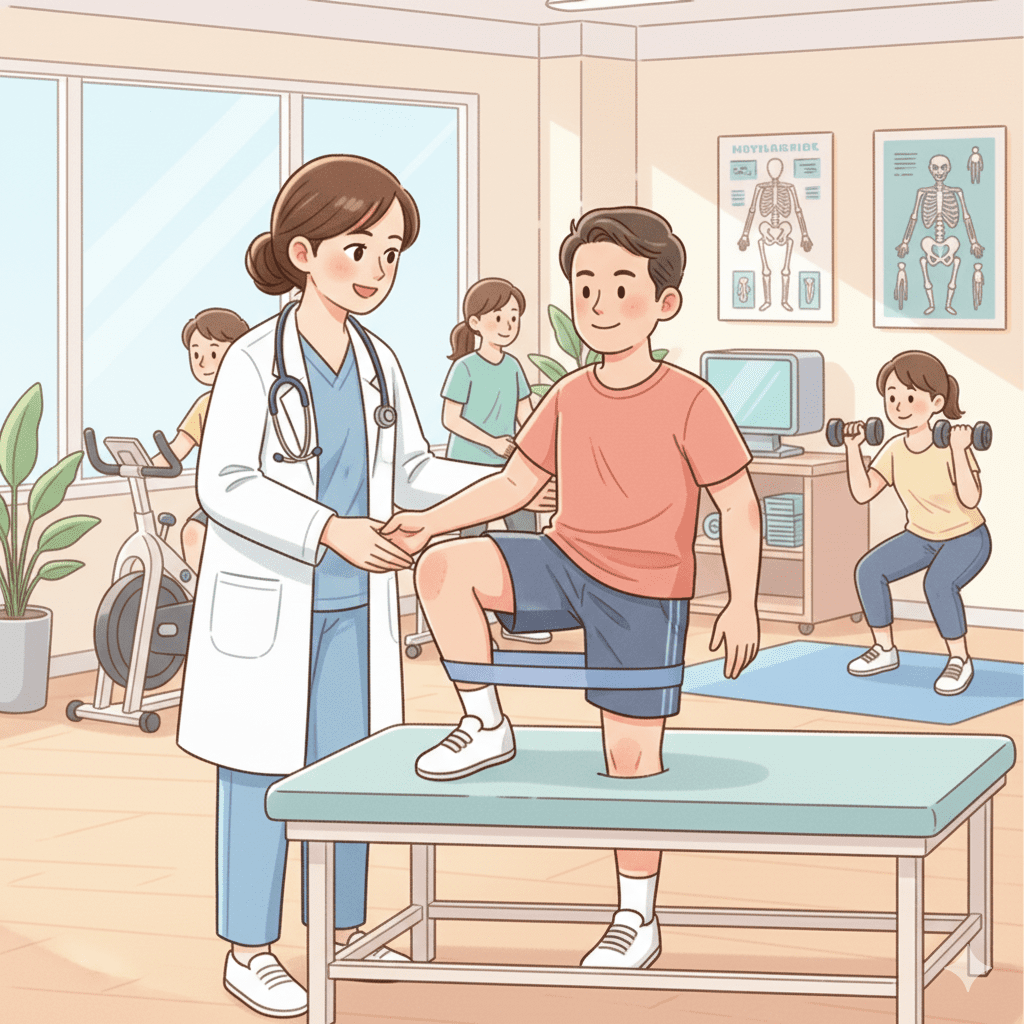
And this is the stage where physiotherapy makes the biggest difference.
Physiotherapy helps because it:
- Improves joint lubrication
- Restores proper load distribution
- Activates the quadriceps (which protects your knee like armor)
- Strengthens the hip muscles to reduce knee stress
- Reduces pressure on the femoral condyle
- Decreases inflammation naturally through movement
- Helps the joint move smoothly again
Movement heals the knee.
Correct movement protects it.
The earlier you start treating knee pain,
the more you can prevent long-term damage.
When Should You Worry?
You should take knee pain seriously when:
- It lasts more than 2–3 weeks
- You feel stiffness every morning
- Pain increases while going downstairs
- You hear grinding or cracking frequently
- There is swelling after workouts
- You rely on painkillers often
- You stopped activities because of pain
Pain is your body whispering.
Don’t wait until it starts shouting.
🌱 You Can Save Your Knee Before Arthritis Shows Up
Your knee pain is not “in your head.”
It’s not about age.
It’s not about bad luck.
Your body is simply reacting to early changes.
And these changes respond beautifully to early physiotherapy care.
You can protect your knee.
You can prevent arthritis from worsening.
And you can stay active without fear.

If your knee hurts and you’re tired of guessing what’s wrong…
Come visit us at Physiogain.
We don’t just treat the pain.
We find the reason behind it.
We fix the root cause.
And we help you move confidently again — for life.
Your knees deserve early care.
Your future self will thank you.