
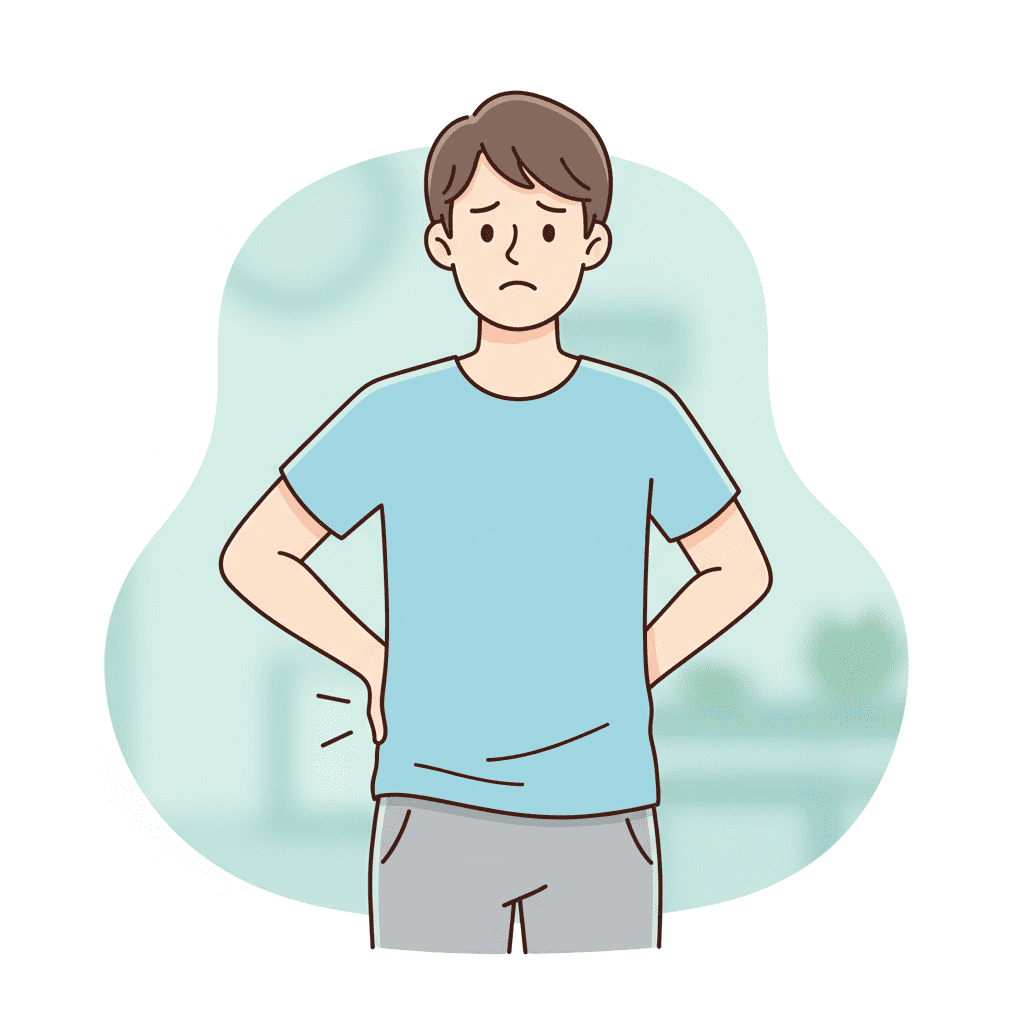
Back pain is becoming the #1 problem among young adults (18–35) — mainly because of phones,
long sitting, bad posture, weak core, and sudden workouts after long gaps.
But here’s the real truth:
👉 Not all back pain is the same.
And when you know which type you have, it becomes easier to understand why it’s happening and when you need a physiotherapist.
This blog explains the 5 most common types of back pain, the symptoms you may notice, and simple things you can do at home.
(Educational purpose only. Always consult a physiotherapist for a proper assessment.)
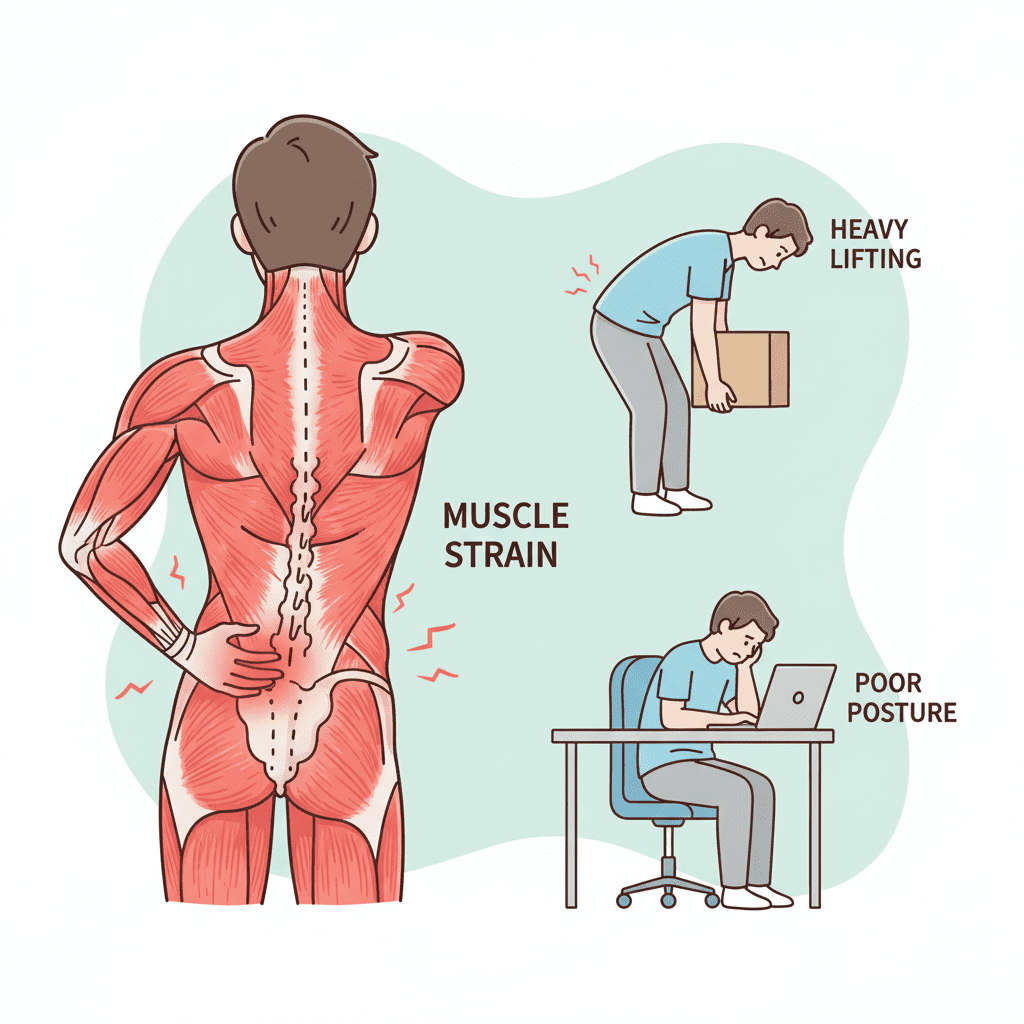
1. Muscle Strain Pain (The Most Common)
How it feels:
- Sharp or tight pain in the lower back
- Increases if you bend, lift, or twist
- Muscles feel “pulled” or tired
- Happens after long sitting or sudden heavy activity
Why it happens:
- Long hours on laptop
- Bad lifting technique
- Weak core muscles
Simple home fix:
- Gentle stretching
- Warm packs
- Light walking
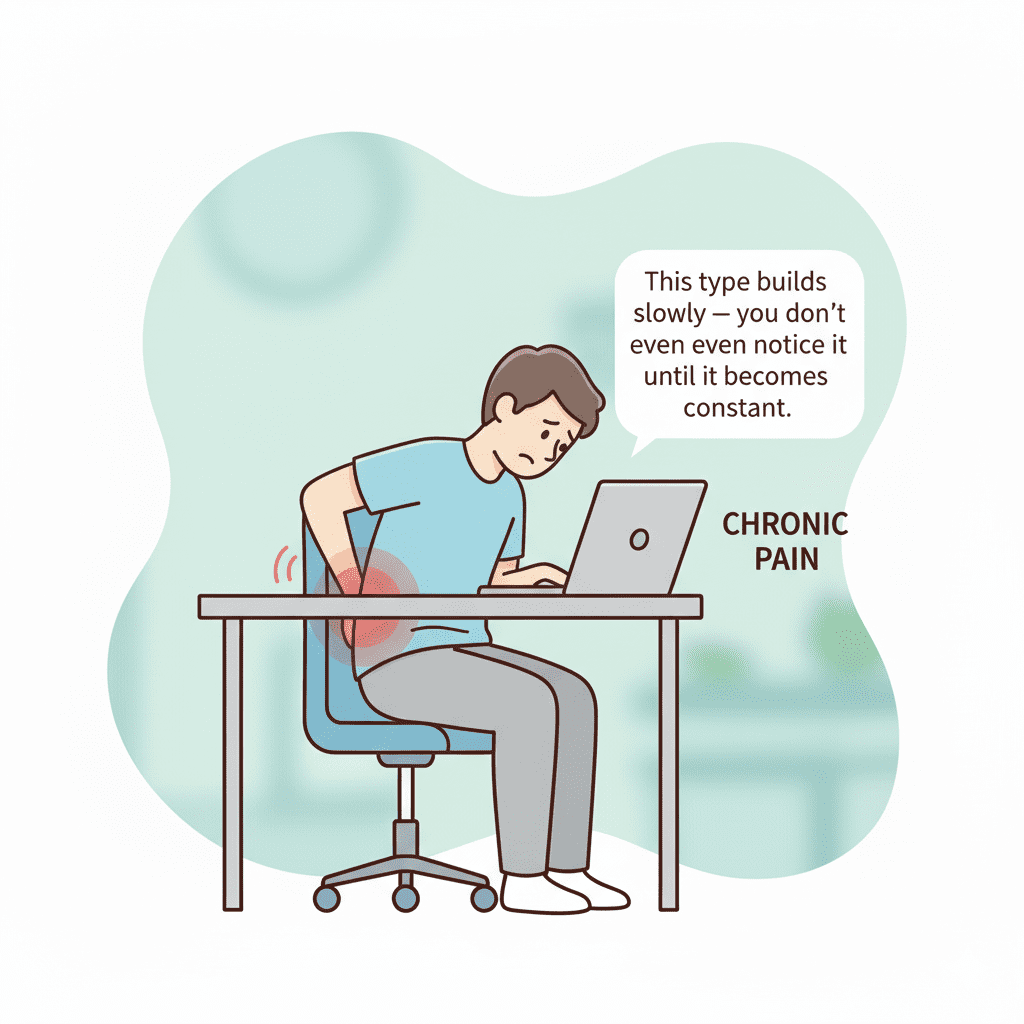
2. Postural Back Pain (The “Laptop Back”)
How it feels:
- Dull, achy pain in mid or lower back
- Pain increases after sitting for 45+ minutes
- Shoulders feel tired
- Better when you stand or walk
Why it happens:
- Sitting with a bent spine
- Hunched shoulders
- No back support
Simple home fix:
- Sit upright
- Keep screen at eye level
- Stretch every 30–40 minutes
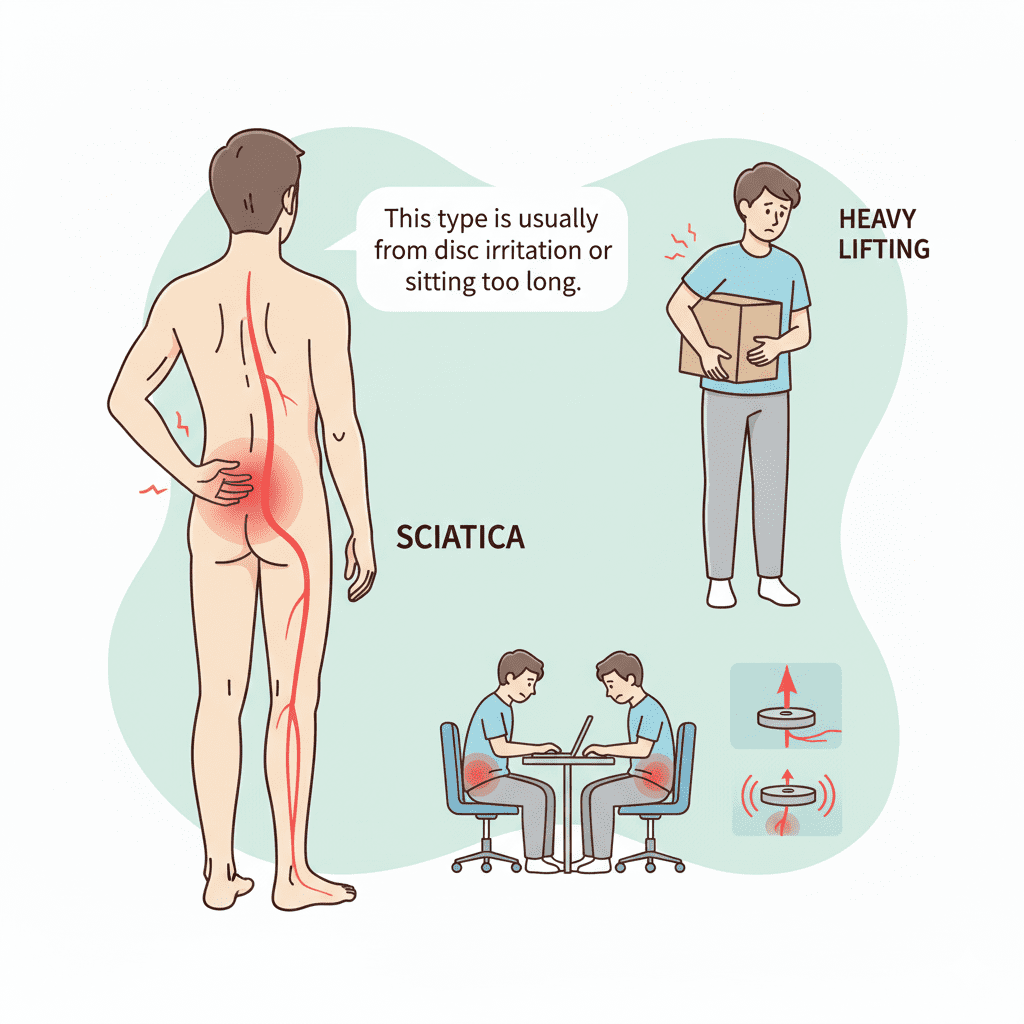
3. Nerve-Related Pain (Sciatica-Like Pain)
How it feels:
- Sharp, shooting pain down the leg
- Tingling or numbness
- Pain increases when you sit for long
- One side hurts more than the other
Why it happens:
- Irritated nerve
- Sitting on soft couch for hours
- Weak hip and core muscles
When to see a physio:
- If the pain travels below the knee
- If you feel numbness or weakness
4. Joint-Related Back Pain (Facet Pain)
How it feels:
- Pain stays in one small area
- Feels worse when you bend backward
- Morning stiffness
- Pain reduces with movement
Why it happens:
- Long sitting
- Sudden twisting
- Reduced spinal mobility
Simple home fix:
- Gentle mobility exercises
- Light warm-ups before workouts
5. Stress-Related Back Pain (Yes, Stress Can Hurt Your Back)
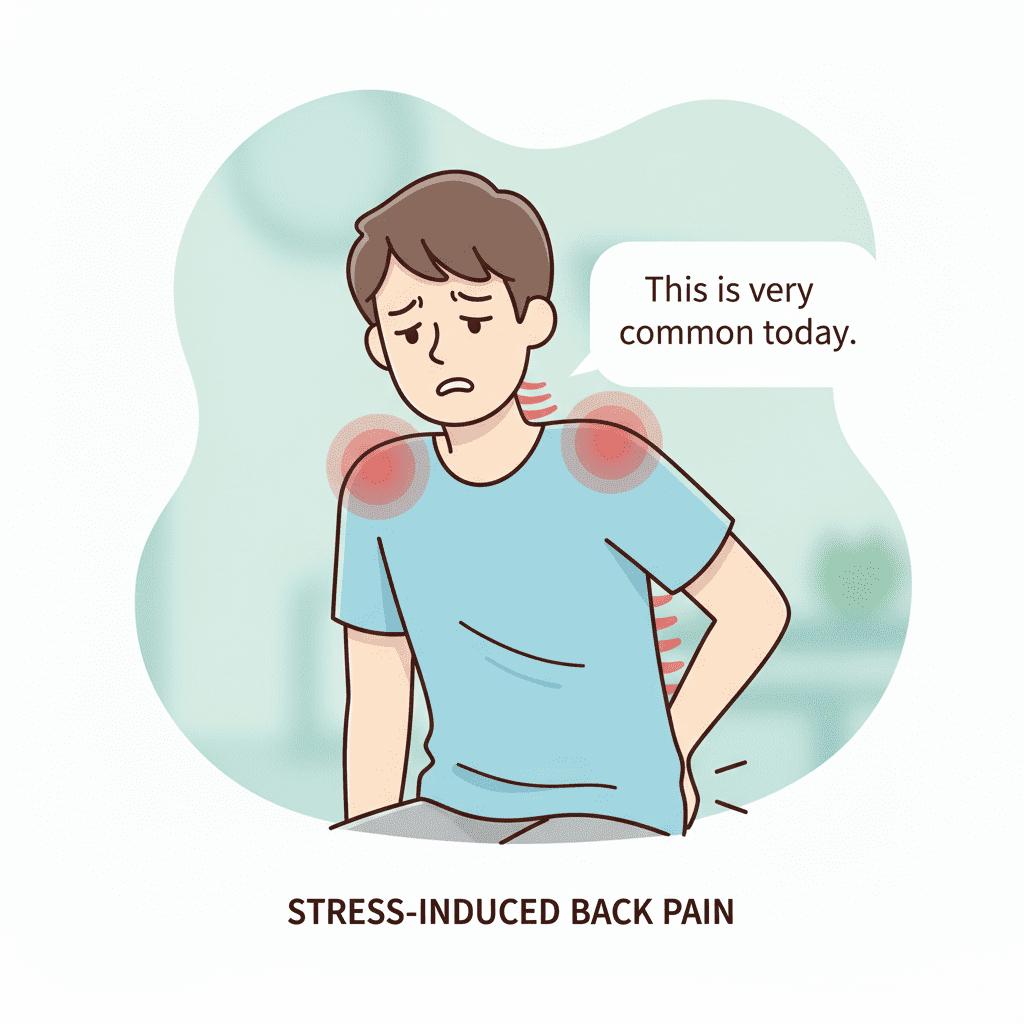
How it feels:
- Tightness in upper or lower back
- Pain comes and goes
- Gets worse on stressful days
- Muscles feel “locked”
Why it happens:
- Stress stiffens muscles
- Shallow breathing
- Constant tension
Simple home fix:
- Deep breathing
- Gentle stretching
- Short walks
When Should You See a Physiotherapist?

See a physio if:
- Pain lasts more than 7–10 days
- Pain goes down the leg
- You feel numbness or tingling
- Pain affects sleep or daily work
A physiotherapist can assess:
- Muscle imbalances
- Posture issues
- Joint stiffness
- Movement patterns
- Nerve tension
And then give you a personalized plan that treats the root cause.
Simple Takeaway
Back pain is not one single problem — it has many types.
When you understand which one you’re facing, your recovery becomes much faster.
This blog is for education only.
Always consult a certified physiotherapist if your pain is severe, long-lasting, or affecting your daily life.
Why Choose Physiogain for Your Back Pain?
At PhysiGain, we don’t just treat pain — we find the real reason behind it.
Most young adults don’t know what type of back pain they have. That’s why our physiotherapists use a detailed assessment, movement tests, posture checks, and muscle strength analysis to understand exactly what’s causing your discomfort.
What you get at Physiogain:
- ✦ One-on-one expert physiotherapy
- ✦ Treatment based on the cause, not temporary relief
- ✦ Personalized exercise plans
- ✦ Posture correction + home routine
- ✦ Updated, research-backed methods
- ✦ A friendly environment where your recovery is the priority
If you’ve been struggling with back pain for more than a week, or if the pain is affecting your work, sleep, or travel — don’t wait.
👉 Book your assessment with Physiogain today and start your recovery the right way.
Your spine will thank you later.