
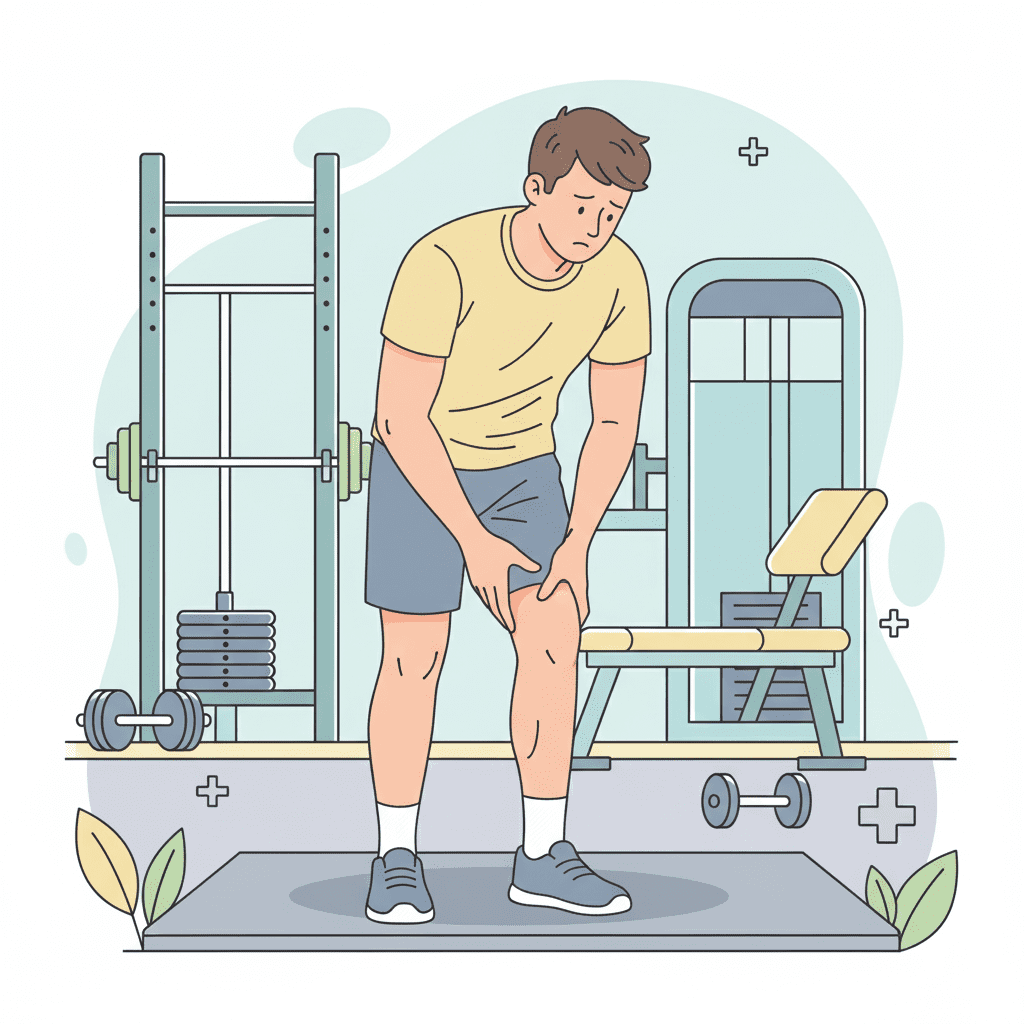
Have you noticed how many young people today — in their late teens, early 20s, or even 30s — are complaining of knee pain
that feels strange, nagging, or just won’t go away?
It’s not just “bad luck.”
There’s a real trend.
And part of it is because of how we live, how we train, and how our bodies move.
As a physiotherapist, I see this more and more in my clinic.
So in this blog, I’ll explain why this knee pain is happening to young adults, what’s going wrong in the body, and what you can do now to stop it—and even prevent it.
1. Knee Pain: Not Just for Older People Anymore
Knee pain used to feel like an “old person problem,” but that’s changing fast.
- Research shows that Patellofemoral Pain Syndrome (PFPS) is very common in younger people. PMC+1
- A meta-analysis found that around 28.9% of adolescents report symptoms of PFPS. PMC
- In primary care (GP visits), studies show many patients aged 7–24 years are being diagnosed with PFP. OUP Academic+1
So yes — it’s real, and it’s growing.
2. What’s Causing All This Knee Pain in Young Adults?
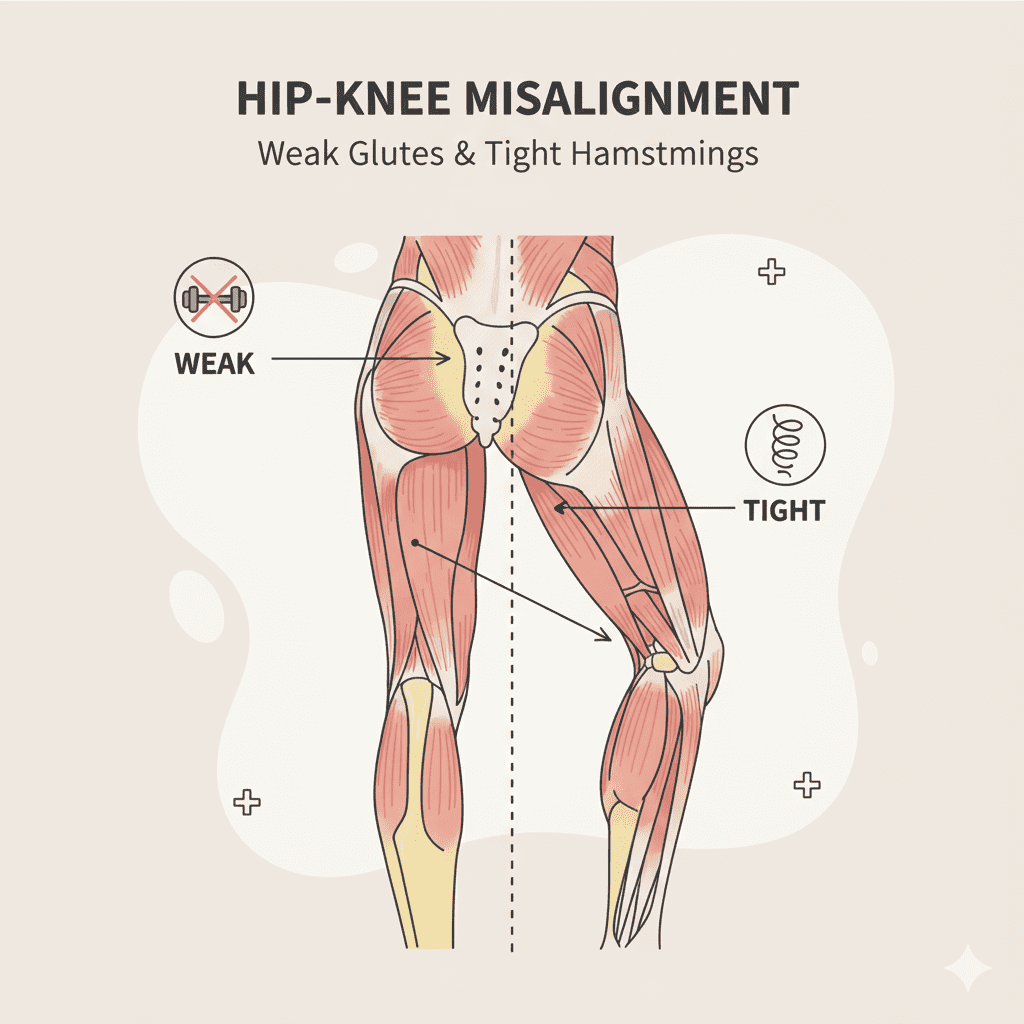
There are a few big reasons — and a lot of them come from how we move and train.
🔧 Biomechanics & Muscle Imbalance
- The way your hip, thigh, and knee work together matters a lot.
- A review of hip biomechanics found that weak hip external rotators and abductors (muscles on the side and back of your hip) can raise the risk of PFPS. RSD Journal
- Tight hamstrings (the muscles at the back of your thigh) are also linked to PFP in young adults. PubMed
🚨 Overuse & Training Load
- Many young adults are training hard: squats, lunges, running, going to the gym — sometimes too much, too fast. That overload stresses the knee.
- In female athletes, studies have shown that special movements like “landing with knee abduction” (knee caving inward) can predict who will get PFP. PubMed
⚖️ Body Composition
- Overweight or higher body fat can make things worse. In young adults with PFP, higher BMI and fat mass were linked to poor knee function and lower strength. PubMed
- Less lean muscle mass (muscles you can use) is also a problem — it makes the knee less stable and more prone to pain.
📈 Growth, Age & Gender
- PFPS is especially common during adolescence. As kids grow, their bodies change, their muscles might not keep up, and this can strain the knee joint. PubMed+1
- Also, girls/young women are more likely to get PFPS than boys — studies show higher incidence in females. PubMed+1
3. Why It’s Called a “Fitness Syndrome”
Here’s why this knee pain is starting to feel like a syndrome, not just random injury:
- Young adults are training more intensely than ever — more gym, more HIIT, more sports.
- Many don’t have a movement foundation (good hip strength, flexibility, proper alignment).
- There’s not always good coaching on biomechanics — so errors like knee collapse, poor landing, or weak hip control go unchecked.
- They push through pain, hoping it’ll go away — but without early care, the pain sticks around.
When biomechanical issues + overuse + poor recovery mix, you get a very real fitness-related knee problem.
4. What Physiotherapy Can Do — And Why You Should Act Early
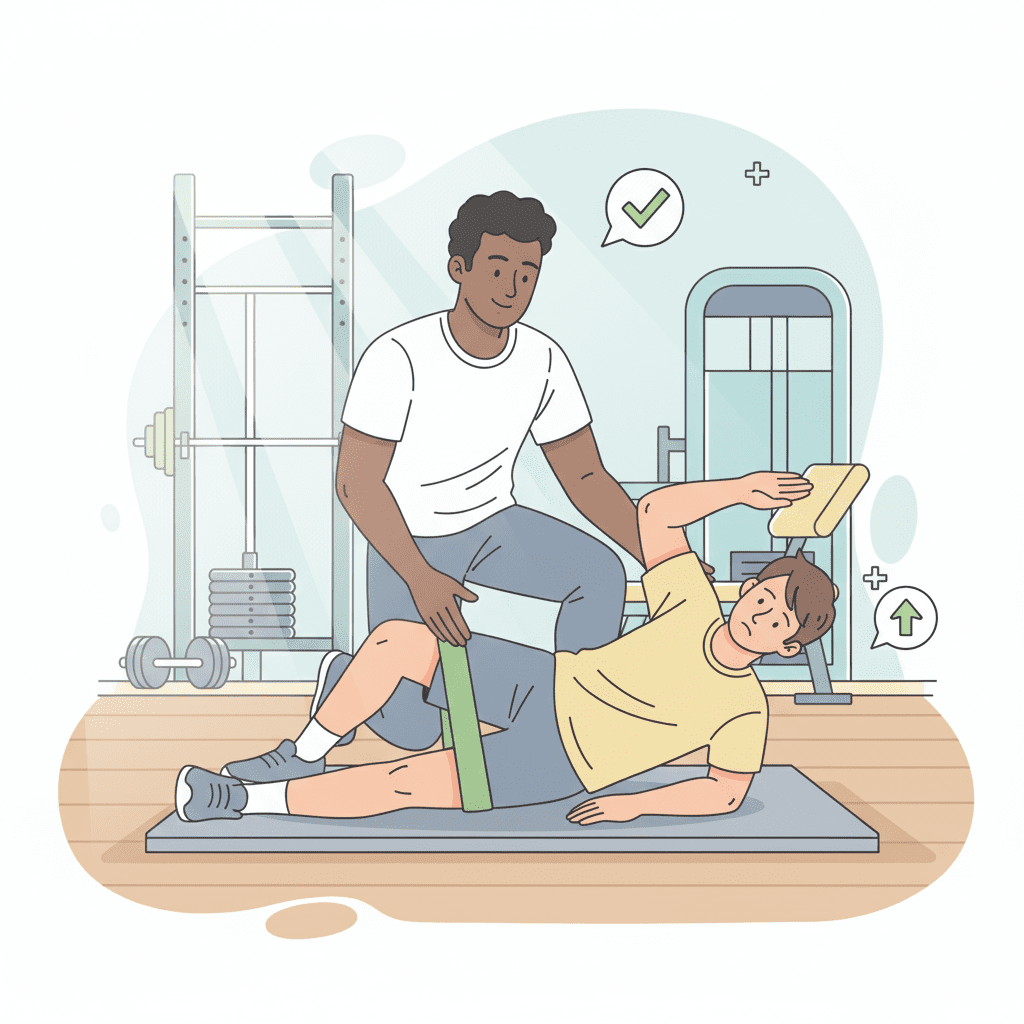
If you’re a young adult dealing with PFPS-type knee pain, here’s how physiotherapy can help right now:
4.1 Early Assessment
- A physiotherapist can look at how you move: your hip control, how your knees align, how your muscles fire.
- We test things like hip strength, hamstring tightness, foot mechanics — because these matter.
4.2 Strength & Control Work
- We’ll guide you on exercises to strengthen your hip abductors and external rotators. This helps stabilize the knee.
- We also work on quad (thigh) strength, but in a way that’s safe for your knee: not just “lift heavy,” but “lift smart.”
4.3 Movement Retraining
- We teach you how to squat, land, and run the right way (your knees should not cave in).
- Gait retraining (how you walk/run) helps too: in teenagers, walking and running in a better pattern can reduce stress on the patellofemoral joint. Ovid
- We may use foot work or foot alignment drills if your feet or ankles are contributing to the knee stress.
4.4 Flexible & Personalized Exercises
- Exercises are tailored to you: age, activity, pain level, strength.
- We focus on long-term control, not just “fix the pain and move on.”
4.5 Education + Self-Help
- I’ll teach you simple strategies: when to reduce load, how to recover, how to prevent flare-ups.
- You learn to listen to your body, not just push harder.
4.6 Early Interventions Work Best
- A study on adolescents with PFPS showed that starting multimodal physiotherapy early (within a few months of symptoms) helped significantly, in both short and long term. BioMed Central
- Waiting too long makes recovery harder — especially in young people.
5. What You Can Do Right Now (Even Before Visiting a Physio)
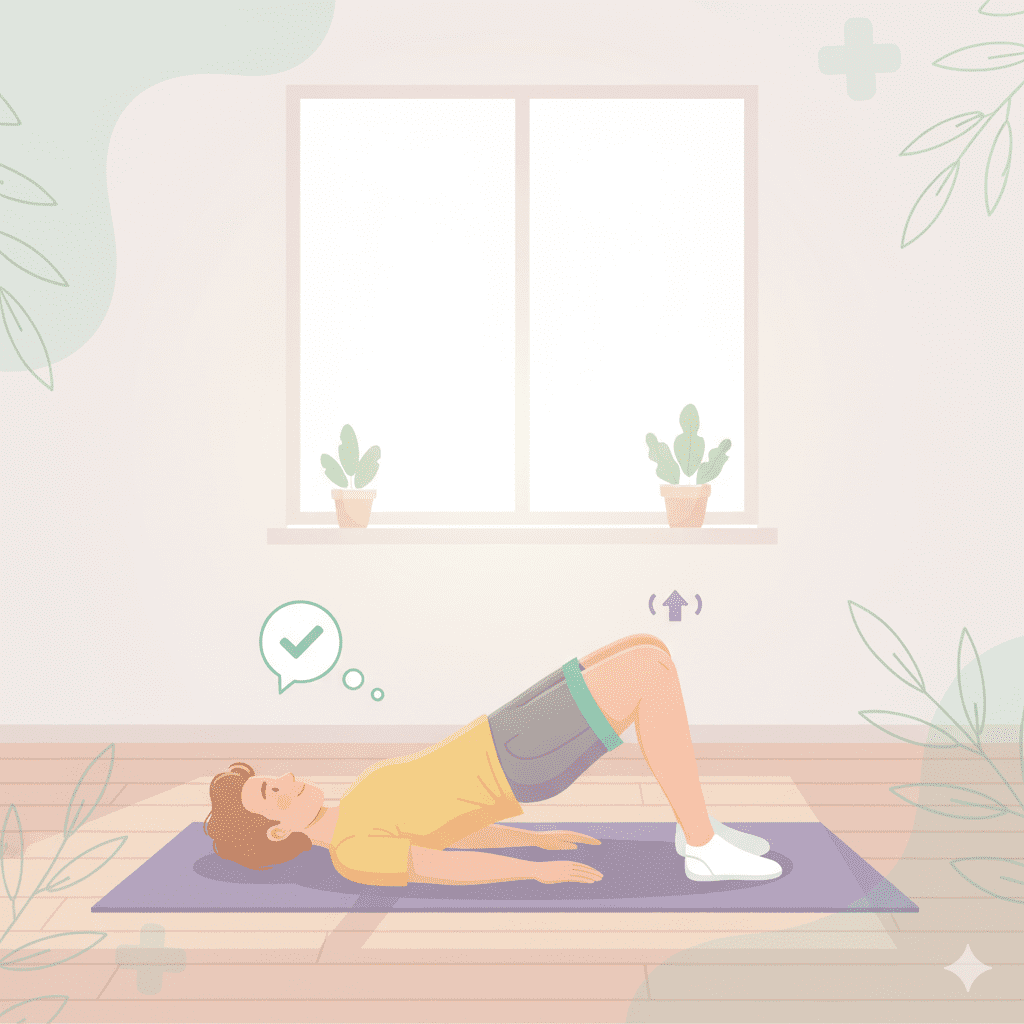
If you feel that nagging pain in the front or sides of your knee, here are some practical steps:
- Pause or modify high-stress knee exercises if they flare up your pain (squats, jumps, deep lunges).
- Add hip activation work: side-lying clams, glute bridges, band walks — to strengthen glutes and hips.
- Stretch your hamstrings: loose hamstrings help relieve stress on your knee.
- Work on your landing mechanics: if you run or jump, pay attention to how you land; try softer landings and training cadence.
- Manage body weight: if you’re overweight or have higher body fat, work gradually on lean mass + fat reduction — this helps your knee a lot.
- Seek physiotherapy early: don’t wait years. Getting help now prevents this from becoming a chronic problem.
6. Why This Matters for You & Physiogain
- If left unchecked, PFPS can become a long-term problem. Many people don’t “grow out of it.”
- Through physiotherapy, you’re not just “treating pain,” you’re retraining movement — and that builds a stronger, more stable knee.
- At Physiogain, we want to help you stay active, strong, and pain-free — especially at such a young, energetic age.
- Early intervention = better long-term results = less time off doing what you love.
7. Key Take-Aways (Simple Summary)
- Knee pain in young adults is rising, and PFPS is a major cause.
- The pain often comes from poor biomechanics, muscle imbalances, and overuse.
- There is strong scientific support for these problems in active youth and young adults.
- Physiotherapy is very effective if started early: strength, movement retraining, personalized exercises.
- You can begin basic self-care now — and reach out to a physio to build a long-term, smart plan.